Generic selectors
Exact matches only
Search in title
Search in content
Post Type Selectors
Industries • Food & Beverage • Hygiene-Critical

Fishery and Seafood Processing

Fishery and Seafood Processing is one of the most demanding conveyor environments in modern food manufacturing. Water, salt, oils, organic residue, low temperatures, and frequent washdowns create a perfect storm of corrosion risk and hygiene pressure. The right conveying layout reduces manual handling, keeps throughput predictable, and supports sanitation routines that are repeatable under real-world time constraints.

CSA designs and manufactures conveyor systems that support Fishery and Seafood Processing operations where cleanability and corrosion resistance are non-negotiable. This page is built as a practical decision guide for buyers and operations teams: conveyor layout logic, belt selection (PU, modular, monolithic), hygiene-first component choices, and how to align the system with inspections and export expectations.

Stainless steel structures Food-grade belt selection Washdown-ready layouts Audit-friendly flow

Fishery and Seafood Processing: What Breaks “Normal” Conveyors

In Fishery and Seafood Processing, the conveyor is not a background detail. It is a hygiene surface, a throughput control point, and a maintenance risk if it is built incorrectly. Salt accelerates corrosion. Proteins and oils form films that hide in corners. Water carries residue into hard-to-reach spaces. Then washdowns arrive, exposing weak design choices, poor drainage, and areas where contamination can build up.

The facilities that run well do not rely on “clean harder”. They engineer cleanability into the line. That means open profiles, sensible slopes, transfer points that do not trap residue, and belt surfaces that do not become permanent storage for yesterday’s product. A practical conveyor strategy for Fishery and Seafood Processing reduces sanitation time and helps teams maintain consistent hygiene outcomes shift after shift.

CSA manufactures conveyors and supplies spares for conveyor systems it manufactures. This keeps compatibility consistent and reduces downtime caused by mismatched parts. Installation and commissioning services are available in selected regions and confirmed per project scope.

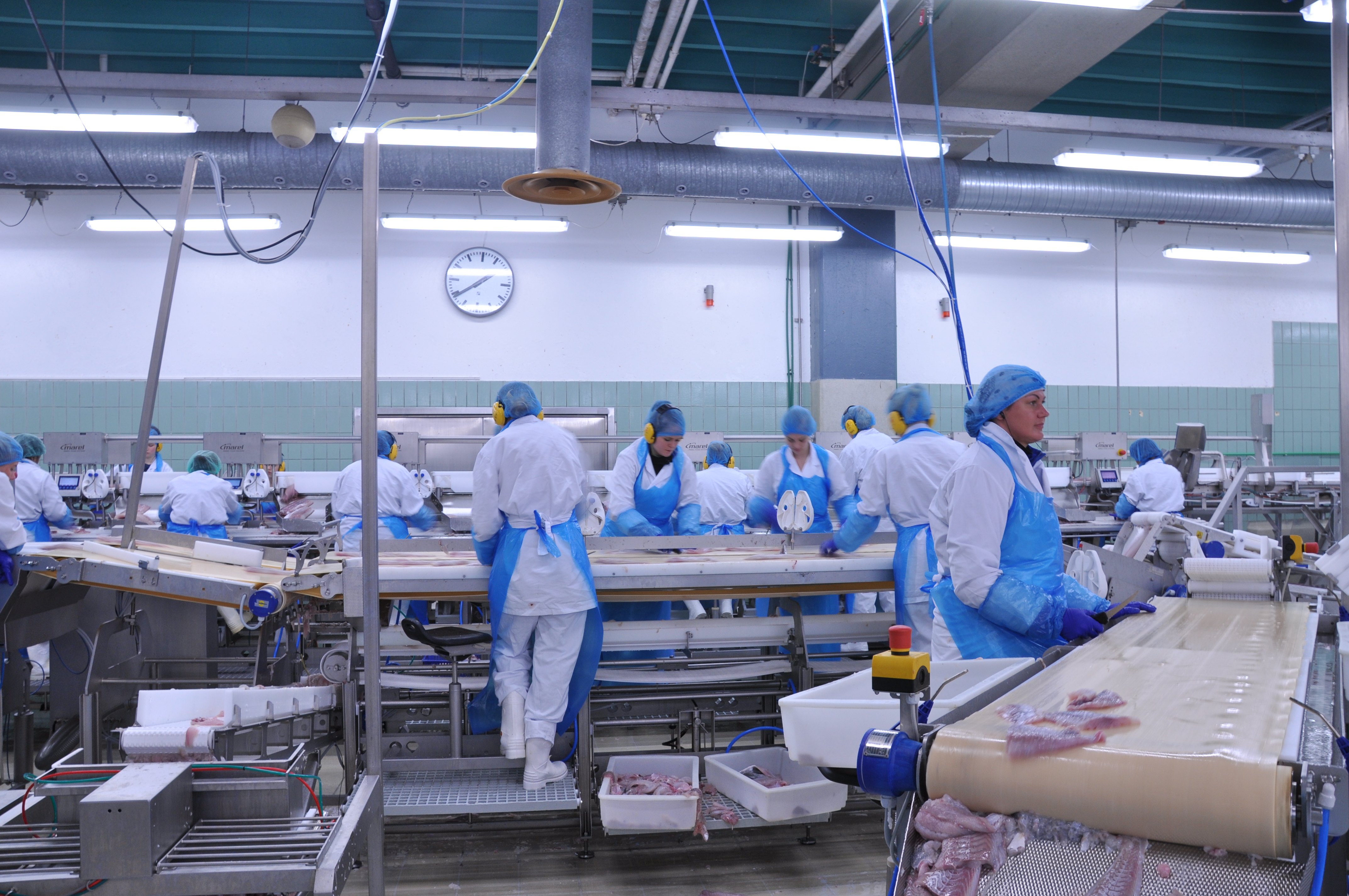
Fishery and seafood processing conveyor systems in a hygiene-critical facility

Fishery and Seafood Processing lines benefit from cleanable layouts, corrosion-resistant structures, and belt surfaces that support repeatable washdowns.

Fishery and seafood processing stainless steel conveyor line
Stainless steel frames are widely used in Fishery and Seafood Processing wet zones because corrosion resistance and cleanability are operational essentials.
Fishery and seafood processing food grade conveyor belting for washdown zones
Food-grade belting helps Fishery and Seafood Processing teams reduce sanitation time, improve traction in wet handling, and standardise cleaning routines.
Fishery and seafood processing packing conveyor layout for export staging
Packing and export staging within Fishery and Seafood Processing depends on stable transfers, controlled speed, and inspection-friendly line flow.

Operational Flow in Fishery and Seafood Processing Facilities

A good conveyor plan starts with a simple question: “Where does product change state?” Those moments create handling risk. Most Fishery and Seafood Processing operations share a familiar flow, even if species and product formats differ. The role of conveying is to reduce manual handling, control transfers, and keep hygiene steps practical.

Receiving and intake handling

Receiving areas may handle chilled, iced, boxed, or bulk product. In Fishery and Seafood Processing, intake conveyors are selected for gentle handling and spill control. Open structures and underside access support fast cleanup when water and residue are unavoidable.

Wash, sort, and grade

Rinse lines and sorting tables require drainage-friendly layouts. Belt selection affects how water sheds and how quickly residue clears. In Fishery and Seafood Processing, drainage is not a luxury, it is how you keep the line moving without turning sanitation into a daily emergency.

Trim, fillet, and portion

Precision stages need stable belt tracking, predictable transfers, and easy-to-clean surfaces. These zones are often high-contact areas in Fishery and Seafood Processing, so cleanability and inspection access have real operational impact.

Pack, label, and stage for dispatch

Packing lines require steady product flow through weighing, packing, labelling, and dispatch. Export staging adds inspection and documentation pressure. A stable layout supports audit confidence in Fishery and Seafood Processing, especially when hygiene outcomes must be demonstrated and repeated.

The objective is controlled flow with fewer touchpoints. In Fishery and Seafood Processing, every unnecessary touchpoint is a risk point and a time cost.

Design Principles for Fishery and Seafood Processing Conveyor Systems

The best systems in Fishery and Seafood Processing are designed for the cleaning routine first, then for throughput. That sounds backwards until you remember sanitation time is production time. A line that cleans faster returns to production faster, and it reduces risk at the same time.

Open profiles and practical access

Open-frame construction reduces trapped moisture and improves inspection access. In Fishery and Seafood Processing, if sanitation teams cannot reach a surface, it will not be cleaned consistently.

Drainage and sensible slopes

Pooling water slows handling, creates slip risk, and increases cleanup time. Proper slopes and drip management help Fishery and Seafood Processing lines stay safer and easier to maintain.

Clean transfers and controlled speeds

Transfer points are where residue builds up and product gets damaged. Better transfers reduce bruising, reduce buildup, and improve yield in Fishery and Seafood Processing.

Compatibility over “whatever fits”

Matched components support tracking and reduce belt wear. Compatibility is a maintenance strategy in Fishery and Seafood Processing, not a preference.

For broader conveyor options, see Conveyors. For belt selection fundamentals, visit Belting. For rollers, pulleys, and system-support items, see Components.

Fishery and Seafood Processing: 7 Quality Conveyor Solution Patterns

Buyers want clarity. They do not want mystery. The solution patterns below show what typically works in Fishery and Seafood Processing facilities when hygiene, corrosion resistance, and steady flow matter more than “cheap and fast”. These patterns can be applied to new builds, refurbishments, or process upgrades.

1) Stainless steel belt conveyors for wet zones

Stainless steel structures help resist corrosion and remain cleanable under frequent washdowns. In Fishery and Seafood Processing, this reduces maintenance surprises and supports sanitation routines that are faster to complete.

2) Drainage-friendly handling for rinse and sorting lines

Rinse zones benefit from designs that manage water rather than fight it. Drainage helps reduce pooling and speeds up cleanup, which keeps Fishery and Seafood Processing lines moving.

3) PU belting for food-contact stages

PU belts are often selected for smooth, cleanable surfaces on trimming, portioning, and packing lines. Food-contact suitability can support buyer confidence in Fishery and Seafood Processing, especially where audits or export requirements influence procurement.

4) Modular belts where water exposure is constant

Modular belts can support drainage and wet handling. They are commonly used where water is constantly present, helping Fishery and Seafood Processing facilities manage cleanup efficiently.

5) Monolithic belts for higher hygiene assurance

Monolithic belt surfaces reduce seam-related risk points and can simplify inspection. These belts are used where hygiene assurance is the baseline in Fishery and Seafood Processing, not the aspiration.

6) Clean transfers to reduce product damage and buildup

Transfers can be designed to reduce bruising and reduce residue traps. Better transfers help improve yield and reduce sanitation time in Fishery and Seafood Processing.

7) Layout planning that supports hygiene separation

Raw and processed flow separation reduces cross-contamination risk and supports consistent cleaning routines. Hygiene separation is a practical design principle in Fishery and Seafood Processing, not just a compliance phrase.

Food-Grade Belting for Fishery and Seafood Processing

Belt selection is where cleanability, traction, and sanitation time meet. In Fishery and Seafood Processing, the belt is a hygiene surface and a performance surface at the same time. The right belt depends on the stage, the water exposure, the cleaning method, and whether the zone is high-contact.

PU belting for high-contact handling

PU belts are common where a cleanable surface is needed for trimming, portioning, and packing. In Fishery and Seafood Processing, this supports repeatable cleaning outcomes and stable product movement under wet handling conditions.

Modular belting for rinse lines and wet transfers

Modular belts are widely used where drainage and washdown practicality are priorities. In Fishery and Seafood Processing, this can reduce pooling and support faster cleanup after heavy rinse stages.

Monolithic belting for seamless hygiene

Monolithic belts can reduce seam-related risk points and simplify inspection. Where hygiene assurance is critical, monolithic belts support Fishery and Seafood Processing operations that need consistent sanitation outcomes.

For more selection guidance across all industries, visit Belting.

Hygiene, Washdowns, and Buyer Confidence in Fishery and Seafood Processing

In Fishery and Seafood Processing, sanitation time is production time. The system must be designed to clean quickly and consistently. This reduces downtime, reduces risk, and helps maintain stable throughput when schedules are tight.

Food-contact suitability also influences purchasing decisions. Where a belt specification supports food-contact suitability, it can help teams justify procurement decisions and reduce perceived audit risk in Fishery and Seafood Processing. As an external reference point, the FDA overview below is a useful starting place: FDA Food Contact Substances (FCS).

Fishery and Seafood Processing Targeted Industries

This page is the hub for specific facility types within Fishery and Seafood Processing. Each child page targets a distinct environment so your site structure stays clean and your content stays useful rather than vague.

Fresh Fish Processing

Short cycles, high moisture, frequent sanitation, and fast transfers.

View page

Frozen Seafood Processing

Cold rooms, condensation control, and stable handling in low temperatures.

View page

Fish Filleting and Portioning

Precision handling with cleanable surfaces and stable belt tracking.

View page

Seafood Packing and Export Facilities

Inspection flow, packing stability, and audit-focused hygiene assurance.

View page

Aquaculture Processing

High throughput, wet handling, and consistent transfers across stages.

View page

Value-Added Seafood Processing

Additional preparation stages where consistent sanitation is essential.

View page


Where Fishery and Seafood Processing Fits Into Food and Beverage

Fishery and Seafood Processing sits within the Food and Beverage cluster and overlaps with packaging, cold storage, and warehousing environments. Use the broader hub for cross-links and internal structure support: Food & Beverage.

Cold Chain Reality: Temperature, Condensation, and Line Stability

Seafood environments are rarely “room temperature and predictable.” Many facilities operate across chilled prep rooms, cold stores, blast-freeze areas, and packing lines where condensation is constant. These conditions influence belt traction, frame corrosion, and how quickly residues harden on surfaces. A conveyor layout that works in a dry plant can become unreliable when moisture condenses on rollers, product is partially frozen, and sanitation cycles happen multiple times per day.

Temperature changes can also impact tracking and transfers. Product can move differently when surface moisture freezes, and packaging can behave differently when shrink wrap, labels, or cartons are exposed to cold rooms. In practice, stability comes from simple principles: consistent belt tension, controlled transfer points, sensible slopes, and drainage paths that do not allow pooling. Where drip points are ignored, water finds its way into components, floor safety worsens, and downtime increases.

Facilities that run reliably treat “cold chain” as part of the conveyor design, not as an operational afterthought. That includes planning how product moves between temperature zones, limiting unnecessary stops, and using layouts that allow teams to inspect the underside of belts and clean around structural supports. In cold zones, cleaning time matters even more because residue becomes harder to remove if it sits too long.

Practical ways to reduce failures in cold and wet zones

  • Minimise pooling: use drainage-friendly runs and avoid flat surfaces that hold water, ice, or residue.
  • Control transfers: design handoffs to reduce product drops, tearing, and residue build-up at transfer edges.
  • Maintain access: keep inspection and cleaning access realistic so sanitation routines stay consistent.
  • Plan for condensation: assume moisture will form and design so it drains away instead of sitting in corners.

Cold chain issues are rarely “one big failure.” They are usually many small issues that stack up: slips, tracking drift, residue traps, longer washdowns, and minor corrosion that becomes major later. Design choices that prevent small issues are what protect uptime.

Maintenance Strategy That Actually Reduces Downtime

In wet food environments, maintenance is not a quarterly event. It is continuous. The goal is to prevent the small failures that stop production: tracking drift that damages a belt edge, residue build-up that forces longer sanitation, or component wear that causes vibration and misalignment. The maintenance plan should match how the facility operates, including shift patterns, cleaning cycles, and peak production seasons.

The most useful strategy is to standardise: standardise components where possible, standardise inspection routines, and standardise spares that reduce response time. When a line uses mixed parts or “whatever is available,” diagnosing problems takes longer and fixes become temporary. A consistent system reduces guesswork and improves repeatability, especially when different teams work different shifts.

What to inspect routinely (and why it matters)

Tracking and alignment

Small tracking issues become fast belt wear. Regular checks prevent edge damage and reduce unexpected stoppages caused by drift or rubbing.

Transfer points

Transfers collect residue and cause product damage if poorly maintained. Clean transfer edges reduce build-up and improve yield.

Drainage routes

Blocked drainage increases pooling, slip risk, and corrosion. Keeping drainage clear reduces sanitation time and improves floor safety.

Fasteners and supports

Loose supports increase vibration and misalignment. Quick checks prevent gradual movement that becomes a major breakdown later.

A strong spares plan is the boring hero of uptime. The best plants keep a short list of critical items ready because waiting for parts in the middle of production is expensive. This is also why system compatibility matters: fewer part variations mean faster repairs, less confusion, and easier training for new maintenance staff.

CSA supplies spares for conveyor systems it manufactures, which helps keep parts compatible and reduces downtime caused by mismatched components or last-minute substitutions.

Planning for Throughput Peaks and Seasonal Demand

Seafood facilities rarely operate at a perfectly steady pace throughout the year. Catch seasons, export demand, weather patterns, and cold storage availability all influence production volumes. Conveyor systems that perform well during average weeks can become bottlenecks during peak periods if capacity planning is ignored. This is why throughput should be assessed not only at normal load, but also at the highest realistic operating demand.

During peak intake periods, product dwell time becomes critical. If lines back up, manual handling increases, hygiene risks rise, and staff fatigue becomes a factor. Conveyor layouts that allow for buffering, controlled accumulation, or temporary staging help facilities absorb surges without compromising sanitation routines or safety. Even simple design allowances can prevent rushed decisions that introduce long-term inefficiencies.

Seasonal demand also affects cleaning schedules. Higher volumes usually mean shorter sanitation windows. Systems designed with easy access, minimal crevices, and predictable belt behavior clean faster under pressure. When cleaning time is underestimated, facilities either lose production hours or accept higher hygiene risk, neither of which is sustainable.

Design considerations that support peak operations

  • Allow for buffer zones: controlled accumulation prevents stoppages from cascading upstream.
  • Design for fast cleaning: open profiles and accessible surfaces reduce sanitation time during high-volume periods.
  • Plan realistic belt speeds: pushing belts too fast increases wear and product instability.
  • Reduce manual touchpoints: fewer handoffs improve consistency when staff are under pressure.

Long-term reliability comes from planning for the worst realistic day, not the best-case scenario. Facilities that invest in systems capable of handling peak demand with minimal stress experience fewer emergency modifications and less reactive maintenance. Over time, this stability improves output consistency and lowers total operating cost.

Throughput planning is not about oversizing everything. It is about understanding where pressure builds up and designing those sections to cope calmly when volumes increase.

FAQ: Fishery and Seafood Processing

Why are stainless steel frames common in Fishery and Seafood Processing?

Stainless steel remains cleanable under frequent washdowns and resists corrosion caused by salt and moisture. That makes it a practical default for wet zones in Fishery and Seafood Processing.

Which belts are typically used across Fishery and Seafood Processing lines?

PU belts are common in high-contact trimming and packing stages, modular belts suit drainage-heavy rinse zones, and monolithic belts are used where higher hygiene assurance is required in Fishery and Seafood Processing.

Does CSA service third-party conveyors?

CSA supplies spares for conveyor systems it manufactures, helping ensure compatibility and reducing downtime caused by mismatched components in hygiene-critical operations.

Is installation and commissioning available?

Installation and commissioning services are offered in selected regions and confirmed per project scope.

Page Contents