Generic selectors
Exact matches only
Search in title
Search in content
Post Type Selectors
  • South Africa manufacturing
  • Spec-based support
  • Parts & Spares planning
  • Cross-border supply

Industrial roller components for reliable conveyor performance

This page exists for one reason: keeping your conveyor lines running without guesswork. Conveyor Supplies Africa supplies engineered parts that match your load, speed, environment, and frame geometry. You get consistent fit, predictable service life, and a replacement approach that stops “almost fits” from becoming a monthly event.

Conveyor system · Material handling · Conveyor belt · Bearing

Industrial roller assemblies and components

What this hub helps you solve (without drama)

Maintenance and procurement teams usually land here after the same pain cycle: a part fails, the line slows, stores has three “similar” replacements, none fit, and production suddenly becomes a workshop. This page is built to stop that cycle using practical specification control and sensible ordering habits.

  • Reduce ordering mistakes by separating tube length, shaft width, and end style into clear fields.
  • Standardise critical dimensions so repeat buys are predictable, even across different sites.
  • Match sealing and bearing choice to the real environment (dry, damp, washdown), not a best-case fantasy.
  • Build a controlled replacement plan so downtime becomes a scheduled task, not an emergency.

If your team searches for conveyor components at the last minute, that’s not bad luck. It’s usually missing documentation plus weak spare parts planning. Fix those two and everything gets calmer.

Scope control

Conveyor Supplies Africa supports general industrial environments and production facilities. This hub intentionally excludes extractive-sector use cases. That means we design and supply for hygiene, logistics flow, packaging demands, and manufacturing uptime, where consistent movement and predictable spares matter.

Important: We support non-mining industries only. If your site needs corrosion resistance, washdown suitability, or quiet operation in occupied areas, tell us early so selection matches reality.

Built for planners: the best outcome is a small, standardised list of repeat-fit parts and a clean reorder system. That is how you reduce the cost of “unexpected” failures.

What we supply and manufacture (South Africa)

Conveyor Supplies Africa supplies and manufactures conveyor parts, assemblies, and complete systems for production and distribution environments. Where catalogue options don’t match your frame geometry, duty cycle, or service requirements, we build to measured specification or drawing. This includes custom manufacturing of conveyors and rollers as a standalone replacement scope or as part of a full line build.

This page focuses on roller components that influence uptime: housings, bearing families, sealing approaches, shaft ends, and supporting parts that keep movement stable. If you need more than parts, we also support custom conveyor manufacturing for full assemblies, upgrades, and repeatable builds across multiple facilities.

Typical requests

  • Repeat-fit replacement parts to reduce downtime and onsite rework.
  • Correctly selected roller bearings and seals for the real operating environment.
  • Stable shaft-end selection: spring, threaded, or fixed retention.
  • Clear reorder lists and sensible spare parts planning.
Warehouse and hygiene-ready conveyor roller parts
Fit and repeatability matters: standardised conveyor roller parts reduce stoppages and ordering errors.
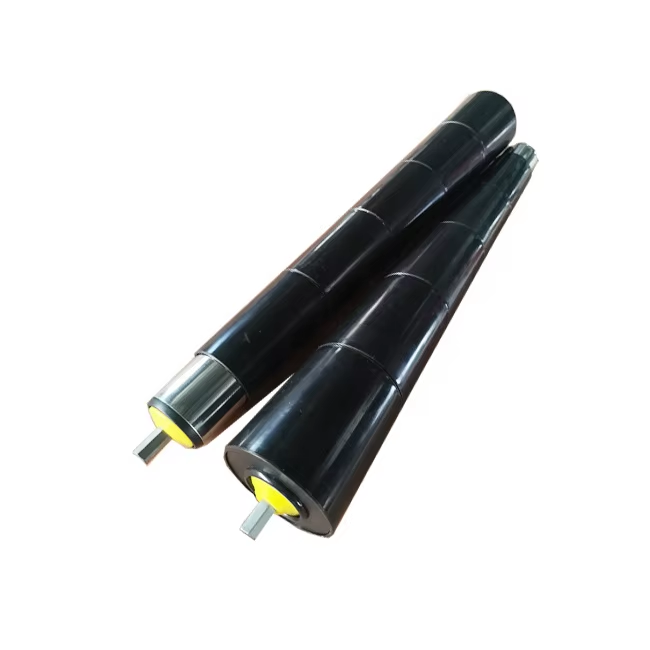
Taper segment roller components for conveyor applications
A controlled parts list stops random conveyor components from creeping into your line over time.

Where these parts are used

These products are used across warehousing flow lanes, carton handling, packaging lines, agricultural packhouse movement, food processing environments, and pharmaceutical facilities. Each environment affects materials, sealing, noise tolerance, and the wear pattern you will see over time. That is why selection must reflect real cleaning routines, moisture exposure, temperature swings, and duty cycle.

A simple rule that saves money: if the environment is harsh, choose sealing and materials for the harshness. If the duty is heavy, choose structure for the duty. If maintenance access is limited, choose designs that allow faster replacements. Ignore those three and you will “mysteriously” keep replacing the same parts.

Product card reference (spec-ready visual)

Below is the product-card layout reference for bearings, housings, sprockets, and PVC supports. Use this to align internal ordering notes with consistent labels and sizing language. It helps teams communicate the same way, which reduces quote cycles and prevents “we meant the other one”.

Gravity roller bearings, housings, sprockets, PVC supports

Built for clear selection: light, medium, heavy duty references plus the supporting hardware that affects service life. If you want this shown as separate clickable cards later in Elementor, the content is already grouped. For now, the image keeps the same style, spacing, and “text card” feel in a single block.

How to use this visual internally

  • Use duty labels to standardise what “light”, “medium”, and “heavy” means on your site.
  • Map each duty group to a spares kit with reorder quantities and lead-time assumptions.
  • Where your line differs (spacing, frame, load), treat the visual as a reference, then confirm specification before ordering.

roller components specification checklist (fast quoting, fewer mistakes)

A clean quote starts with clean measurements. Most ordering errors come from mixing tube length with shaft width, or guessing the end style. Use the checklist below to send the minimum information that prevents rework and delays.

Measurements to send

  • Tube outside diameter and (if known) wall thickness.
  • Tube length and shaft width (send both, not one number).
  • Shaft diameter and end style (spring, threaded, fixed).
  • Quantity, operating speed, and maximum load per zone.
  • Photos of frame ends and installed unit (front + side).

If you are using powered movement, describe expected behaviour: metering, indexing, buffering, or continuous flow. That affects drive selection and how the supporting hardware should be built.

Conditions that change the build

  • Wet areas, washdown routines, cleaning chemicals, or corrosion risk.
  • Stop/start duty cycle vs continuous running, plus temperature swings.
  • Recurring symptoms: noise, vibration, early bearing failure, uneven wear.

If a part is failing early, include a short note: “bearing seized”, “tube worn”, “roller shafts bent”, or “wear is only on one side”. Context lets us prevent repeat failure instead of just repeating the purchase.

Galvanization, Stainless steel, PVC, Nylon.

Selection signals that prevent repeat downtime

The goal is simple: choose a design that survives your environment and duty cycle, then keep replacements consistent. Use these selection signals to sanity-check a spec before ordering.

Tube diameter
Larger diameters typically reduce deflection over longer spans and can support heavier loads. Confirm span and spacing.
Material choice
Choose based on moisture, cleaning, and corrosion. Stainless for hygiene zones, appropriate finishes for general duty, polymer where noise matters.
Shaft end type
Spring ends speed replacements, threaded ends help fixed retention, and fixed ends suit certain mounting designs. Align with your frame ends.
roller bearings + sealing
Match bearings to load and speed, and match seals to washdown/moisture. Bad selection equals early failure.
End details
Confirm retention method, seats, and any special interface parts like roller end caps where applicable.
Standardisation
Identify zones with the same conditions and standardise there first. That is the fastest route to fewer spares and fewer mistakes.

Common naming is messy, so here are useful terms included once for clarity: conveyor rollers, conveyor roller parts, roller shafts, roller end caps, idler components.

Countries and industries we support

This hub supports South Africa operations and cross-border supply where sites want consistent specifications and repeat ordering. The easiest way to reduce downtime across multiple facilities is to standardise what can be standardised, then stock spares intelligently. It turns urgent procurement into normal procurement. Humans love pretending those are the same thing. They’re not.

Countries we serve (internal links)

If you operate across multiple countries, standardised spare parts planning reduces both downtime and freight surprises.

Industries we serve

We supply non-mining industries only, focusing on hygiene, uptime, and predictable movement.

Systems and related product hubs

Plan your layout using system pages, then return here for specification and spares alignment:

If you need a complete build (not just replacements): we support custom manufacturing of conveyors and rollers and full custom conveyor manufacturing to match footprint, duty, and maintenance access constraints.

Types and selections (what works where)

Choosing correctly means matching the build to load, speed, environment, and service access. The “best” option is the one that fits your operating reality and keeps replacements repeatable. Below are practical categories used across distribution, packaging, and production environments.

Spring ends (service speed)

Good for frequent replacements and fast maintenance access. Spring retention reduces downtime during swaps.

roller components note: confirm spring type, widths, and bearing selection to avoid “almost fits”.

Threaded ends (fixed retention)

Useful where fixed mounting is required and end retention must stay locked.

Confirm threads and end detail. That is where ordering errors breed.

Powered zones (controlled flow)

Used for metering, buffering, and controlled movement. Specify behaviour, not just dimensions.

Pair correct drive selection with repeatable spares.

Noise control (polymer options)

Useful where noise matters in occupied areas and lighter duty zones.

Confirm environment compatibility and cleaning routines before selecting.

Washdown/hygiene builds

Corrosion resistance and sealing become priority. Select for cleaning chemicals and moisture exposure.

roller components note: sealing and material choice decide service life here.

Transfer protection

Transfers decide whether your system runs smoothly or becomes a daily jam report.

Share drop height and product mass to confirm a suitable build.

Weight class guidance (starting point)

Final selection depends on span, pitch, speed, duty cycle, and environment. This is a starting point that helps you describe needs clearly.

Light duty
Cartons, totes, trays. Prioritise smooth flow and service access.
Medium duty
Crates and mixed packed goods. Focus on consistency and sealing.
Heavy duty
Pallet lanes. Specify tube wall, shaft strength, and bearing family properly.
Hygiene/wet zones
Choose corrosion resistance and seal integrity for washdown routines.
Powered zones
Specify flow behaviour and duty cycle. Plan spares for predictable replacement.
Transfers/impact
Protect handover zones. Many stoppages start here, not “somewhere else”.

Roller conveyor.

A practical spares + procurement process

If you want fewer stoppages, stop treating replacement parts like a surprise. A basic process turns a reactive line into a managed one. This section is for teams who want stable operations without adding layers of bureaucracy for the fun of it.

Step 1: Define zones

Break your conveyor into zones that share conditions: dry warehouse lanes, washdown areas, heavy pallet zones, and powered control sections. You can’t standardise effectively until you know which zones truly match.

This is where people usually try to shortcut. Then they wonder why one “standard” part fails in one area but not another.

Step 2: Standardise where it makes sense

Create a small list of repeat-fit parts per zone category. Keep dimensions consistent, document end styles, and align bearing families so stores holds fewer variations.

Standardisation is not “one part for everything”. It’s “one part for the same conditions”.

Step 3: Build a spare parts planning kit

Set reorder triggers based on usage and lead time. Hold the items that cause downtime, not the items that feel “important”. Include wear items like roller bearings, seals, and any required roller end caps where applicable.

A small correct kit beats a storeroom full of random “spares” that don’t fit.

When to use custom manufacturing of conveyors and rollers

Use custom builds when the frame geometry is non-standard, when legacy equipment requires exact matching, when duty cycles exceed typical catalog assumptions, or when you need consistent parts across multiple facilities. This is where custom conveyor manufacturing becomes the smarter long-term choice, because it reduces onsite rework and ordering errors.

Simple test: if you keep modifying brackets or “making it work” during installation, you are paying for custom work anyway, just in the worst possible place: on your shop floor, while production waits.

Materials, compatibility, and quality signals

The quickest way to burn money is choosing a part that ignores your environment. Moisture exposure, washdown chemicals, corrosion risk, dust buildup, and duty cycle all change what “good” looks like. Selection should align with the conditions that actually exist on your site.

Materials

  • General duty steel/finishes for dry, controlled environments.
  • Stainless options for hygiene zones where corrosion resistance matters.
  • Polymer choices where noise reduction and lighter duty are key.

Use the right material for the right zone. It sounds obvious. Humans still mess it up daily.

Compatibility checks

  • Confirm cleaning routines and chemicals before choosing seals.
  • Match bearing families to load and speed, not assumptions.
  • Confirm end retention method so replacement is repeatable.

A part can be “quality” and still be wrong for your site. Correct selection matters more than marketing labels.

If you want a complete system scope instead of piecemeal replacements, our team supports full builds and upgrades: custom manufacturing of conveyors and rollers plus integrated Systems planning, with sensible spares and service access.

Why Choose Conveyor Supplies Africa

Anyone can sell parts. The real difference is whether you get repeatable fit, spec support, and an ordering approach that reduces downtime. Conveyor Supplies Africa focuses on stable outcomes: smoother flow, fewer stoppages, cleaner replacements, and predictable procurement. We support roller components supply with practical selection input and scalable spares planning.

Spec-first support

We help you document the critical dimensions and conditions so future orders are faster and correct. That reduces procurement back-and-forth and stops onsite “adjustments” that waste time.

Local manufacturing capability

Local build support allows repeatability and faster iteration, especially for legacy frames or non-standard requirements. It also supports multi-site standardisation under custom manufacturing of conveyors and rollers.

Uptime + spare parts planning

We help you hold the right spares in the right quantities. That reduces downtime and prevents mismatched replacement attempts. A small correct list beats a storeroom full of unusable “spares”.

What good supply looks like

  • Repeatable specification per zone category, not random purchases.
  • Materials and sealing aligned to real conditions and cleaning routines.
  • Clear documentation so replacements fit first time.
  • Support for custom conveyor manufacturing where catalogue options do not match footprint or duty.

FAQ

Straight answers for teams buying roller components and related conveyor components.

What information do you need to quote accurately?

Send tube diameter and length, shaft diameter and width, end style (spring, threaded, fixed), quantity, load type, maximum load per zone, environment (dry, damp, washdown), and photos of the installed unit and frame ends. If failures repeat, note what you see (noise, vibration, seized roller bearings).

Can you help with spare parts planning?

Yes. We help you identify high-wear zones, standardise the repeat-fit list, and build a practical spares kit with reorder triggers. This reduces downtime and prevents “random” parts from creeping into the system.

Do you support custom builds?

Yes. We support custom manufacturing of conveyors and rollers where frame geometry, duty cycle, or environment requires it. This is ideal for legacy equipment, unusual end styles, or standardising across multiple sites.

Which industries do you supply?

We supply non-mining industries, including agriculture, food and beverage, packaging, logistics, warehousing, and pharmaceutical environments. Industry conditions influence material choice, sealing, and long-term service life.

Do you supply across Africa?

Yes. We support cross-border supply through our country hub pages. Standardising your specifications is the best way to keep replacements predictable across multiple facilities.

Why do “similar” replacements fail to fit?

Because key dimensions get mixed: tube length vs shaft width, incorrect end style, wrong shaft diameter, or the bearing/seal configuration differs. Using a documented spec sheet stops this problem quickly.

Speak to the team

For quotes, standardisation, or a full build scope, talk to Conveyor Supplies Africa. We supply roller components with spec support, planned spares, and the option for custom conveyor manufacturing where needed.

Page Contents