Generic selectors
Exact matches only
Search in title
Search in content
Post Type Selectors
Industries

Food and Beverage Industry conveyors built for hygiene, flow, and real-world uptime

In food plants and beverage operations, conveyors sit at the intersection of sanitation, production targets, and safety. The practical goal of Food and Beverage Industry conveyors is simple: move product reliably, cleanly, and predictably through processing, inspection, packing, and dispatch without turning every shift into a troubleshooting session.

Conveyor Supplies Africa delivers industrial conveyor solutions aligned to non-mining industries across Africa. We support upgrades and new builds with robust systems, plus the practical items that keep lines moving: conveyor parts, conveyor spares, and dependable conveyor components selected around your environment and duty cycle.

food and beverage conveyors hygienic conveyor systems washdown conveyors material handling conveyor systems Wikipedia: Conveyor system

Hygienic movement for packaging, bottling, and processing

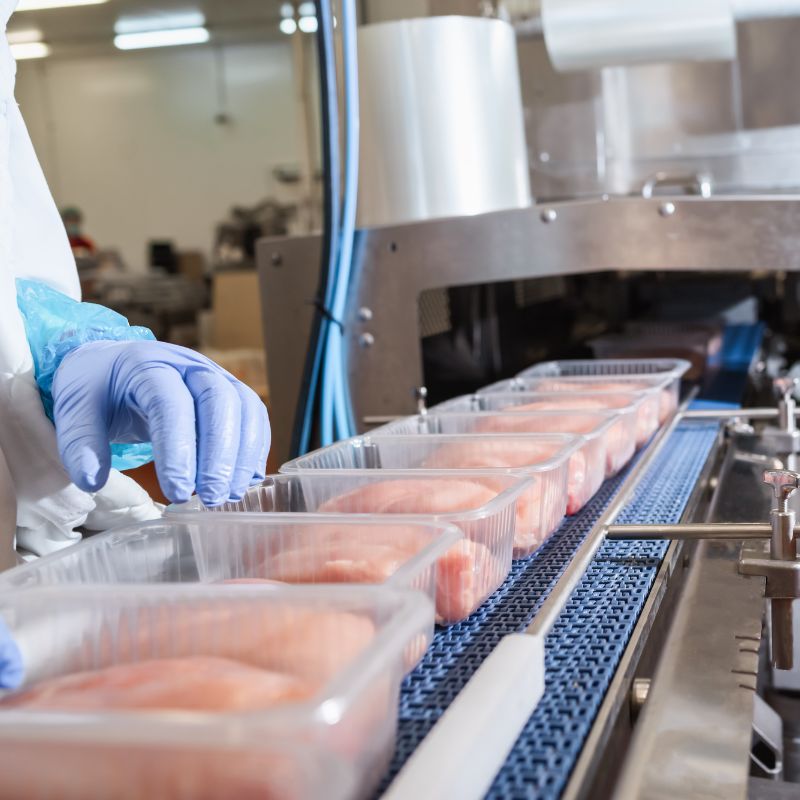
Food and beverage industry conveyors supporting hygienic flow for packaging and processing
Cleanable layouts, stable transfers, and service-friendly access are what keep Food and Beverage Industry conveyors trustworthy on the floor.
Mining excluded: this page and all examples are aligned to non-mining industries.

Why hygiene-focused conveyor design matters

In food and beverage operations, downtime is expensive, but contamination risk is worse. That combination is why Food and Beverage Industry conveyors need design that respects wet zones, washdown routines, and the pressure of end-of-line packing where minor jams quickly become major production losses. A conveyor can “work” while still being a daily pain if it traps debris, is awkward to clean, or forces operators to fight transfers and accumulation.

We focus on fit-for-purpose systems that keep flow stable and cleaning practical. That includes belt conveyors for controlled transport, roller conveyors for unit loads and staging, gravity conveyors for simple lanes, and modular conveyors where drainage, cleanability, and access drive the specification. For dispatch workflows, telescopic conveyors can reduce manual handling and speed up turnaround.

Reality check: If a conveyor is hard to clean, it will not get cleaned properly. That is how small design compromises become operational risk.

Wikipedia: Food safety, Wikipedia: Sanitation, Wikipedia: Packaging.

If you are comparing suppliers, ask a simple question: “How does this design behave during cleaning and after cleaning?” For Food and Beverage Industry conveyors, the right answer includes access, materials, drainage, component protection, and a sensible spares plan, not just “it’s stainless.”

Where these systems are used in the value chain

Food and beverage facilities are not one-size-fits-all. Some run washdown and high-care zones. Others run dry packaging lines with high carton volumes. Many combine processing, storage, and distribution in one footprint. Your layout should start with product behaviour, sanitation routine, and throughput targets, then match system type and components to the real duty cycle. When done correctly, Food and Beverage Industry conveyors become boring in the best way: predictable, consistent, and easy to maintain.

food processing
Cleanable frames, stable movement, and practical inspection at transfer points.
beverage bottling
Controlled spacing, merges, and line balance to prevent accumulation chaos.
packaging
Smooth handoffs and reduced snag risk where cartons, cases, and wraps dominate.
cold chain
Components selected for temperature variation, condensation, and hygiene routines.
warehousing
Staging, picking, and dispatch support with efficient lanes and routing options.
logistics
Safer handoff points and reduced manual handling for steadier throughput.

A useful planning approach is to sketch your process as zones: wet, dry, high-care, packing, staging, dispatch. Then you can choose materials and guarding correctly and avoid “one conveyor fits all” decisions that fail in week two. For most sites, the “best” system is the one that matches cleaning reality, product behaviour, and the pace of the line. That is the real standard for Food and Beverage Industry conveyors.

System types that commonly fit operations

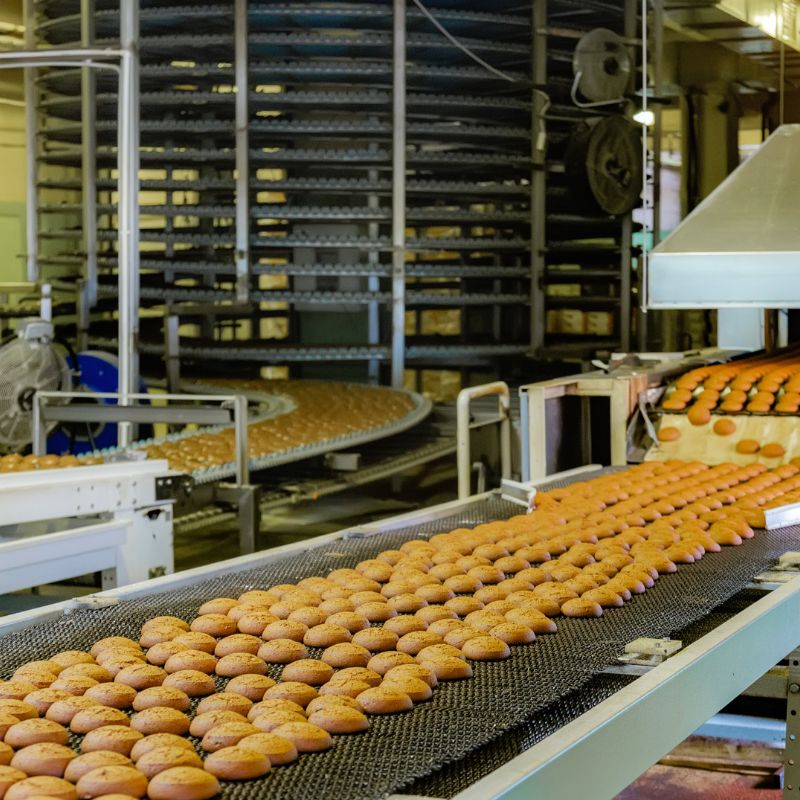
Hygienic conveyor line image
hygienic conveyor systems should prioritise access, cleanable surfaces, and predictable transfers.

What we commonly supply

  • stainless steel conveyors for washdown and wet zones where corrosion resistance matters.
  • modular conveyors for drainage-aware layouts, curves, and cleanability-driven design.
  • PVC belt conveyors and PU belt conveyors for controlled movement on inspection and packing lines.
  • conveyor rollers and duty-matched assemblies for staging, accumulation, and unit-load movement.

Conveyor selection depends on product behaviour, cleaning routine, and throughput expectations. Wet environments need corrosion-aware components and layouts that avoid water traps. Dry packaging lines often need stable transfers, guided flow, and reliable accumulation without carton damage. Either way, the “small stuff” like rollers, bearings, guides, and transfer geometry usually decides whether a line feels smooth or chaotic. That is why Food and Beverage Industry conveyors should be treated as engineered systems, not catalogue parts glued together with hope.

If you are updating an existing line, we typically start by identifying where losses happen: transfer jams, label scuffs, unstable merges, sanitation delays, or awkward access. Fixing those areas first often delivers better ROI than replacing an entire system. A practical upgrade approach tends to be: stabilise flow, improve cleanability, standardise wear items, then scale improvements across the plant. That is how Food and Beverage Industry conveyors become maintainable instead of “temperamental.”

Food and Beverage Industry conveyors design playbook for hygiene and throughput

Conveyor design in this industry is about balancing competing realities: operators want speed and simplicity, quality teams want cleanliness and control, and maintenance teams want access and standardisation. The most successful Food and Beverage Industry conveyors are built around practical habits on site, not around an idealised diagram. A design that requires extraordinary behaviour to stay clean or reliable will fail, because humans are consistent at being human.

The playbook below focuses on what works across food processing, beverage bottling, and high-volume packaging lines. It also fits distribution environments such as warehousing and logistics, especially where stability and predictable movement matter. Every facility has nuance, but the fundamentals tend to repeat in surprisingly boring ways.

Transfer stability first
Most downtime is transfer-related. Start by designing stable handoffs, correct speed transitions, and controlled product guidance.
Cleanability is a feature
Hygiene is not a sticker. It is access, drainage, minimal debris traps, and surfaces that can be cleaned within real time windows.
Standardise wear items
Fewer SKUs means faster repairs, better training, and less wrong-part purchasing. This protects uptime over months, not just day one.

Belt selection and surface behaviour

Belt choice is rarely “one best option.” It depends on product contact, temperature, cleaning routine, and the behaviour of the item being moved. For inspection and controlled movement, PU belt conveyors are often used where grip and smooth transport are important. For certain packaging and dry handling applications, PVC belt conveyors can be appropriate. For wet environments, frequent cleaning, and curved layouts, modular conveyors can offer practical cleanability and drainage advantages.

The point is not to chase a material label. The point is to select belting that behaves consistently, supports cleaning routines, and does not degrade into tracking issues or contamination traps. A good belting decision supports the wider system and protects the purpose of Food and Beverage Industry conveyors.

Frames, finishes, and washdown reality

Washdown environments are unforgiving. If the frame design traps water, residue, or debris, it creates hygiene risk and adds cleaning time. That is why washdown conveyors typically benefit from thoughtful drainage, reduced flat ledges, and sensible guarding that can be removed without drama. In many wet areas, stainless steel conveyors are preferred where corrosion resistance is non-negotiable. In dry areas, alternative frame materials may suit, provided cleanliness and durability are still supported.

For general context only, Wikipedia references for stainless steel and corrosion can be useful. On your site, though, the question is practical: “Will this design stay clean and reliable under our actual routine?” That question should guide every decision for Food and Beverage Industry conveyors.

Performance checklist for cleanable and reliable conveying

Use this checklist when planning upgrades. It is based on the points that repeatedly cause avoidable downtime, messy cleaning routines, and inconsistent flow. You do not need “perfect.” You need consistent, maintainable performance. That is the real standard for Food and Beverage Industry conveyors.

Hygiene and cleanability

  • Accessible surfaces that do not trap debris in hard-to-reach corners.
  • Layouts that allow inspection without dismantling major sections.
  • Material and finish choices appropriate for water and cleaning chemicals.
  • washdown conveyors designed so cleaning is realistic within time windows.

Flow and uptime

  • Stable transfer points that reduce snags, jams, and product damage.
  • Component choices aligned to duty cycle, speed, and load characteristics.
  • Logical zoning and staging, especially on busy packing areas.
  • A planned spares approach to keep repair time short when wear happens.
Practical truth: Most “mystery downtime” is repeated small stoppages. Fix transfers, access, and component consistency first.

Common failure points we design around

Many line problems are predictable: bearings fail early due to contamination, belt tracking drifts, rollers wear unevenly, and transfers snag packaging. The fix is rarely exotic. It is correct duty-rated parts, sensible guarding, stable geometry, and maintenance access that makes routine checks easy. When those are addressed, Food and Beverage Industry conveyors tend to become calmer and more predictable.

Transfers
Gaps, angles, and speeds that cause snagging or bounce, especially on light packaging.
Contamination exposure
Wet zones and residue require smarter component protection and cleaning access.
Inconsistent spares
Too many variants slow repairs and increase wrong-part purchases.

Parts and spares strategy that protects uptime

A spares strategy is not about buying everything. It is about stocking what fails first, what is slow to source, and what stops your line when it fails. In washdown or high-care areas, parts planning also needs to respect exposure conditions and cleaning routines so the wrong materials do not fail prematurely. This planning is part of what keeps Food and Beverage Industry conveyors consistent over time.

We support customers with practical standardisation: fewer SKUs, easier training, faster repairs, and less “we bought the wrong thing again” friction. When multiple lines run similar formats, standardising common items such as conveyor rollers, bearings, shafts, and guides can simplify maintenance. This matters in busy manufacturing environments, but it is just as valuable in high-volume warehousing and logistics.

conveyor rollers
Core uptime parts for staging and unit loads. Correct bearings and shafts reduce premature failure.
conveyor components
Bearings, shafts, brackets, guards, guides, and wear strips that keep flow stable.
conveyor parts
Belting, fasteners, cleaning-related wear items, and transfer consumables that cause frequent stops.

How to build a simple spares list (without overspending)

Most teams either under-stock and suffer downtime, or over-stock and tie up budget in parts that expire or never get used. A sensible approach is to categorise items by impact and lead time. Tier one: line-stoppers (rollers, bearings, critical belt items). Tier two: predictable wear items (guides, wear strips, transfer parts). Tier three: long-lead items (special assemblies, custom guards). When you apply this logic, Food and Beverage Industry conveyors are easier to maintain because repairs become planned and repeatable.

If you operate multiple lines, standardising the common assemblies across them is where the big gains usually live. The aim is not to force everything to be identical. It is to reduce unnecessary variety. This supports training, reduces procurement mistakes, and improves mean-time-to-repair. The result is that Food and Beverage Industry conveyors keep performing even during peak periods.

Hygiene, flow control, and day-to-day realities on production floors

In food and beverage sites, conveyor performance is judged on whether it remains reliable after cleaning, temperature swings, seasonal volume spikes, and process changes. That is why industrial conveyor solutions here have to balance cleanability, stability, and simple maintenance. The goal is safe, predictable material handling without turning sanitation or troubleshooting into a daily marathon.

Practical success usually comes down to three things: stable transfers, surfaces that can be cleaned properly, and parts standardisation so maintenance is consistent. If those three are handled well, the rest of the system tends to behave. If they are ignored, even expensive equipment becomes frustrating. This is the daily reality behind most Food and Beverage Industry conveyors.

Hygiene-focused conveying needs to do well

  • hygienic conveyor systems should allow access without dismantling major sections.
  • washdown conveyors should avoid water traps and dead zones that collect residue.
  • stainless steel conveyors are often preferred where corrosion resistance is non-negotiable.
  • Where belt choice matters, PVC belt conveyors or PU belt conveyors should match cleaning and product contact needs.

sanitation and food safety.

Flow control that keeps packaging lines stable

  • conveyor systems should support consistent spacing ahead of sealing, labeling, or packing stations.
  • roller conveyors help with unit loads, staging, and accumulation when cartons and cases dominate.
  • gravity conveyors create simple lanes for staging and dispatch prep when formats are consistent.
  • telescopic conveyors reduce manual handling during loading and dispatch, improving throughput.

conveyor system.

Cold chain and condensation considerations

cold chain environments bring a specific mix of temperature variation and condensation risk. Components that perform well in dry ambient zones can degrade faster when moisture and temperature swings are added. For Food and Beverage Industry conveyors operating near chilled storage, selection of bearings, guarding, and access points becomes more important. The goal is to maintain predictable flow without creating maintenance hotspots.

A practical cold-chain approach includes: (1) preventing water traps and residue build-up, (2) selecting materials and finishes that tolerate cleaning, and (3) standardising wear items so maintenance is simple. When sites do this well, they reduce downtime and protect product movement across storage and dispatch.

Daily maintenance readiness without overbuying

Most downtime is repeated small stoppages: worn rollers, drifted tracking, snagging transfers, and missing spares. A sensible conveyor spares strategy prevents that by stocking the right items and standardising where possible. This is part of making Food and Beverage Industry conveyors supportable, not just “installed.”

conveyor parts
Transfer wear strips, guides, and critical fasteners that stop lines when worn.
conveyor spares
Line-stoppers: rollers, bearings, shafts, and critical drive-related items.
conveyor components
Common assemblies so replacements are quick and consistent across areas.

Mining is excluded completely. Everything here supports non-mining industries such as manufacturing, warehousing, logistics, packaging, pharmaceutical, and agricultural operations. If you need baseline context on workflow, Wikipedia’s overview of material handling is useful.

When the specification matches your cleaning reality and product behaviour, Food and Beverage Industry conveyors stop being a daily problem and become a predictable asset. Sadly, that still feels like “magic” on some sites, even though it is just practical engineering.

Why Choose Conveyor Supplies Africa

Choosing a supplier is about outcomes: stable flow, cleanable design, and support that continues after commissioning. We focus on practical engineering and maintainable systems for non-mining industries across Africa. When customers need Food and Beverage Industry conveyors that prioritise hygiene and uptime, our approach is to scope properly, build to duty, and support maintenance with the right parts strategy.

Hygiene-focused engineering

We design around realistic cleaning routines and access, not “ideal conditions.”

Stable transfers and predictable flow

We prioritise transfer design and line stability, especially around packing and dispatch zones.

Parts, spares, and uptime support

We supply conveyor parts and support spares planning to reduce downtime.

Built for Africa, aligned to non-mining

We support manufacturing, warehousing, logistics, packaging, pharmaceutical, and agricultural.

How we scope correctly (and avoid rework)

We request a short list of inputs to quote accurately: product type, packaging format, throughput target, wet or dry zones, cleaning routine, and photos or short video of transfer points. This reduces assumptions, speeds up specification, and prevents rework. It also helps ensure the final Food and Beverage Industry conveyors specification matches the real workflow instead of a guess.

If you are replacing equipment, we also ask what you are trying to stop happening: jams, spillage, frequent roller failure, sanitation delays, or damaged packaging. Knowing the failure mode helps specify the solution faster and more accurately.

custom manufacturing of conveyors and rollers

We deliver custom manufacturing of conveyors and rollers because real facilities do not match catalogue assumptions. Layout constraints, product behaviour, wet zones, and cleaning routines shape the correct specification. Our custom conveyor manufacturing focuses on build quality, service access, and component choices aligned to duty cycle. This is particularly important for Food and Beverage Industry conveyors because cleanliness, access, and stability are non-negotiable.

This includes belt conveyors, roller conveyors, gravity conveyors, telescopic conveyors, and modular conveyors. Where needed, we support retrofits and upgrades using standardised conveyor rollers and aligned conveyor components to keep maintenance simple. For many sites, the most valuable outcome is not a “new conveyor,” but a stable system that stays clean and keeps moving.

Material handling fit
Designed around your flow, access routes, and constraints.
Duty-matched build
Components selected based on speed, load, and exposure conditions.
Supportable design
Maintenance-friendly access and sensible spares strategy.

Wikipedia: Material handling. The key takeaway is practical: build for your workflow and cleaning routine, and your Food and Beverage Industry conveyors will repay you in uptime.

Countries We Serve

Conveyor Supplies Africa supports customers across Africa with design, supply, and project delivery aligned to non-mining industries. If you need Food and Beverage Industry conveyors for regional operations, we scope around your environment and duty cycle.

Industries We Serve

Our solutions support non-mining industries where hygiene, reliability, and repeatable flow matter. We help customers specify and maintain Food and Beverage Industry conveyors with a practical focus on uptime and cleanability.

FAQ

Direct answers for planning and upgrading cleanable conveying and packaging flow in food and beverage operations.

Do you supply Food and Beverage Industry conveyors for washdown environments?

Yes. We supply options such as stainless steel conveyors and washdown conveyors designed for practical cleaning access and corrosion-aware component selection. For Food and Beverage Industry conveyors in wet zones, we focus on drainage-aware layouts and serviceable design.

Which belts are common in food operations?

Depending on the application, PVC belt conveyors and PU belt conveyors are common for controlled movement and packing lines, while modular conveyors may suit hygiene-driven zones. We scope belting around product behaviour, cleaning routine, and throughput needs.

Can you help with conveyor parts and conveyor spares planning?

Yes. We supply conveyor parts, recommend practical standardisation, and support conveyor spares planning to reduce downtime and improve maintenance consistency. This is often one of the fastest improvements you can make for Food and Beverage Industry conveyors.

Do you supply solutions for mining?

No. We exclude mining and focus only on non-mining industries.

What information helps you quote faster?

Product type, packaging format, throughput target, wet and dry zones, cleaning routine, and photos or video of transfer points. That helps scope accurately and avoid rework.

Can you assist with upgrades rather than full replacements?

Yes. Many sites improve stability by upgrading transfer points, standardising wear items, and correcting components that cause repeated stoppages. This approach keeps Food and Beverage Industry conveyors reliable without unnecessary full system replacement.

Do you support distribution environments like warehousing and dispatch?

Yes. We supply and support systems for warehousing and logistics workflows, including unit-load movement, staging lanes, and dispatch improvements. These environments often benefit from durable components and predictable flow.

Ready to upgrade hygiene and uptime?

If you need a cleanable, reliable conveyor setup for food or beverage workflows, we can help you scope the safest next step. We supply industrial conveyor solutions, support custom conveyor manufacturing, and provide the right conveyor components to keep your line stable and supportable. When planned properly, Food and Beverage Industry conveyors stop being a daily problem and become a predictable asset.

410
59
611
79
Page Contents