Generic selectors
Exact matches only
Search in title
Search in content
Post Type Selectors
Products • Manufactured (Non-Mining) Custom builds + support Africa supply ready

Note: Mining sector content is excluded everywhere on this site. We design and supply for processing, production, warehousing, logistics, agriculture, packaging and food-grade environments.

Conveyors that keep product moving, downtime low, and planning simple

These lines are not “nice-to-have equipment”. They are flow control. When a line stalls, everything downstream turns into rework, overtime, late dispatch, and daily friction between teams. This parent page helps you choose the right approach, understand what changes cost the most later, and connect to the correct child pages for deeper specifications.

Our approach is practical: match the load and product behaviour to the correct method, match the environment to the right materials, and build the maintenance plan in from day one. We also support custom manufacturing of conveyors and rollers, because the “system” is more than a frame with a motor. It is transfers, guides, wear surfaces, rollers, spares, and how your team will actually use the line under pressure.

If you have inherited equipment that technically works but the workflow feels like a daily compromise, that is usually a selection and layout issue. Better selection reduces manual touches, reduces damage, and cuts small stoppages that quietly destroy throughput.

Fast quote checklist

  • What are you moving (cartons, totes, crates, bags, bulk items) and what are the dimensions?
  • Throughput target (items/hour) and whether accumulation is required
  • Environment: dry, dusty, wash-down, cold room, heat zones, outdoor exposure
  • Layout: straight, curves, incline, decline, multi-level, merge/divert points
  • Maintenance preference: simplest manual line vs automation-ready build
Need help urgently? Justin +27 67 111 3159 • Jessica +27 67 755 5527sales@conveyorsupplies.co.za
Countries Industries (all non-mining)

Conveyor systemMaterial handlingAutomation

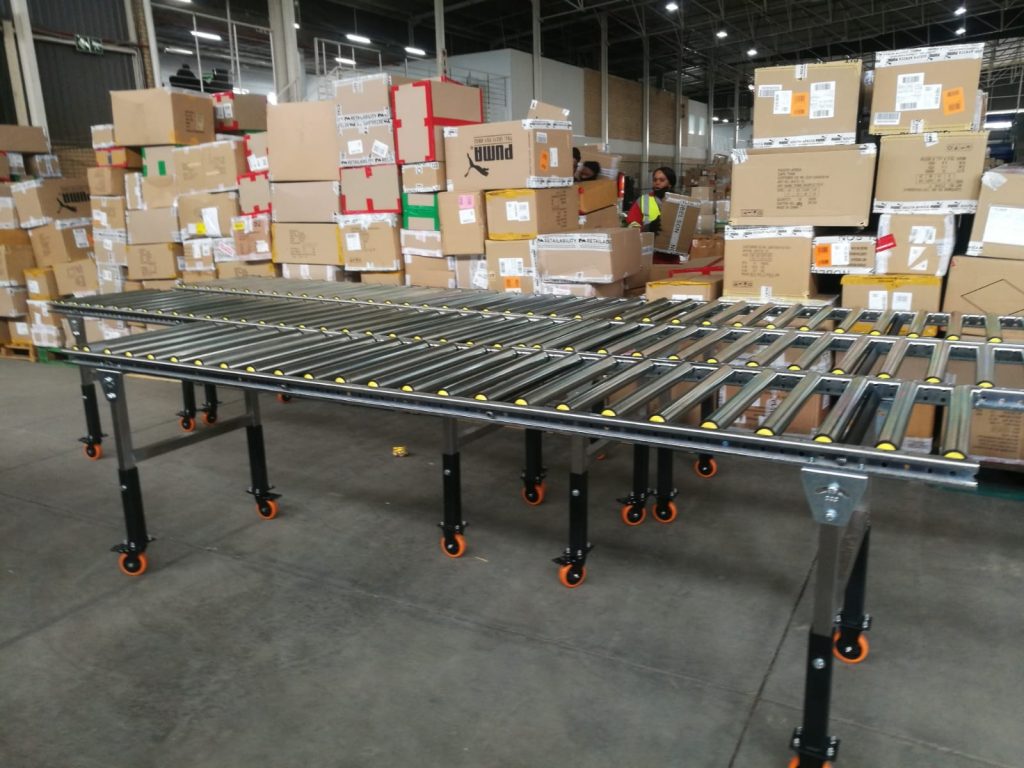
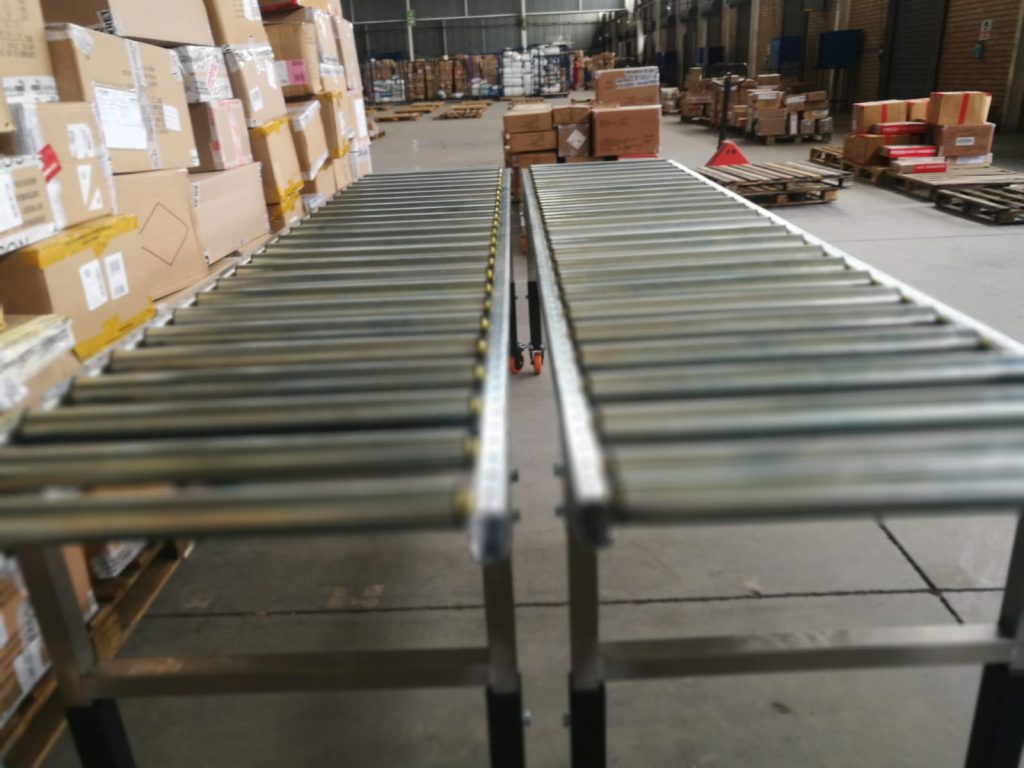
Gravity roller lane in gauteng used for stable warehouse flow
Conveyors
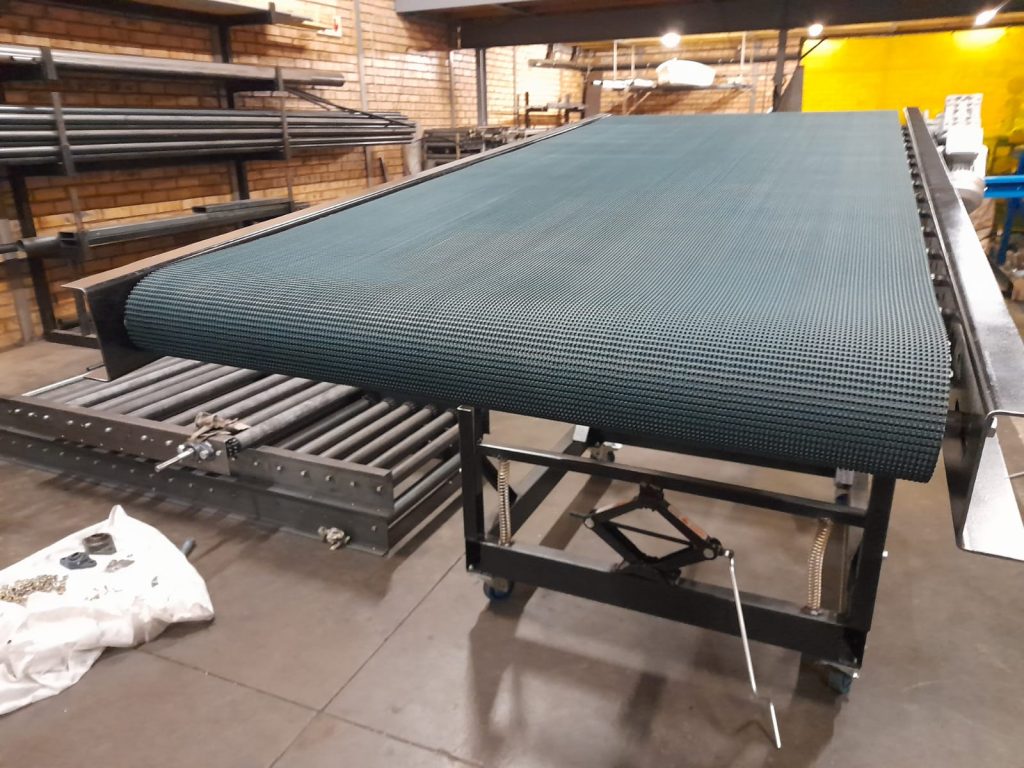
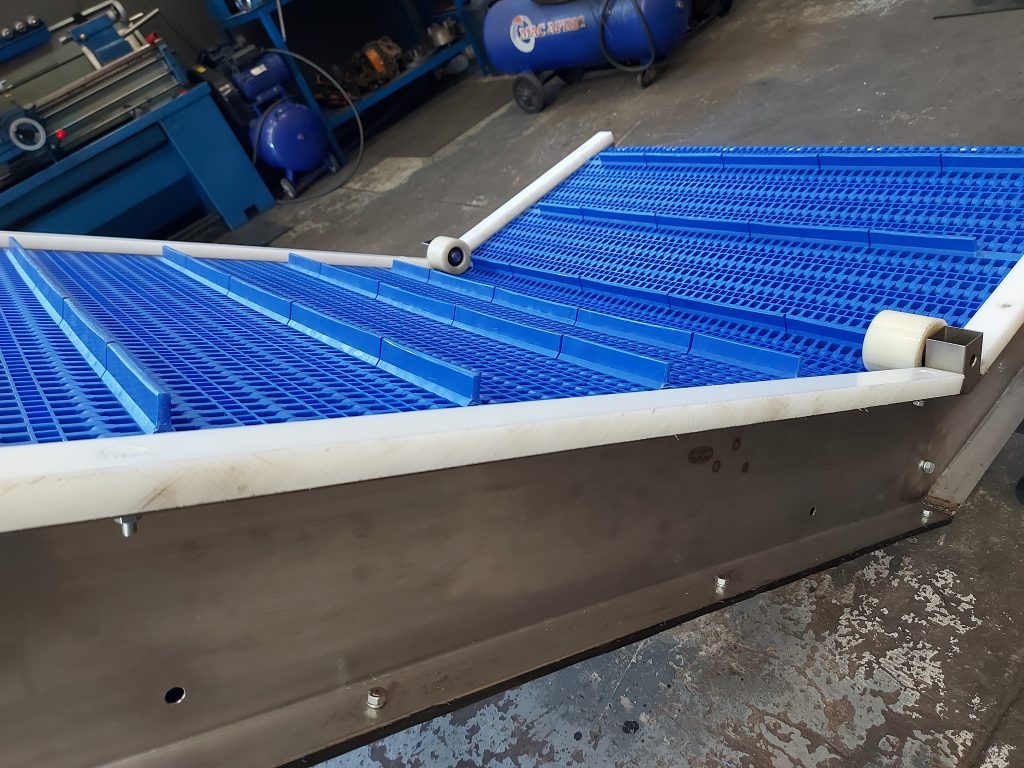
Cleanable belt section for wash-down handling and controlled flow

At-a-glance: what we build

  • Gravity, belt, modular, roller, stainless, telescopic and turntable solutions
  • Non-mining industries only: production, processing, warehousing, logistics, agriculture
  • Custom manufacturing of conveyors and rollers with spares planning support

How to choose the right system (and avoid expensive rework)

Most expensive problems are not caused by “bad equipment”. They are caused by small design decisions that look harmless on day one and become daily pain once production pressure kicks in. A curve that is slightly too tight, a transfer that is a little too high, a roller pitch that is just wrong for the footprint of the product, or a frame that is difficult to clean properly. These mistakes create stops, product damage, and unsafe workarounds.

Selection should start with what you are moving and how it behaves. A rigid carton with a clean base behaves differently from a bag that sags, a crate with ribs, a tote with uneven runners, or a product that is wet and sticky. The environment matters just as much. Dust changes friction and wear. Water and chemicals change corrosion risk. Cold rooms change belt grip and shrink tolerances. Outdoor exposure changes maintenance frequency. When selection matches reality, the line becomes predictable and boring, which is exactly what operations teams want.

Planning is also about the human side of the operation. Who will maintain the line? How often can they stop production to work on it? Do they have access to spares? Are parts standardised across sites? If the operation needs low-maintenance reliability, the design must prioritise access, simple change-outs, and predictable wear items. If the operation needs automation readiness, the design should still remain serviceable, but it must include practical sensor placement, guarding, and stable flow control.

Practical rule: If a design only works when a specific operator is on shift, the design is not stable. Good design should work on a bad day, with average staff, under realistic cleaning schedules.

Three visual reminders (images sized consistently)

Stable transfer section used to reduce snag points

Transfers decide reliability

Snags, edge catches, and poor discharge angles trigger jams. Treat change points as a design priority and reliability improves immediately.

Infeed Discharge Guides
Wash-down ready frame and belt section with cleanable geometry

Environment decides materials

Wash-down and chemical exposure demand corrosion control and cleanable geometry. Dust demands wear control and sealing.

Wash-down Dust Cold
Warehouse lane with simple staging and controlled movement

Flow control beats speed

A stable line that does not stop outperforms an aggressive line that jams every hour. Plan buffering and release points properly.

Buffering Release Stability

Checklist for faster quoting

Use the checklist below and your quote will be faster and more accurate. It also prevents the common “price changes later” problem caused by missing information.

  • Product type and dimensions (including the largest and smallest variants you expect)
  • Maximum weight and expected duty cycle (hours per day, days per week)
  • Throughput target and whether buffering/accumulation is required
  • Layout details: lengths, elevation changes, curves, merges, and diverts
  • Photos of the area and the tightest pinch points
  • Cleaning regime and environmental notes (water, chemicals, dust, cold room)
  • Maintenance preference: simplest robust build vs automation-ready approach

Conveyors specification worksheet: the details that prevent delays

If you want a quote that stays stable and a build that performs properly, treat the specification as a short project, not a quick message. Most rework comes from “missing but important” information. The good news is that you can avoid that with a structured worksheet. This section is written to be practical: you can copy the points into an email and attach photos. When we receive clear details, we can recommend conveyors that suit the real workflow, not an idealised version of it.

Start with the product. Measure the largest, smallest, and most awkward variants. Include the base condition. Is the base flat, ribbed, soft, sticky, or likely to sag? Tell us if the product can rotate or tip. Many conveyor problems come from instability at speed, not motor capacity. If a product wants to drift, guides and transfers must be designed accordingly. For mixed product lines, we often design conveyors around the worst-case item and then tune guides for the common case.

Define the flow objective. Are you trying to move product from A to B, or are you trying to manage waiting and release? In warehousing and dispatch, buffering is often the main requirement. In production, stable feed is often the main requirement. In packaging, consistent spacing and controlled discharge are often the main requirement. The best conveyors are the ones that match the constraint downstream. If the downstream process is slow, the transport system needs controlled accumulation, not more speed.

Map your change points. These are the merge points, the divert points, the infeed points, the discharge points, and any elevation changes. You can have the best transport surface in the world and still have a line that stops because the change points are poor. For reliable conveyors, transfers need attention: correct height differences, correct gap management, correct nosebar or transfer plate choice, and correct guide geometry so product does not snag. If you can, send photos of each change point and a rough sketch showing the direction of travel.

Describe the environment honestly. “Dry area” sometimes means “occasionally sprayed with a hose.” “Light dust” sometimes means “heavy airborne powder.” “Food-grade” sometimes means “daily chemical wash-down.” The environment affects materials, bearings, sealing, and the frame finish. It also affects what maintenance is realistic. If conveyors will be cleaned daily, we design for access and cleanability. If conveyors will run in dust, we design for wear control and sensible spares. If conveyors are outdoors, we design for exposure, drainage, and easier servicing.

Define duty cycle and uptime risk. How many hours a day will the line run? How many days per week? Is the line seasonal with peak surges? Does downtime stop the whole operation or can the site bypass temporarily? These answers influence the design approach and the spares strategy. For high-duty conveyors, we typically focus on standardised wear items, predictable change-outs, and clear maintenance access so service can be done fast and safely.

Clarify power and control expectations. If the site wants simple manual handling, then powered movement can be limited and controls can stay minimal. If the site wants automation readiness, then we plan for sensor placement, safe guarding, control panel location, cable management, and predictable access. This is where many conveyor projects go wrong: the line is built without considering how the controls will actually work in the space.

Include safety and operator workflow. Who loads the line? Who unloads it? Where do operators stand? Are there pinch points where hands can get caught? Are there areas where product can fall? The best conveyors protect staff by design, not by “be careful” signs. Good guarding should reduce risk without making maintenance impossible. If access panels are awkward, people skip checks, and reliability suffers.

Quick message you can send us: “We need conveyors for [product], size [X], weight [Y], throughput [Z]. Environment is [wash-down/dust/cold/outdoor]. Layout is [straight/curves/incline], length [L]. Change points: [merge/divert/discharge]. Duty cycle: [hours/day]. Photos attached.” It takes 5 minutes and saves days of back-and-forth.

Conveyors planning and spares: what to stock first

Spares planning is not glamorous, which is why most sites ignore it until a breakdown happens at the worst possible time. Start with the parts that fail most often under your duty cycle. Typically that includes wear strips, belts or modular sections, rollers or bearings (depending on the system), and the transfer parts that take repeated impact. For cross-border supply, spares planning is even more important because lead times matter. Standardising conveyors across sites simplifies stocking and training. The goal is not to stock everything, it is to stock the handful of items that prevent the most downtime.

For many operations, the biggest gain is consistency. If one site uses one roller type and another site uses a different roller type, both sites end up holding more spares than necessary. If the same belt type is used across multiple lines, spares management becomes simpler and cheaper. This is why we look at conveyors not as isolated machines, but as part of a broader operating system: parts, maintenance habits, and predictable servicing.

Finally, remember that “cheap now” can be expensive later. If the frame is difficult to clean, the cleaning time becomes a hidden cost. If access is poor, maintenance takes longer. If transfers are not designed well, product damage becomes a hidden cost. The most cost-effective conveyors are the ones that reduce those hidden costs over the full life of the line.

System families: where each option performs best

Different system families exist because not all products and environments behave the same. The goal is to select the simplest approach that meets the needs of the process. Complexity is not a feature. Complexity is a cost unless it directly solves a real operating problem. In well-run sites, conveyors reduce manual touches and keep flow stable, which protects throughput and reduces fatigue.

Gravity movement for staging and simple transfer

Gravity lanes are ideal when loads can roll reliably and the process allows manual control. They work well for staging, packing, and despatch preparation. The important topics are slope design, safe end stops, and correct roller pitch for the footprint of the load. When these are right, gravity conveyors remain robust and low maintenance.

Belt movement for stable continuous transport

Belt-based systems are common for continuous movement where you want stable product support. They handle a wide range of loads and can be built for long runs and controlled speed. The key is transfer design and tracking. If the infeed is unstable, the discharge is poor, or tracking is not managed properly, performance suffers even if the belt itself is correct. Correctly designed conveyors in this category are typically valued for stability, predictable flow, and simple servicing.

Modular surfaces for wash-down and practical maintenance

Modular surfaces are often chosen for wash-down environments, hygiene requirements, and layouts involving curves and incline/decline. They are service-friendly because damaged sections can be replaced more predictably, and the geometry can be designed for cleanability. In many plants, modular conveyors are selected to support consistent cleaning without damaging the transport surface.

Roller movement for buffering and controlled release

Roller-based transport is a strong fit for cartons, totes, and pallets where controlled release and buffering matter. This is common in warehousing and distribution. Success depends on roller spacing, drive selection, product footprint stability, and the way the process releases items downstream. When designed properly, conveyors of this type reduce manual pushing and help standardise flow.

Stainless builds for corrosion and hygiene risk

Stainless frames are usually selected because corrosion and hygiene risk are business risks, not preferences. When cleaning is frequent, the design must allow access, drain properly, and avoid hidden cavities. Correctly built, stainless conveyors stay cleaner and remain reliable over time.

Telescopic loading and routing tools

Extendable loading solutions reduce walking and improve turn-around time at vehicles. Routing tools like turntables support direction changes in tight spaces. These solutions must still prioritise safety, stability, guarding, and reliable controls. If the site is focused on reducing loading time, telescopic conveyors often deliver a direct operational benefit.

Important: selection becomes easier when you define your “must not happen” list (damage, slip, contamination risk, unsafe build-up, missed dispatch windows). That list turns preference into engineering criteria and helps you choose conveyors that actually fit the process.

Conveyor range: choose the right system family (parent → child pages)

Below is the high-level range overview. Each card links to the dedicated child page where we go deeper on specifications, applications, and selection criteria. Images use WordPress media URLs that display reliably.

Gravity roller line for simple manual product flow

Gravity Systems

Best for low-maintenance movement where manual push or natural slope is acceptable. Ideal for staging, packing, despatch lanes, and simple point-to-point transfer.

Simple Low maintenance Staging

View Gravity Conveyors

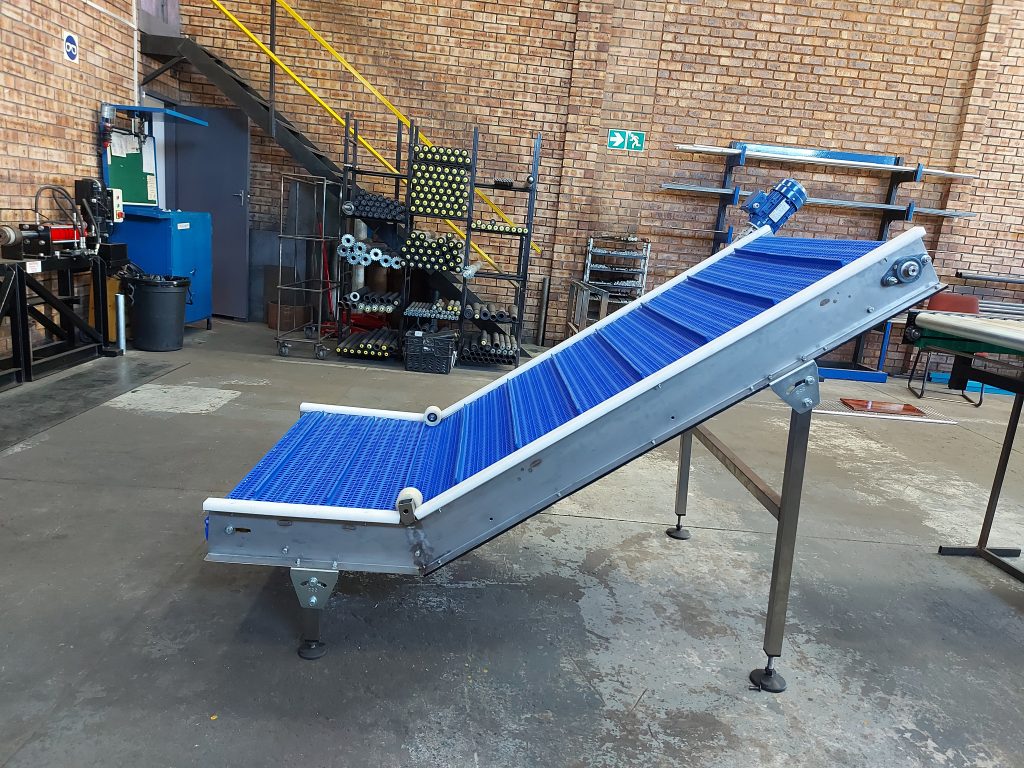
Modular plastic belt incline system built for wash-down handling

Modular Systems

Hygienic, configurable, and maintenance-friendly. Excellent for wash-down zones, curves, and incline/decline applications.

Hygiene Curves Predictable servicing

View Modular Conveyors

Belt line built for stable handling and consistent speed control

Belt Systems

Versatile choice for stable, continuous movement. Suitable for many products where controlled speed and long runs are needed.

Versatile Stable transfers Continuous flow

View Belt Conveyors

Powered roller line for cartons and controlled flow zones

Roller Systems

Ideal for cartons, totes, and pallets where controlled movement and scalable automation is needed, including buffering zones.

Buffering Control Warehouse flow

View Roller Conveyors

Stainless frame system for hygiene-first processing zones

Stainless Steel Systems

Designed for hygiene-critical and corrosion-sensitive environments. Common for wash-down production and cleanability needs.

Hygiene Corrosion control Cleanability

View Stainless Steel Conveyors

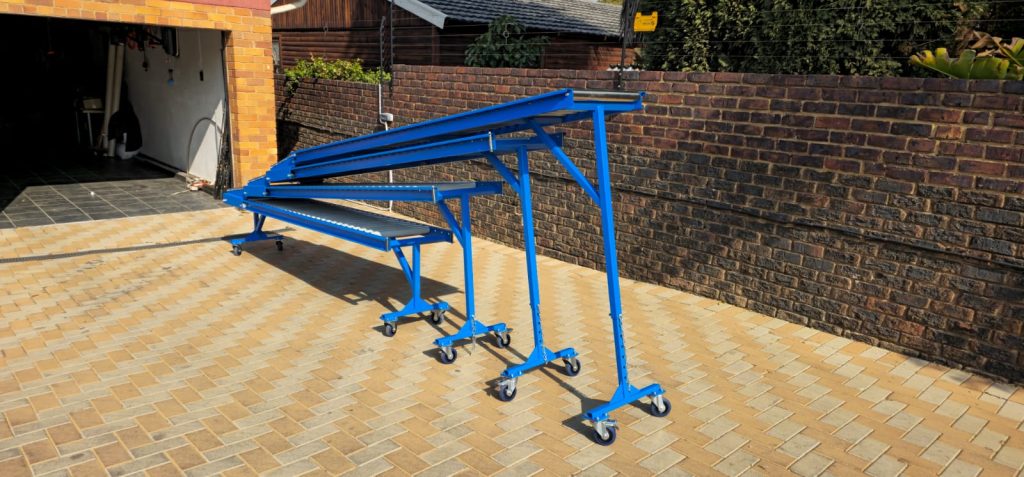
Extendable loading line for faster vehicle loading and unloading

Telescopic Loading

Extend and retract for faster loading and unloading. Built for warehousing and distribution to reduce manual handling time.

Fast loading Less walking High throughput

View Telescopic

Turntable platform used to change direction and improve routing

Turntable Routing

Change direction and manage routing without long reroutes. Practical for space-saving layouts where rotation is the best option.

Space-saving Routing control Efficiency

View Turntables

Layout support for staging, merges and controlled transfers

Layout & Transfers Support

Most failures happen at change points. We help plan merges, diverts, guides and safe discharge so the line works in real life.

Transfer design Merge/divert Jam reduction

View Services

Spare parts planning to reduce downtime risk across sites

Parts & Spares Planning

Downtime loves missing spares. We help you standardise wear items, belts, rollers and components so operations remain stable.

Standardisation Wear items Uptime planning

View Parts & Spares

If you are unsure which family to choose, start with product behaviour and the environment. Then tell us your “must not happen” list (damage, slip, contamination risk, bottlenecks). That’s usually where the right choice becomes obvious.

Frequently Asked Questions (FAQ)

How do I choose between belt, modular, roller, and gravity systems?
Start with product behaviour and the environment. If hygiene and wash-down matter, modular or stainless options often win. If you need continuous stable movement, belt systems are common. If you need buffering and warehouse scalability, roller options fit well. If you want the simplest low-maintenance transfer and manual flow is acceptable, gravity lanes are often ideal.
Do you manufacture custom systems and custom rollers?
Yes. We support custom manufacturing of systems and rollers for non-mining industries. Custom means correct layout, correct materials, correct transfer design, and predictable maintenance access.
Can you support cross-border projects outside South Africa?
Yes. We supply across Africa and help you standardise components and plan spares so you reduce downtime risk. The fastest way to help is to send product details, photos of transfer points, environment notes, and throughput goals.
What information do you need for a fast quote?
Product type and dimensions, weight, throughput target, environment (wash-down/dry/cold/etc.), layout needs (length, incline/decline, curves), and where the line must merge, divert or accumulate. Photos of the intended area help a lot.
Do you supply parts and spares for existing systems?
Yes. We supply components, belts and spares, and we can help you build a basic spares kit to prevent common downtime scenarios.
Fast next-step card image for stable warehouse flow

Fast next step

If you want the quickest path to the right answer, send: product dimensions, weight, environment notes, layout sketch, and photos of where the system will start and end. We’ll recommend the best family and the practical options so the solution matches the workflow.

Page Contents