Modular Belt solutions from Conveyor Supplies Africa are built for stable conveying, predictable maintenance, and fast section replacements when production cannot afford downtime.
When you choose a modular system, you are choosing a maintenance strategy. Instead of a single continuous belt, modular designs use interlocking modules joined with pins. This makes repairs faster, spares easier to standardise, and shutdowns more predictable. It also helps operations that need hygiene-friendly surfaces, reliable tracking, and consistent product support.
If you are searching for modular belt near me or comparing conveyor modular belting options for a new line, this page is your selection guide. It is written for real-world conditions in food processing, packaging, warehousing, logistics, agriculture and general manufacturing. Mining content is excluded everywhere on this site.
Our approach is simple: match belt surface to product behaviour, match material to environment, match conveyor layout to belt flexibility, and then build a spares kit that keeps your team operating calmly. We also provide custom manufacturing of conveyors and rollers, because belt performance depends on the conveyor system, the guide configuration, the wear surfaces, and transfer design.
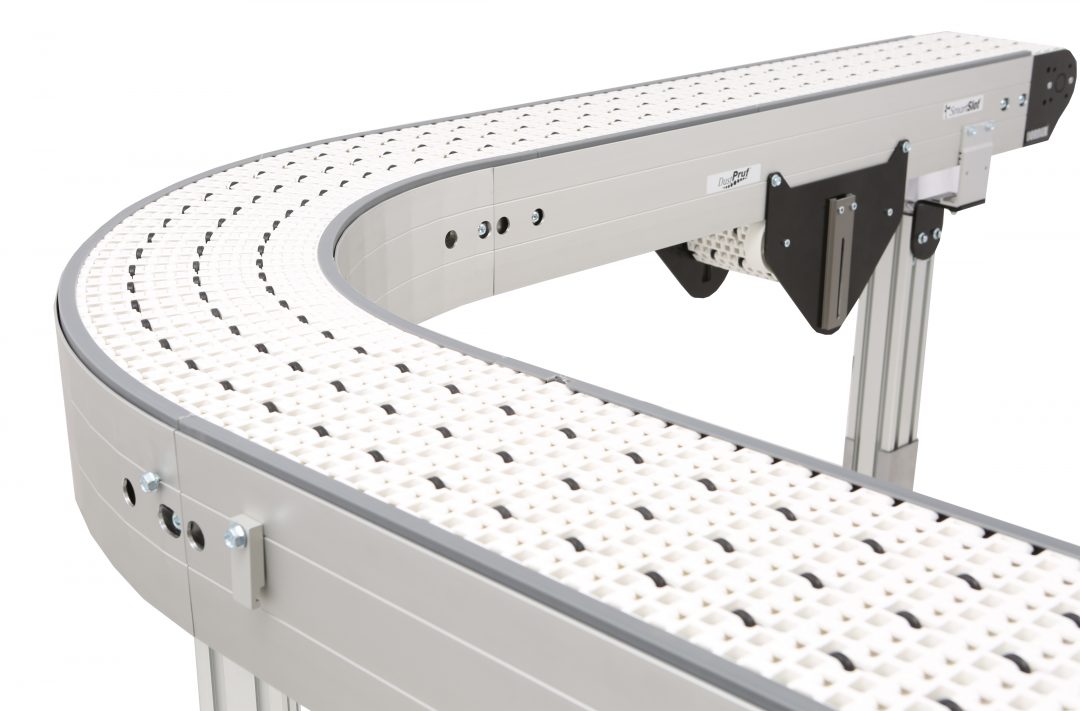
Modular systems are serviceable by design. If a section is damaged, you replace modules instead of replacing the entire belt. That reduces waste, shortens downtime, and makes repairs repeatable. The belt becomes less “a consumable” and more “a maintained asset”. This is a major advantage for operations where stoppages cause missed dispatch windows, spoilage risk, or labour downtime.
The best results come from matching selection to reality: product size, moisture, temperature, sanitation routines, and conveyor geometry. If the conveyor has turns, choose a design suited to cornering like side flex modular belt configurations. If the line has slopes, traction and fabrication become critical, including cleated modular belt or high-grip tops. If the line has transfers and accumulation zones, surfaces like a modular roller belt style top can reduce friction and back pressure.
You wanted the keywords included and bolded without turning the page into nonsense. Done: modular belt near me, conveyor modular belting, modular roller belt, cleated modular belt, side flex modular belt, curved modular belt, incline modular belt, decline modular belt, flat modular belt, ribbed modular belt, flush grid modular belt, food grade modular belt, modular belt for farms, modular belt for bakery, modular belt for butcher, modular belt for abattoirs, modular belt for food grade industry, modular belt for pack houses, modular belt for packaging, tab chain for bottle industry, modular belt for bottle industry.
Conveyor Supplies Africa supports custom manufacturing of conveyors and rollers for non-mining industries. That matters because belt reliability is connected to the conveyor: shaft alignment, sprocket placement, guide geometry, transfer design, and the condition of wear surfaces. We treat the conveyor as a system, not as a pile of parts.
If you want a quick “sanity check” before ordering, measure the belt pitch, count your sprockets, confirm shaft diameter, and send a photo of the guide rails and transfer zones. Most selection mistakes come from missing these basics. When they are confirmed, module replacement stays quick, alignment stays stable, and your spares plan stops turning into guesswork.
Conveyor belt • Plastics • Preventive maintenance • Material handling
Internal links for planning: Conveyor Systems, Conveyor Rollers, Services, Parts & Spares.
Practical note: if your belt issue repeats, it is usually not “bad belting”. It is often a system issue like transfer impact, misaligned sprockets, guide rub, or worn wear strips. Fix the cause and your spares usage drops sharply.
Selection starts with three realities: (1) what you convey, (2) the environment the belt lives in, and (3) the geometry of the conveyor. A belt that performs well in a dry warehouse may not be the best fit for a wash-down food facility. A belt that runs perfectly on a straight conveyor may fail early if forced through tight turns without correct guiding and support.
If you handle food, sanitation and cleanability matter. Use designs and materials aligned to a food grade modular belt requirement, and choose surfaces that support your cleaning workflow. Open designs can help drainage and inspection. Solid designs can help small products. The correct solution is the one that keeps quality consistent and maintenance predictable.
Hygiene teams often use structured cleaning programs and documented controls. If you want a neutral reference point for how food sites manage risk, see HACCP. It is not conveyor-specific, but it explains why cleanability, inspection access, and consistent surfaces matter in real operations.
If you need to move product up or down slopes, choose traction solutions designed for that duty. An incline modular belt often benefits from cleats or high-grip tops, while a decline modular belt may require grip to prevent uncontrolled sliding and product bunching. On slopes, traction is not a luxury. It is stability.
If your layout includes turns, select options engineered for cornering and choose guides that support stable tracking. A curved modular belt solution should be selected with radius, product behaviour, and guide setup in mind. This is where correct guiding prevents chronic drift, edge wear, and unnecessary tension adjustments.
The easiest way to shorten downtime is to pre-plan spares. Your spares kit should match the belt family: pins, sprockets, key modules, guides and wear surfaces. When you stock compatible parts, breakdowns become maintenance tasks, not operational emergencies.
If you are comparing “local” options using modular belt near me, remember: availability matters, but compatibility matters more. The wrong pitch or sprocket setup will cost more than any shipping ever will.
Below is a structured range using your WordPress media URLs and your requested headings. All image ALT text avoids the focus keyword phrase so the “ONE image ALT only” rule stays compliant. Per your instruction, Perforated/Mesh Top Modular Belt is removed.
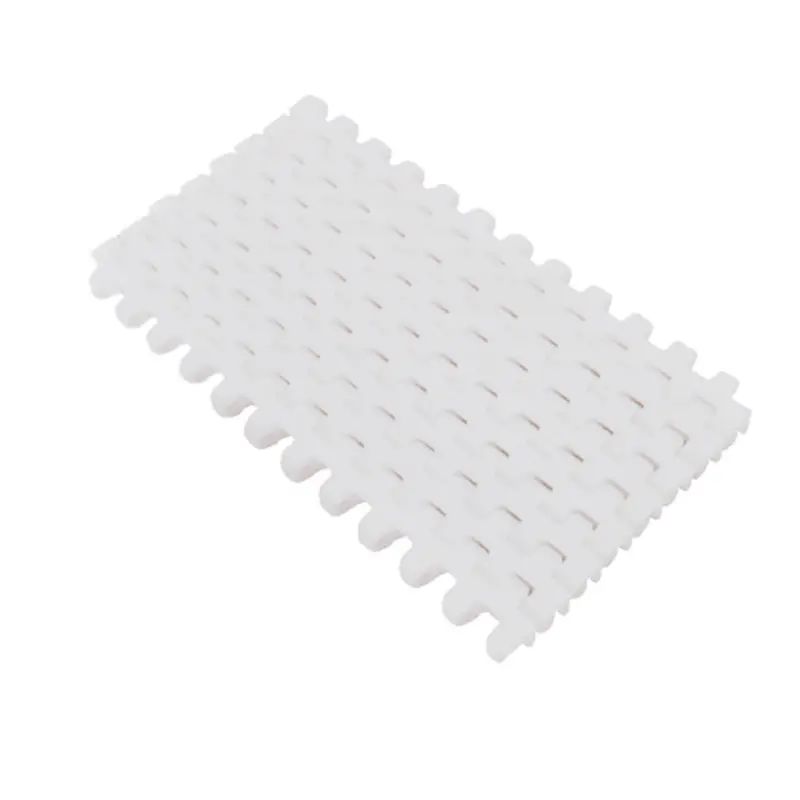
Nylon (PA) options are selected where strength and mechanical stability matter in production conditions.
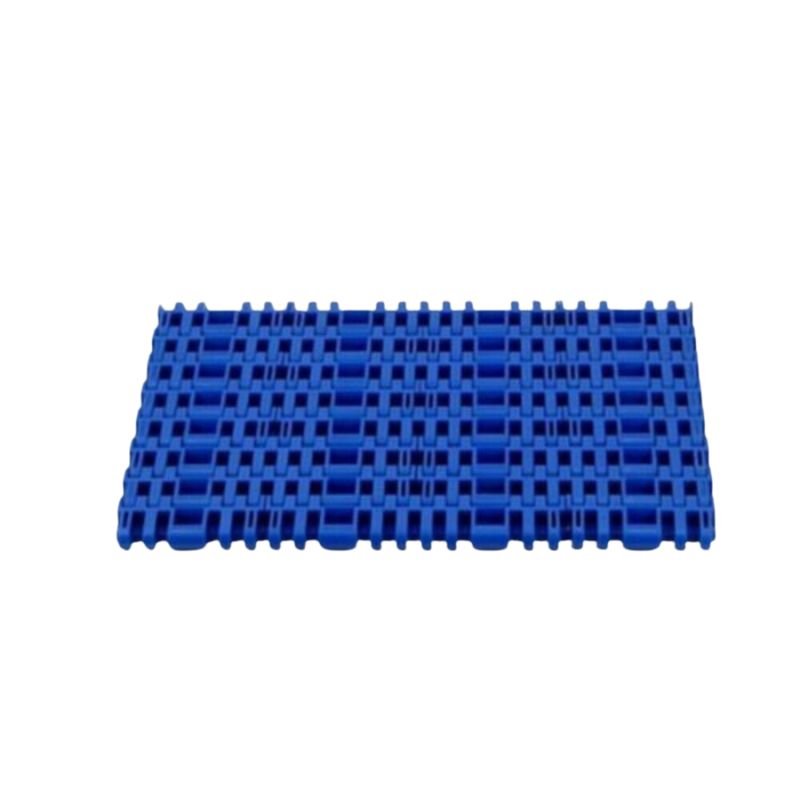
PE options are commonly considered where moisture exposure and smoother travel are important.
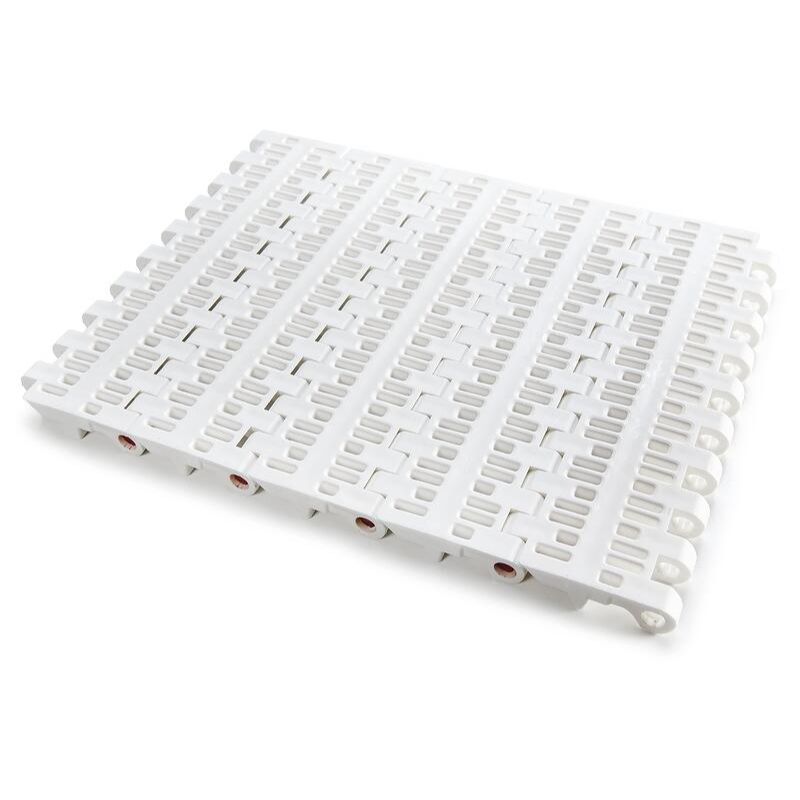
PP options are commonly used for general conveying where practical maintenance and broad usability are important.
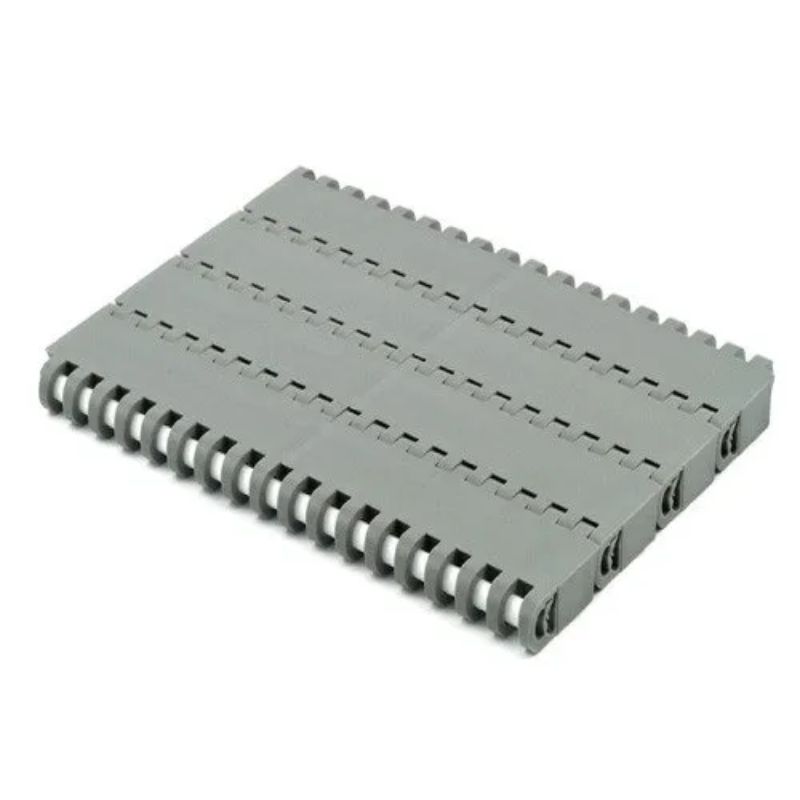
POM options are selected where consistent movement and predictable performance are priorities.
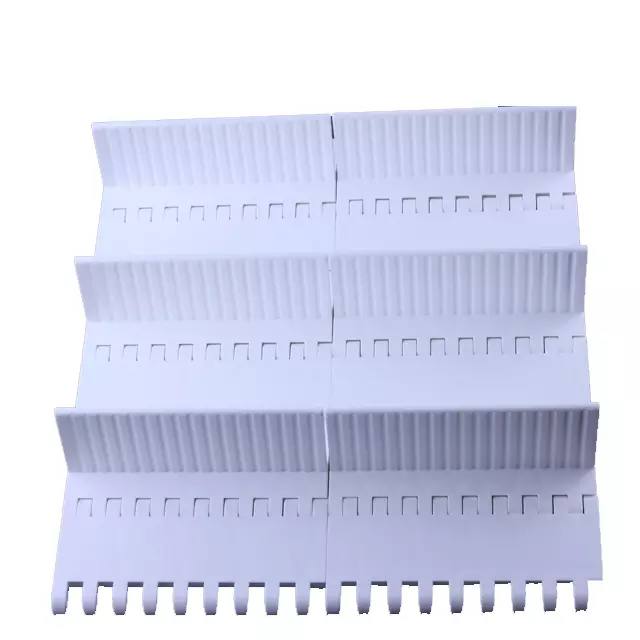
Cleats and flights improve stability and control on slopes and indexing zones.
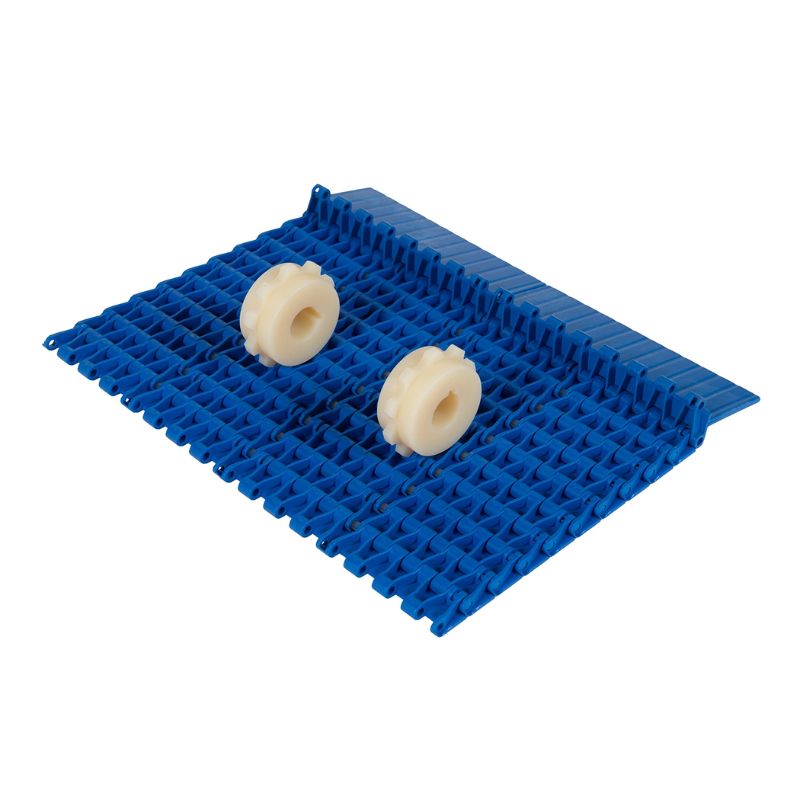
Tracking tabs support stable guiding and reduce drift.
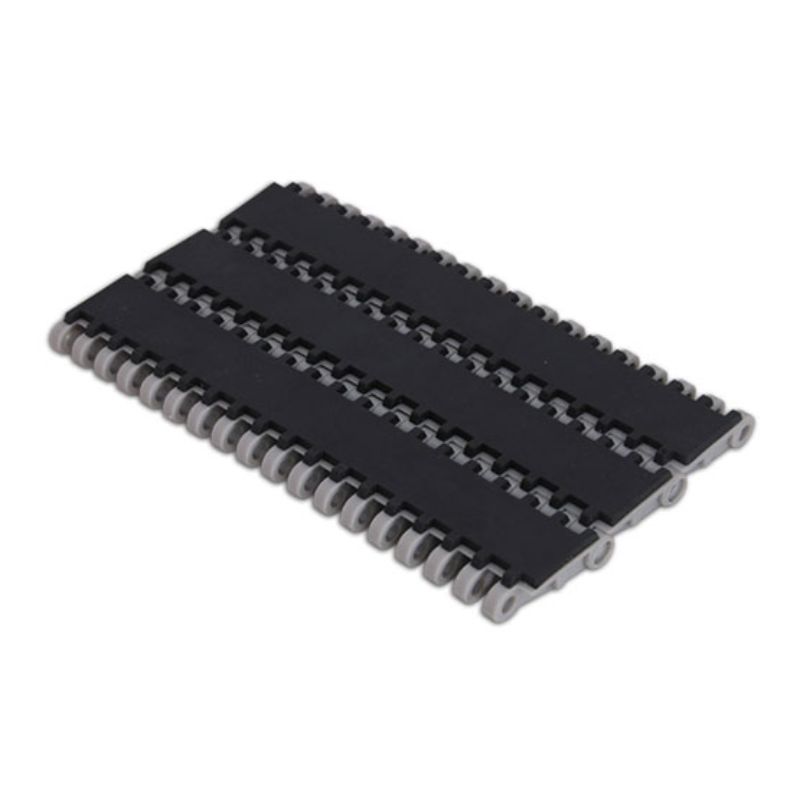
Traction surfaces improve product control for starts/stops, slopes, and handling where slip is the main risk.
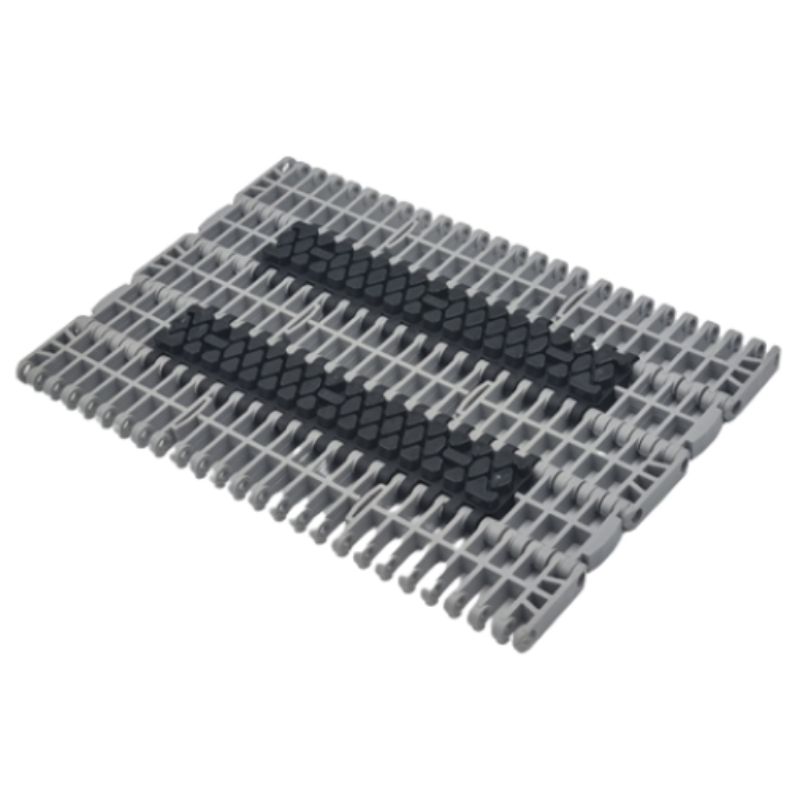
Designed for product stability in motion, especially where acceleration or moisture causes shifting.
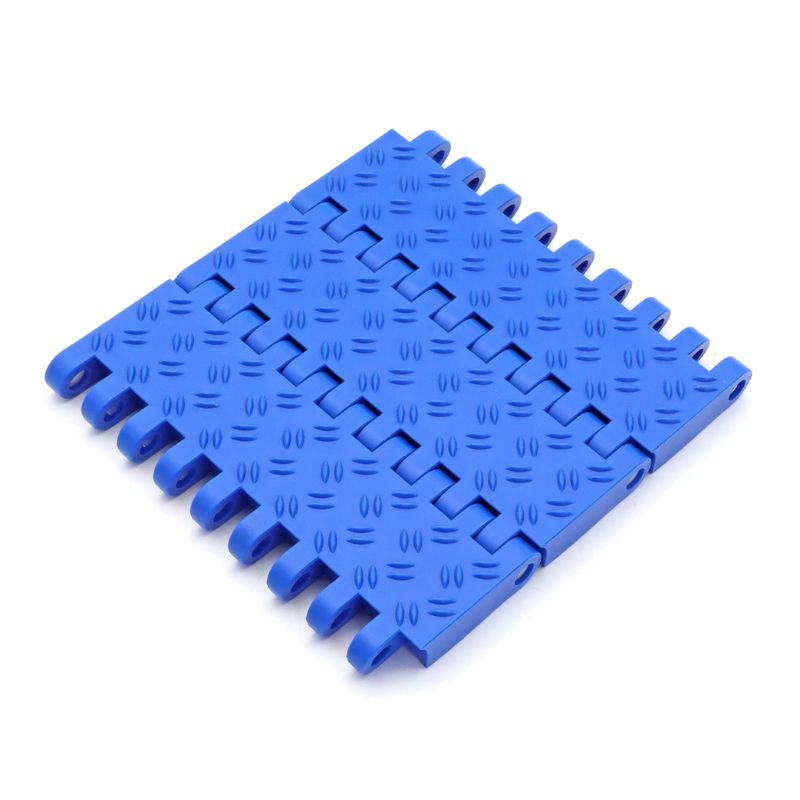
High-traction surface for slopes and zones where product slip is unacceptable.
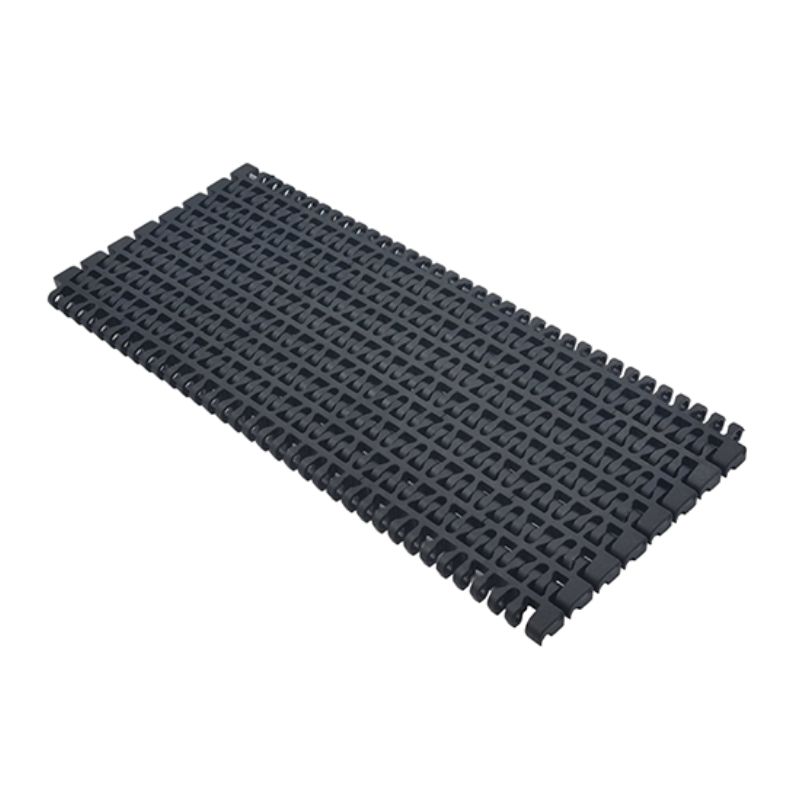
Diamond textures improve grip while supporting predictable product handling and control.
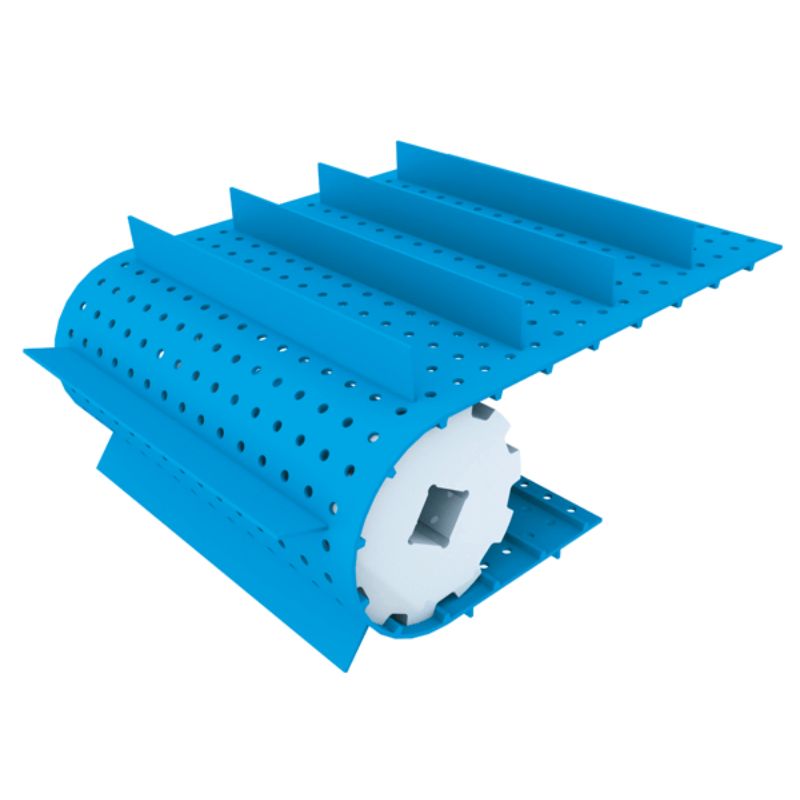
Perforation patterns support airflow and drainage in process zones where moisture management matters.
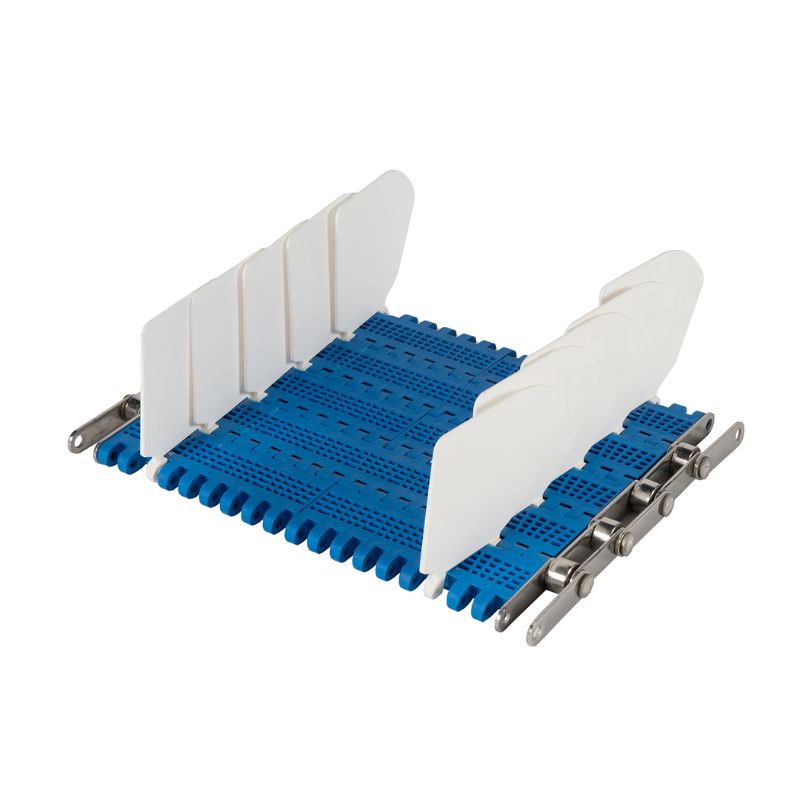
Side guards support containment and reduce spillage, especially on slopes and transitions.
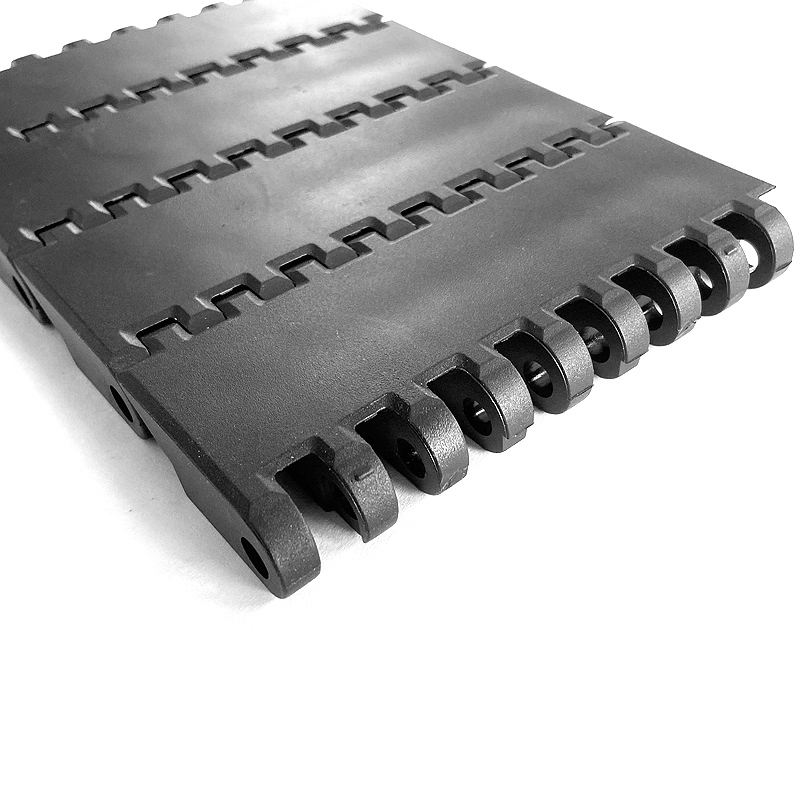
Designed for higher loads and tougher duty cycles in production environments where durability is critical.
Slat and cleat configurations support product spacing and controlled movement where needed.
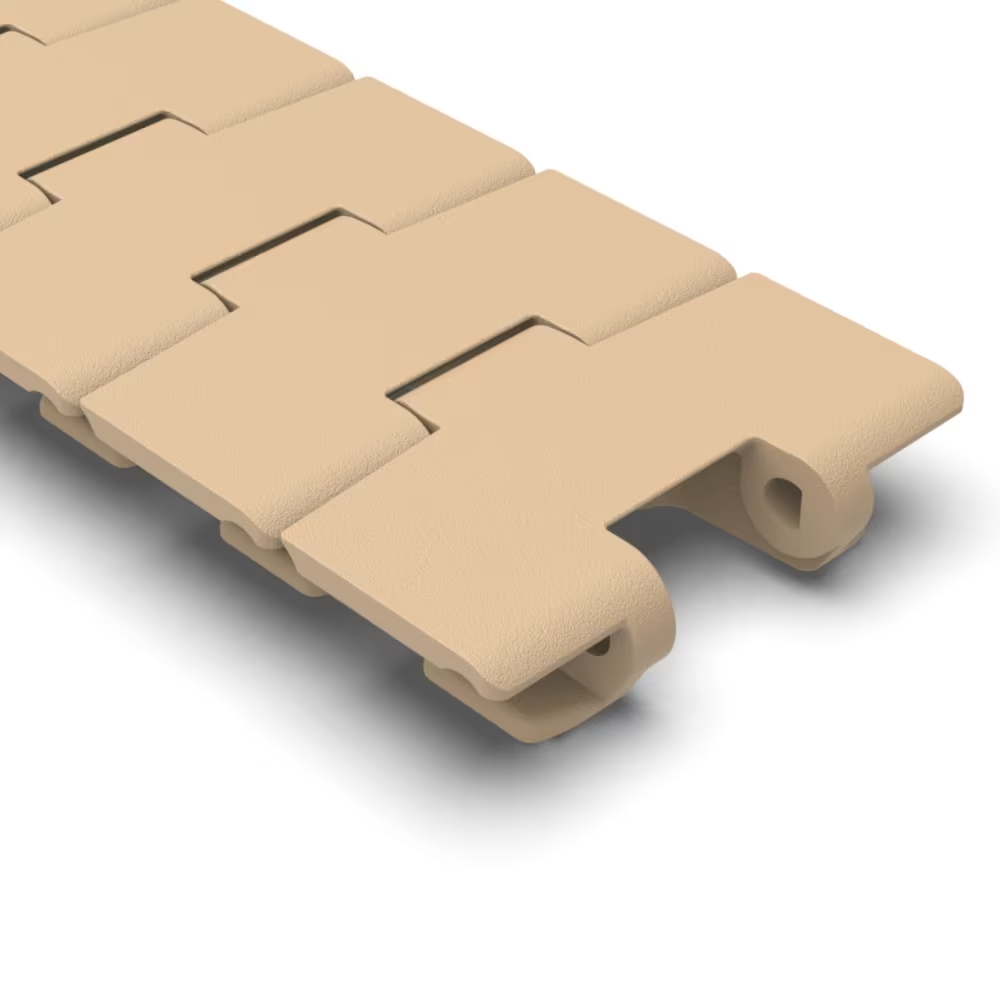
Tab chain designs support guided travel and controlled transport where chain-style conveying is preferred. This is commonly requested as tab chain for bottle industry when stability and guiding are key concerns.
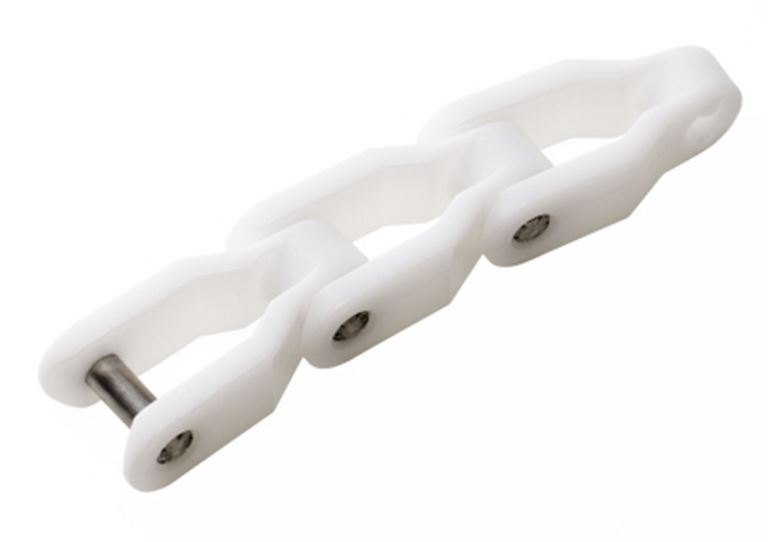
Plastic chain options support production conveying in configured track and guide systems.
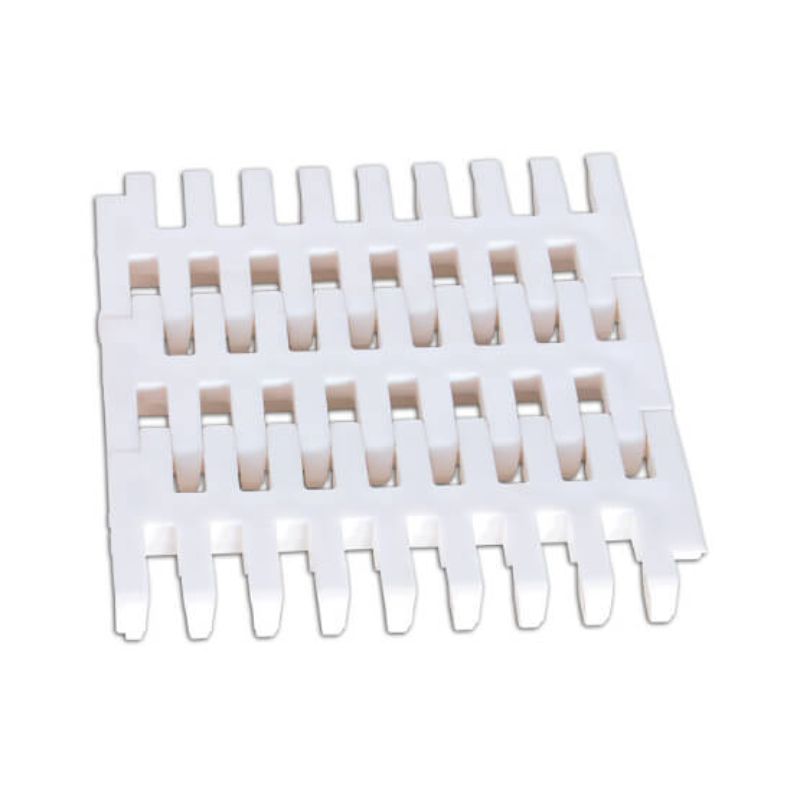
Open grid surfaces support drainage and airflow, improving wash-down practicality and inspection visibility. This is a common request for modular belt for pack houses where moisture management matters.
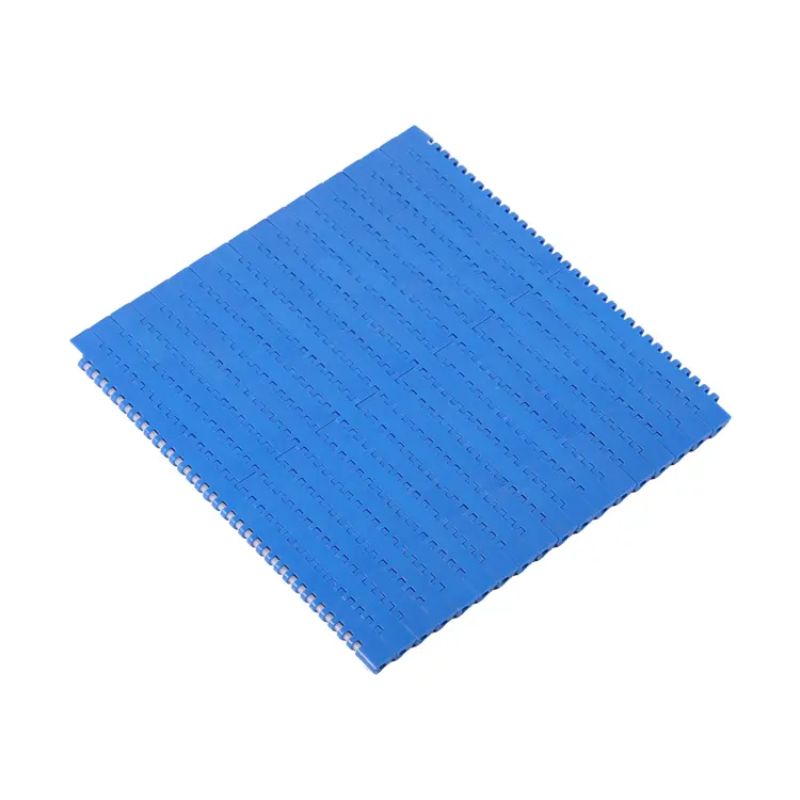
Solid top surfaces provide stable support for cartons, trays and smaller items, especially through transfers. This is frequently selected for modular belt for packaging lines where transfer stability is critical.
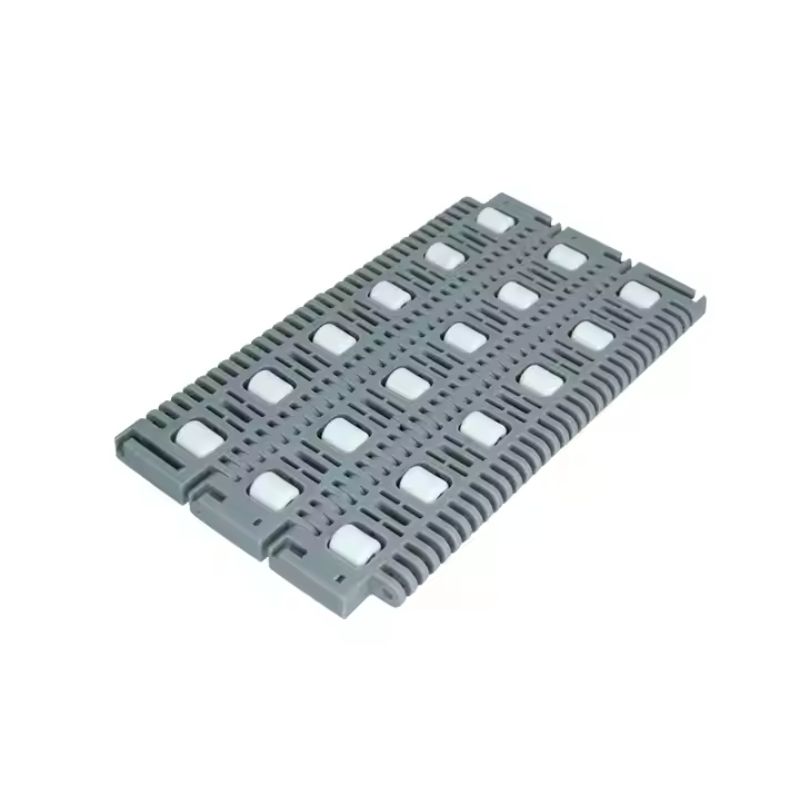
Roller tops reduce friction for accumulation, merging, and gentler handling where back pressure is a concern. If you are searching for a modular roller belt solution, this is usually the feature you need.
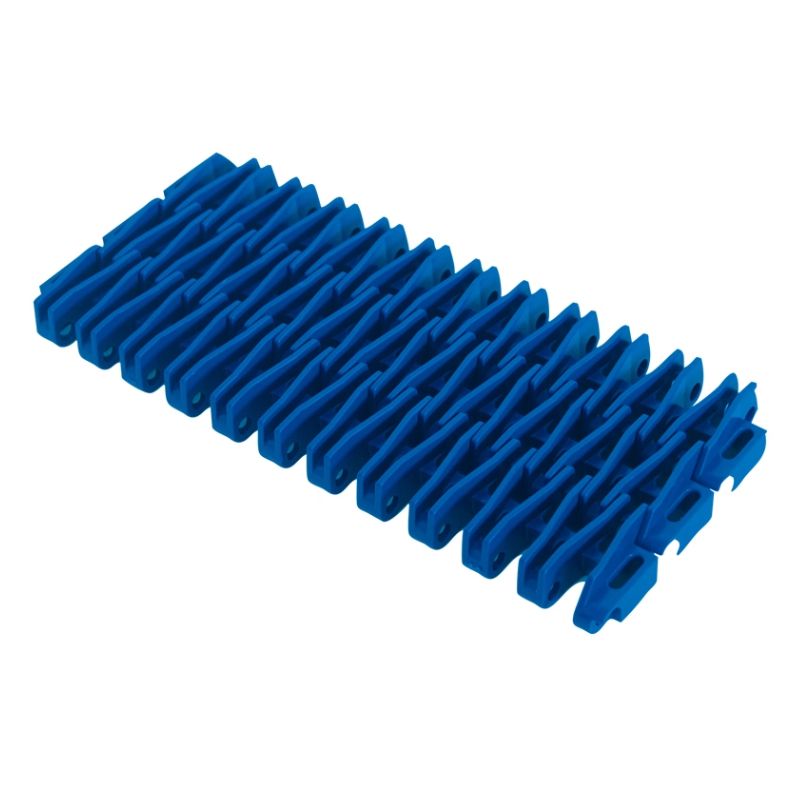
Raised ribs improve traction and stability where standard surfaces are too slippery, supporting applications needing a ribbed modular belt style behaviour.
Spares and system support available: sprockets, pins, replacement modules, guides, and wear surfaces to keep downtime controlled.
The most practical way to select a belt is to start with the industry and the product behaviour. Different industries stress conveyors differently: some are hygiene-heavy, some are constant throughput, and some are debris-heavy environments. We keep it simple and map selection to outcomes. This page excludes mining. Always.
One extra reality that gets ignored: operator interaction. If your line includes frequent manual handling, scanning, or quality checks, your belt must support controlled stopping and restarting without product shifting. That is where grip tops, roller tops, and correctly configured guides earn their keep, because your line behaves consistently under real working conditions, not just during a perfect commissioning test.
Food environments demand predictable cleaning and stable performance. A food grade modular belt solution often benefits from surfaces that support sanitation, drainage, and inspection. For bakeries, you want stable support for trays and consistent travel, which is why modular belt for bakery is a common request. For butchers and abattoirs, you may need durable surfaces and wash-down compatibility, which is why modular belt for butcher and modular belt for abattoirs are included in our selection conversations.
Agriculture and pack houses often deal with moisture, debris, and variable product shapes. Open surfaces can help where drainage matters and reduce pooling. Solid surfaces help when small products need stable support. We include dedicated use cases like modular belt for farms and modular belt for pack houses because selection is driven by the environment and the daily routine of the facility.
Packaging and distribution lines focus on throughput, accumulation, and stable transfers. A modular roller belt style top helps where you need accumulation with reduced friction, while a flat modular belt surface may be better for small items that need stable support through transfers. We include modular belt for packaging because packaging lines combine transfers, merges, and accumulation zones that stress the belt in very specific ways.
Bottling and beverage-style lines often use guided conveying and chain-style solutions. That is where tab chain for bottle industry and modular belt for bottle industry come into play depending on the conveyor design, the required stability, and how the product behaves under accumulation pressure.
Predictable maintenance is not luck. It is spares planning. Modular systems are easy to repair only when the correct parts are on site: compatible pins, sprockets, and spare modules. When parts are missing, “quick repairs” become downtime events. When parts are standardised, repairs become routine.
If your operations span multiple sites, we can help standardise across similar conveyors so the store room stays sane. Standardisation reduces ordering mistakes and improves repair quality across shifts. This matters even more for cross-border sites, where freight lead times should never be the reason production is stopped.
If you run accumulation zones, roller tops and wear surfaces must be maintained. When wear strips are neglected, friction rises, energy usage increases, and the belt is forced to work harder than it should. That shortens service life and increases spares consumption.
Many customers outside South Africa search for suppliers using broad intent keywords and location intent, like modular belt near me. If your team is in another African country and you need supply support for belting, spares, and system components, we can assist with selection and supply. The key is providing clear details: belt width, pitch, top surface, environment, layout, and application.
We support cross-border enquiries through our country pages. Use these internal links to route the correct regional context, then send your belt specs: Nigeria, Tanzania, Zambia, Zimbabwe.
For cross-border sites, the most common challenges are lead time planning, spares strategy, and standardisation. That is why we emphasise building a defined spares kit and confirming compatibility before dispatch. It reduces expensive repeat shipping and prevents downtime caused by ordering incorrect modules, pins, sprockets, or incompatible belt families.
Explore industries (non-mining): Food & Beverage, Packaging, Logistics, Warehousing.
If you are comparing multiple suppliers, ask for a spares recommendation with the quote. Any supplier can sell belting. The better supplier helps you keep running.
CSA supports custom manufacturing of conveyors and rollers for non-mining industries. This matters because belt performance depends on the conveyor. If you have chronic tracking drift, edge wear, or transfer snags, the solution is often in the system: guide design, support surfaces, sprocket alignment, and transfer geometry. We help you fix root causes instead of repeating the same downtime cycle.
We also align systems with parts and spares planning. A conveyor designed for your environment, paired with a defined spares kit, is easier to maintain and easier to scale across multiple sites.
Plenty of suppliers can sell parts. The value is correct selection, correct system matching, and support that reduces repeat downtime. CSA focuses on practical outcomes: stable conveying, predictable maintenance, and a spares strategy that prevents production delays. We supply across South Africa and cross-border Africa, supporting non-mining industries.
If you need help selecting between incline modular belt options with cleats versus friction tops, or deciding whether a side flex modular belt is required for a tight layout, we’ll ask for your conveyor geometry and guide setup first. That’s not “extra admin”, it’s how you avoid buying the wrong thing.
FAQ content below is mirrored into the FAQ schema script at the end of this block.
For hygiene-heavy environments, selection depends on product and cleaning routine. Open surfaces support drainage, while solid surfaces support small product stability. We recommend based on the environment and your product behaviour.
Keep spare modules plus compatible pins and sprockets, along with guides and wear surfaces for high-contact zones. A defined spares kit turns downtime into a predictable maintenance task.
Drift usually comes from guides, side forces at transfers, or misalignment. Fix the system first: guide geometry, sprocket alignment and support surfaces. Tracking features can help when side forces are unavoidable.
Yes. We support selection and supply for African operations, with a focus on correct specification and spares planning to reduce downtime and repeat shipping.
Yes. We support custom manufacturing of conveyors and rollers for non-mining industries and align the selection to system geometry, transfers, guides and spares planning.
