Conveyor Supplies Africa supplies and fabricates PVC conveyor belting solutions for non-mining environments where stable tracking, practical maintenance, and predictable performance matter. Whether you’re moving packaged goods, cartons, trays, parcels, or process materials in controlled environments, we help you specify surfaces and fabrication that match real operating conditions.

Fast quoting tip: send belt width, loop length, smallest pulley diameter, conveyor speed, product type, and a short photo/video of the transfer points. If you don’t know everything, send what you have and we’ll narrow it down fast.
Polyvinyl chloride (PVC) belting is widely used because it balances durability, flexibility, and value across many conveyor environments. A well-selected PVC belt performs in common applications that include packaging lines, distribution centres, warehousing, agriculture handling, and general light-to-medium duty industrial conveying. A PVC belt can be specified with different top covers and backings to suit traction needs, cleanability, noise control, and slider bed performance.
In the real world, PVC belt failures happen early when selection ignores what actually happens on the conveyor: transfers, alignment, pulley condition, and tensioning behaviour. That is why we treat a PVC belt as part of the full system. The goal is consistent flow and predictable maintenance, not “swap the PVC belt again next month.” When the surface and fabrication match the application, a PVC belt becomes a reliability component instead of a recurring expense.
Many throughput losses are predictable: drift that eats belt edges, slip on inclines, uneven product flow at merges, or snagging at transfer gaps. Those are not “mystery problems.” They are design and specification problems. We help correct them by matching top cover grip, construction, and fabrication so your PVC belt suits the duty cycle, the product stability needs, and the housekeeping reality. The result is a PVC belt that tracks, carries, and cleans like it is supposed to.
Below are common surfaces and constructions used across non-mining industries. The right selection depends on traction requirements, the conveyor’s support style (roller bed vs slider bed), cleaning routines, moisture/oils exposure, transfer design, and whether product stability is a priority. Where stability matters on inclines, a PVC belt with texture or cleats can prevent rollback and inconsistent spacing.
A practical guideline: select the least aggressive surface that still achieves control. Overly aggressive textures can trap debris and increase cleaning time. Under-specifying traction shows up as slip and constant micro-stoppages. With correct specification, a PVC belt supports predictable flow and predictable maintenance. In many lines, simply moving to a better-matched PVC belt surface solves “mystery” stop-start behaviour.
Smooth top PVC conveyor belting is widely used for general conveying where clean handling and stable movement are required. A smooth PVC belt supports consistent product flow across long runs and can be a strong choice for packing, inspection, and general transport conveyors. Cleanability is typically straightforward, particularly when transfers and support design are well managed.
If you are troubleshooting scuffing, drift, or edge wear, the PVC belt is often blamed first, but it is usually alignment, pulleys, and transfer geometry. We help you confirm whether the surface choice is correct, or whether your next PVC belt should include guiding, a different backing, or a traction change.
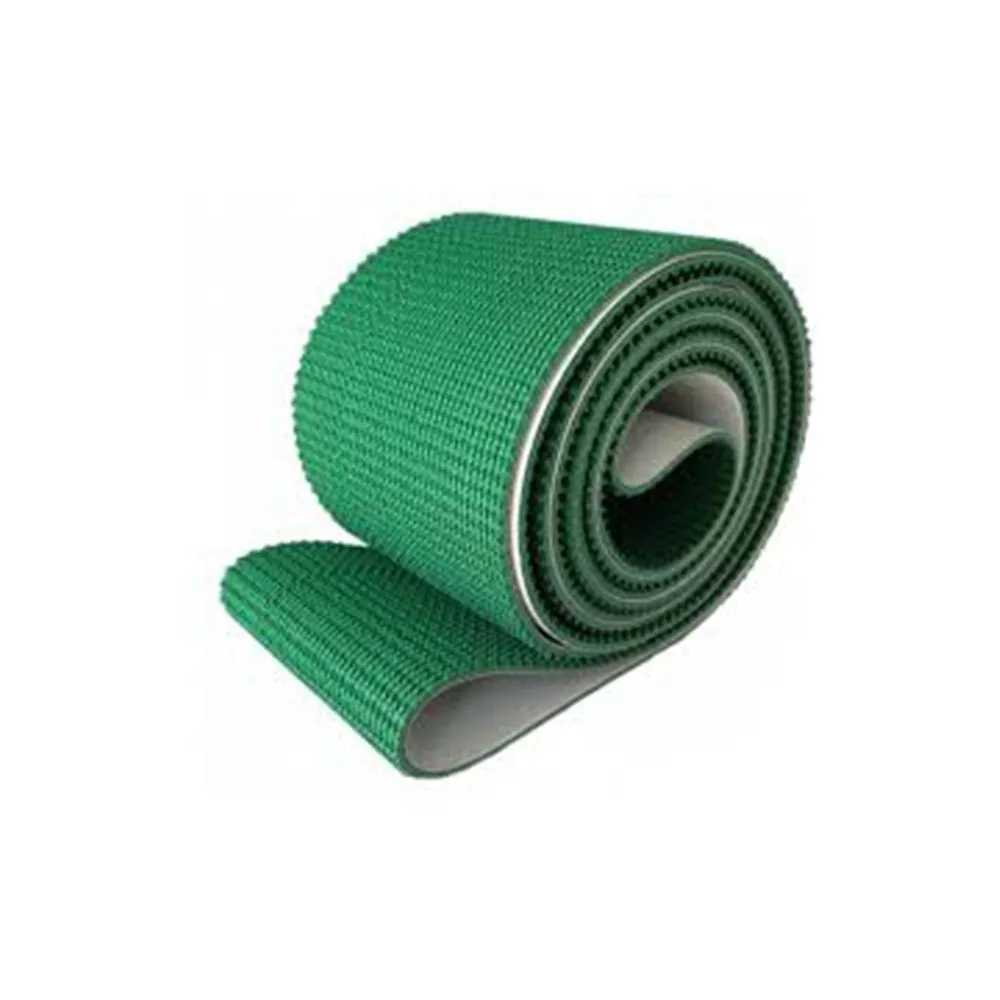
Rough top profiles are designed for better traction where product movement must be controlled, especially on incline and decline conveyors. A rough top PVC belt reduces slip at acceleration points and helps prevent rollback. This is a common option for cartons, trays, packaging and general product handling where stability is part of the line’s productivity.
If your operation experiences frequent stops caused by cartons skewing or sliding, a traction-focused PVC belt can stabilise flow. In many plants, one correct PVC belt change prevents a long chain of downstream issues such as jams, poor scanning, and rework.
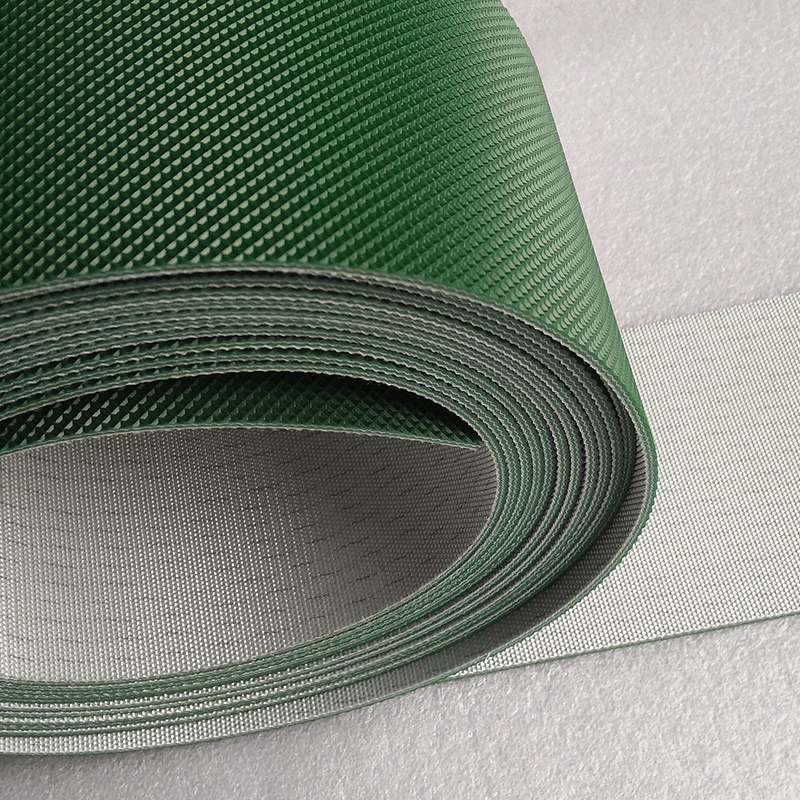
Diamond patterns provide grip without being overly aggressive. This helps maintain stability while reducing marking risk on packaging. A diamond top PVC belt is often used where a balance of traction and cleanability is needed, especially through merges and short incline sections.
Where operators want grip but not deep texture, a diamond top PVC belt can be a practical compromise that still supports product control.
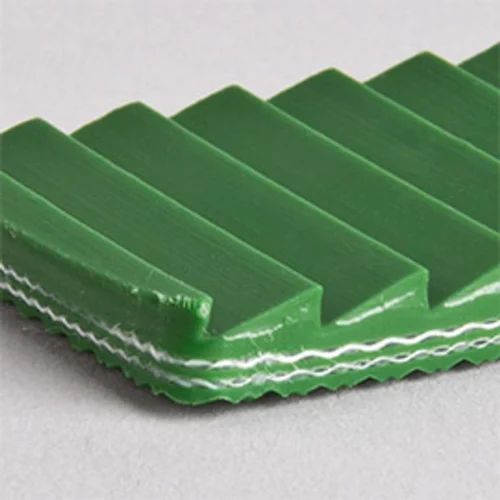
Sawtooth backing can improve drive traction and reduce friction on slider beds depending on the exact belt construction. In compact layouts, a well-chosen PVC belt backing supports smoother running and reduces heat build-up from drag.
If you suspect excessive drag on a slider bed, changing the backing construction on the next PVC belt is often more effective than “tightening it more,” which usually accelerates wear.
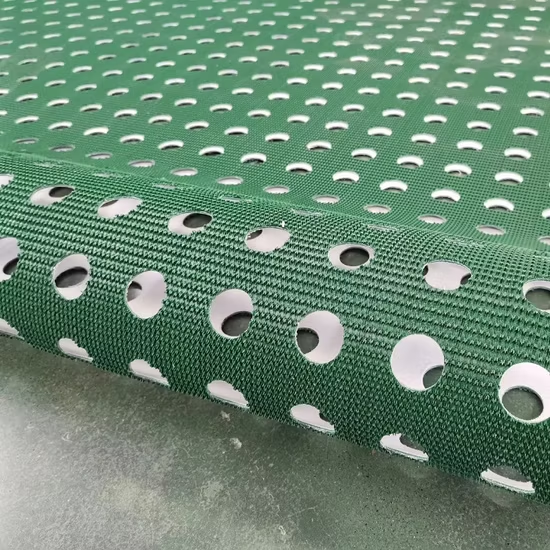
Perforated PVC conveyor belting supports vacuum hold-down conveying to stabilise lightweight products. With the correct hole pattern, a perforated PVC belt can improve positioning and reduce product movement caused by airflow, vibration, or speed changes.
If you are upgrading a vacuum conveyor, the right perforated PVC belt is chosen around product footprint, hole pitch, and vacuum system capability.
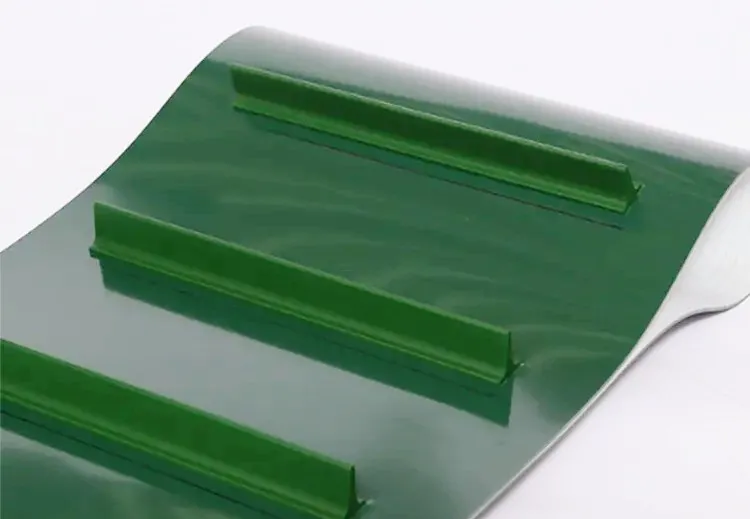
Cleats (flights) provide positive movement on inclines and support consistent spacing. A cleated PVC belt is one of the most reliable ways to control rollback when product stability must be maintained under load.
Cleat height, pitch, and shape should match product size, incline angle, and cleaning requirements so the PVC belt remains practical to maintain.
Fabrication is where most performance gains happen: cleats for incline control, sidewalls for containment, and guides for tracking support. Many “PVC belt issues” are really system issues: poor alignment, worn pulleys, bad transfers, or unsuitable support design. We help resolve root causes by matching fabrication and construction to geometry and duty cycle.
A PVC belt that fits “close enough” often turns into edge wear, drift, and repetitive stoppages. Accurate measurement, correct surface selection, and fit-for-purpose fabrication support stable operation and reduce constant adjustment. The result is a PVC belt that behaves consistently across shifts instead of needing daily intervention.
Cleats prevent rollback and stabilise product flow on incline conveyors. We match cleat height and pitch to the conveyor’s angle and product footprint. The goal is stability without creating unnecessary cleaning effort or snag points. A correctly fabricated PVC belt with cleats reduces repeated slip-related stoppages.
Inclined plane (principle reference only).
Sidewalls reduce spillage and help control loose items at steeper angles. They also reduce spill zones that become daily cleanup problems. Sidewall height and stiffness should match loading behaviour and the conveyor’s layout so the PVC belt remains stable and tracks correctly.
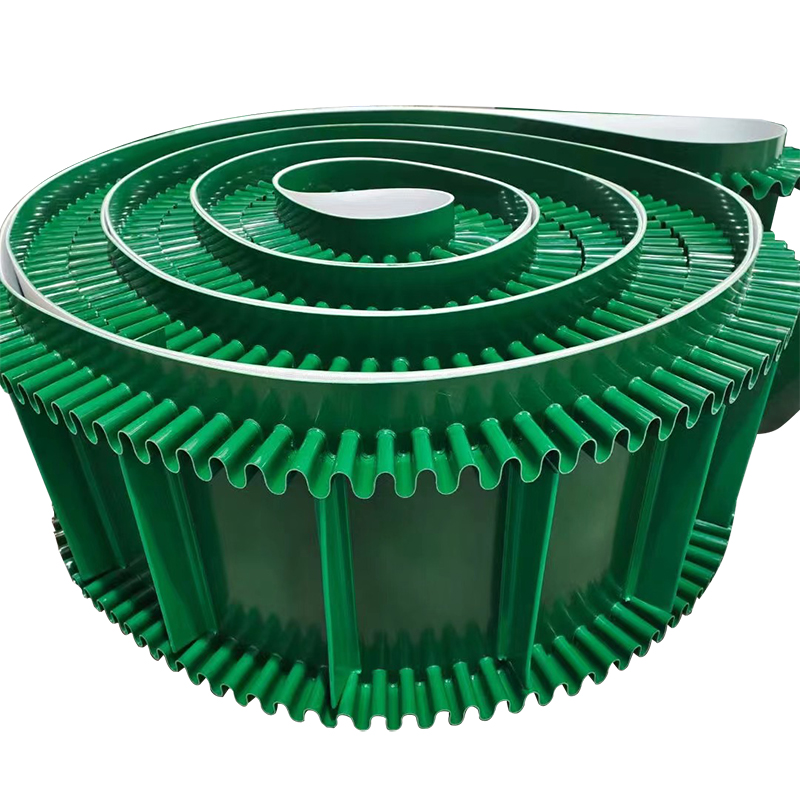
Containment (concept reference only).
Tracking depends on pulleys, tension, alignment, and support design, but guides can assist in demanding layouts. We also advise on transfer points to reduce snagging, product hang-ups, and debris traps that complicate housekeeping. When the system is corrected, the PVC belt runs straight with less edge wear.
If drift is persistent, it is worth checking pulley condition and alignment as part of the fix.
Splice selection affects smooth running, tracking behaviour, and long-term performance. We align splicing options with your maintenance reality: planned downtime windows, on-site capability, and the cost of stoppages. Mechanical fastening can be considered for faster changeovers on certain layouts where a PVC belt must be replaced quickly.
Correct specification reduces drift, slip, and repeat downtime. Use the checklist below to capture the details that change performance. If you’re missing information, photos and a short video of the belt running usually reveal the most important constraints quickly. The more accurate the specification, the more predictable the PVC belt performance will be.
| Spec Item | What it affects | What to send us |
|---|---|---|
| Belt width & length | Fit, tracking stability, edge wear | Width (mm), loop length (mm), or conveyor center distance |
| Surface profile | Grip, slip prevention, cleanability | Smooth / rough top / diamond / sawtooth / perforated |
| Environment | Chemical exposure, cleaning, wear rate | Wet/dry, washdown, oils, chemicals, temperature |
| Product & duty cycle | Wear rate, tracking behaviour, belt tensioning | Product type, weight, units per hour, operating hours |
| Pulleys & transfers | Flex fatigue, splice performance, transfer stability | Smallest pulley diameter, nose bar details, transfer gaps |
| Fabrication add-ons | Incline stability, containment, guiding | Cleats, sidewalls, guides, edge sealing needs |
| Support style | Heat build-up, drag, belt life | Roller bed/slider bed details, wear strips, spacing |
Note: Compliance requirements vary by facility. We supply options suited to non-mining industrial and hygiene-focused environments and align selection to your application details.
PVC conveyor systems are common in operations that demand steady throughput and practical maintenance: packaging, distribution, warehousing, agriculture handling, food handling (where permitted), and general industrial processes. We focus on these environments and do not supply mining applications. In each of these, the right PVC belt surface and fabrication choice protects throughput.
The best performance comes from matching traction, cleanability, and construction to the conveyor’s behaviour: transfers, inclines, merges, and support style. When those elements agree, you get fewer stoppages and more predictable output. In many cases, simply correcting the PVC belt traction or fabrication solves repeated flow issues.
Smooth surfaces support clean handling and stable conveying for many facilities, depending on internal standards. Selection should consider cleaning chemicals, moisture exposure, and transfer design to reduce debris traps and housekeeping burden. A correctly selected PVC belt supports stable movement while keeping cleaning manageable.
Textured surfaces improve stability through merges, accelerations, and incline sections. Stable movement improves scan alignment and reduces rework caused by skewed cartons or inconsistent product flow. A traction-focused PVC belt is a practical fix when product slip is costing time.
Distribution centres rely on stable traction and predictable tracking to keep lanes moving. Consistent conveying reduces stoppages and supports cleaner handling at dispatch. The right PVC belt profile helps maintain stability across acceleration zones and incline sections.
Moisture variability and product sensitivity demand sensible traction choices. The right surface helps stabilise flow while reducing product damage during wash, sort, and packing stages. A well-matched PVC belt supports stable movement without excessive marking risk.
Controlled environments benefit from stable running and predictable changeovers. We can support specification where clean handling and consistent tracking are priority requirements. The correct PVC belt choice here is about stability, cleanability, and predictable maintenance.
Multi-site operations often need a spares-first approach to reduce downtime risk. We align selection with what you can support, replace, and maintain without long delays. Choosing a consistent PVC belt spec across sites can simplify spares, training, and maintenance routines.
Conveyor Supplies Africa is not only a parts supplier. We design, manufacture, and support conveyor systems and components built for real operating conditions. That includes custom manufacturing of conveyors and rollers, belting supply, fabrication, and spares strategy planning to protect uptime after installation. Where a PVC belt is part of the design, we match construction and fabrication to your conveyor geometry.
A conveyor is a system. When one part changes, everything reacts: transfers, tracking behaviour, wear surfaces, rollers, and maintenance needs. When PVC belting is part of your line, geometry must support stable tracking and clean transfers. We help you align the PVC belt, rollers, and transfer zones as a stable package, so you get reliable flow instead of repeated adjustments.
Whether you need a belt conveyor upgrade, a new line, or transfer improvements, we help specify around product flow, cleaning routines, and maintenance access. The goal is predictable conveying, not a conveyor that only behaves when everyone is watching. If the line includes a PVC belt, we ensure it is matched to the actual duty cycle and support layout.
Rollers influence tracking, vibration, and repeat failures at transfer points. We supply and support rollers and key components that stabilise flow. If belts drift or rollers fail frequently, the root cause is usually specification, alignment, or support design. A stable conveyor keeps the PVC belt running straight and reduces edge wear over time.
Conveyor failures repeat when root causes are ignored. Our process is simple: understand the application, specify correctly, and support the outcome. We focus on practical details that change performance: transfers, inclines, duty cycle, cleaning routines, and the maintenance reality on your site. When those are clear, the PVC belt selection becomes straightforward and repeatable.
Product type, load, speed, inclines/declines, environment (wet/dry/washdown), and operating hours. We also review transfer points and common stoppage zones. A short video often saves days of guesswork and helps confirm the correct PVC belt surface.
Surface selection, construction, fabrication needs (cleats/guides/sidewalls), and matching rollers/components. Correct specification is cheaper than repeated downtime and repeated replacements. The right PVC belt tracks better, lasts longer, and reduces stop-start flow.
Spares planning, practical advice, and service support when production pressure is high. For multi-site operations, we also help prioritise spares that protect uptime, including keeping the right PVC belt spec available when it matters most.
Send width, loop length, surface type, smallest pulley diameter, and the environment (washdown, oils, temperature). Include a photo/video of transfer points and we’ll respond with clear options and lead times for the most suitable PVC belt.
We build for uptime and operational simplicity: correct selection, correct fabrication, and the supporting components that keep your conveyor stable. We stay in the non-mining lane on purpose because it keeps our advice relevant to hygiene, product handling, packaging flow, warehouses, and industrial operations. If you need a PVC belt that performs consistently, we match the belt spec to your process and your maintenance reality.
We focus on agriculture, food handling, packaging, logistics, warehousing, pharmaceuticals, and non-mining manufacturing environments. That keeps recommendations practical and aligned to your constraints, including selecting the right PVC belt surface and fabrication for your site.
The cheapest replacement is rarely the cheapest outcome. Correct selection reduces stoppages, product damage, and rework. The goal is predictable output and manageable maintenance, not constant firefighting. A correctly selected PVC belt reduces interruptions and improves flow.
PVC belt, PVC conveyor belt, PVC conveyor belting, green PVC conveyor belt, rough top PVC conveyor belt, diamond top PVC conveyor belt, PVC belt with cleats and sidewalls, PVC sawtooth conveyor belt, PVC vacuum perforated conveyor belt, staggered sawtooth PVC conveyor belt, PVC belt conveyor, polyvinyl chloride conveyor belt, PVC belt supplier South Africa
PVC conveyor belting is commonly used for food handling (where permitted by facility standards), packaging, logistics, warehousing, agriculture handling, and general industrial conveying. In these environments, choosing the right PVC belt surface and construction supports stable tracking and predictable maintenance.
Smooth top is typically used where clean handling and general conveying are priorities. Rough top and diamond patterns add traction for incline stability, merges, and controlled product movement. The best choice depends on product type, incline angle, and cleaning routine, and whether the PVC belt must resist slip under load.
Yes. We can supply and fabricate belting with cleats (flights), sidewalls, guides, and other fabrication features to improve incline stability, reduce spillage, and support tracking. Fabrication is matched to conveyor geometry and operational reality so the PVC belt remains stable in service.
Send belt width, loop length, surface type, smallest pulley diameter, conveyor speed, and the environment (washdown, oils, temperature). A photo/video of transfers helps identify constraints and speeds up correct selection for the most suitable PVC belt.
No. Conveyor Supplies Africa focuses on non-mining conveyor applications only, including agriculture, food handling, packaging, logistics, warehousing, pharmaceuticals, and general manufacturing, where the right PVC belt selection supports clean handling and consistent flow.
Yes. We support custom manufacturing of conveyors and rollers, and we supply parts, spares, and service support to keep systems running reliably. This includes conveyor upgrades where the PVC belt, rollers, and transfers must work together as a stable package.
Request a quote and we’ll respond with clear options based on your application. Call Justin: +27 67 111 3159 · Call Jessica: +27 67 755 5527 · Email: sales@conveyorsupplies.co.za
