Generic selectors
Exact matches only
Search in title
Search in content
Post Type Selectors
Dock efficiency • Faster loading • Reduced handling • Africa-wide support

telescopic conveyors for faster truck loading and container unloading

Docks are where good warehouse plans go to die. The “simple” job of loading or offloading becomes complicated fast when vehicles arrive in bursts, carton shapes vary, the staging space is tight, and people start walking product because the transfer point is too far away. Conveyor Supplies Africa supplies extendable dock systems that keep the working edge closer to the operator and help stabilise flow in non-mining environments. We also support conveyor services, conveyor parts and spares, custom conveyor manufacturing, and custom manufacturing of conveyors and rollers to keep your operation reliable long after installation.

The core idea is predictable movement: fewer touchpoints, fewer awkward lifts, and less time wasted crossing the same few metres repeatedly. If your site runs seasonal peaks, tight dispatch cut-offs, or high receiving volumes, improving dock flow is one of the most direct ways to lift overall performance, without rebuilding the entire facility.

Dock speedShorter turnaround for loading and offloading
Safer handlingLess carry distance and fewer repeat lifts
Flexible reachExtend into vehicles, retract to clear dock space
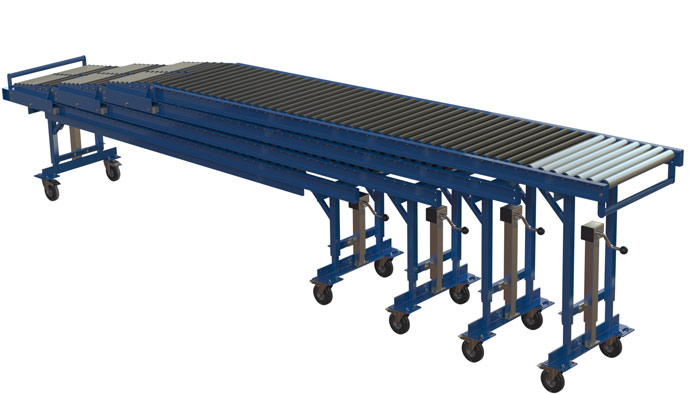
Telescopic conveyors for dock loading and container unloading
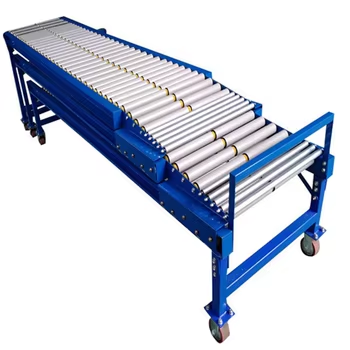
Closed dock conveyor configuration for compact bay footprint

What are telescopic conveyors and how do they work?

An extendable dock system built for real loading patterns

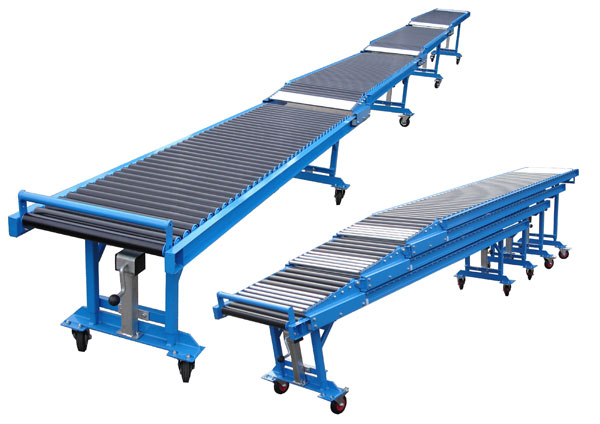
At a practical level, these are dock conveyors with extendable sections that slide outward into a vehicle and retract when the bay needs to clear. The system is designed to reduce “bridging” by hand, stabilise flow at the vehicle threshold, and create a consistent transfer point for cartons and packaged goods. Most solutions use rollers as the transport surface, which is why telescopic roller conveyor formats remain common in distribution and warehousing.

Operators tend to perform better with a stable work point. When the transfer edge stays close to the task, teams move product forward instead of walking back and forth. That translates into cleaner staging, fewer “temporary piles,” and fewer interruptions during peak.

For broader context, Wikipedia (dofollow): conveyor system and material handling.

Why extendable reach matters more than most people admit

A fixed conveyor ends at a fixed point. A dock never behaves in a fixed way: vehicle positions shift, load depth varies, and peak-time pressure changes how people move. Extendable reach reduces wasted steps, keeps the working edge closer to the operator, and improves the rhythm of transfer into the receiving or staging area. In busy warehouse conveyor systems, this is often the quickest improvement you can make without redesigning the entire floor.

This page excludes mining sector content. The focus is non-mining operations including logistics, warehousing, packaging distribution, agriculture packhouses, pharmaceuticals, and general manufacturing.

In most cases, the best results come from combining the dock solution with sensible staging rules. Without staging discipline, even the best equipment ends up feeding chaos faster. With staging discipline, the dock becomes predictable, and predictable is where productivity lives.

Benefits of extendable dock loading solutions

Closed configuration showing compact dock footprint

Shorter turnaround and cleaner dock flow

Faster loading is not just speed, it’s consistency. Extendable dock equipment helps teams keep cartons moving with fewer stops, fewer carry steps, and fewer “we’ll move it later” piles.

  • Reduced carry distance and manual bridging
  • More predictable loading and offloading rhythm
  • Lower congestion at the bay edge

This also supports better coordination between receiving, put-away, picking, and dispatch. When the dock stops being a bottleneck, the rest of the site gets to operate in a calmer, more planned way.

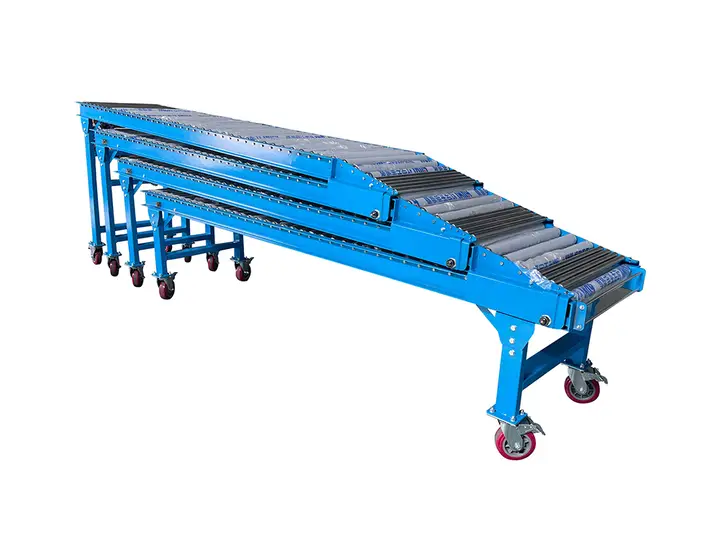
Extendable sections showing robust structure and reach

Flexible reach for mixed vehicle profiles

Vehicle variability is normal. The value of an extendable conveyor is that it adapts to the work instead of forcing people to adapt with unsafe shortcuts.

  • Supports trucks, trailers, and container interfaces
  • Helps maintain flow as conditions change
  • Pairs well with logistics conveyors layouts

Mixed fleets are common across Africa. A system that can handle variation without constant reconfiguration reduces delays and operator frustration. That matters when your dock is measured in minutes, not “we’ll sort it out later”.

Dock loading setup supporting carton flow

Better control and safer handling behaviour

A stable dock loading conveyor setup reduces rushed lifting and repeated twisting. That generally lowers fatigue and damage risk while improving pace.

  • Less manual “bridge the gap” work
  • More consistent transfer into receiving zones
  • Supports training and standard work routines

Safety improvements are often a side effect of removing unnecessary steps. When operators do less awkward movement, they make fewer mistakes. Less damage, less rework, less noise.

Tip that saves money: Many sites overspend chasing “automation” when the real issue is unstable dock routines. Start with controlled flow and proper staging, then decide whether powered systems or PLC conveyor controls add measurable benefit.

System types for truck and container work

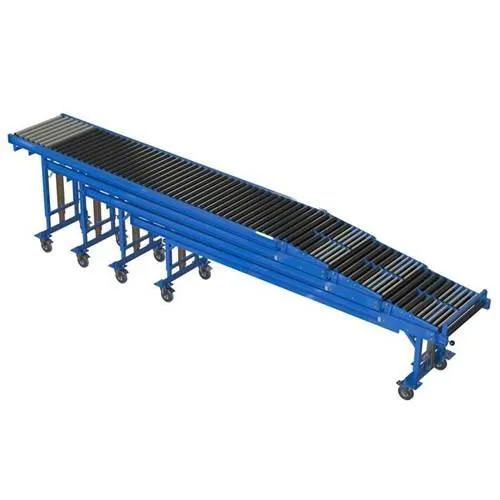
truck loading telescopic conveyor

This format is designed for consistent dispatch routines, bringing the transfer point into the vehicle to reduce wasted motion. It is often selected by operations where outbound performance is measured tightly, and where missed cut-offs create expensive downstream consequences.

Where bay usage is stable, fixed installation tends to provide better repeatability than moving equipment between doors. Where bay usage is unpredictable, mobility becomes more valuable than maximum throughput.

container loading telescopic conveyor and receiving flow

Container work often needs deeper reach and controlled transfer. Using an extendable system reduces repeated carrying inside the container and supports steady loading. On receiving, it functions as a container unloading conveyor to move cartons smoothly into staging or sorting.

Inbound performance improves when the receiving zone stays clear. Controlled transfer reduces “pile-ups” that make scanning, sorting, and put-away harder than it needs to be.

gravity telescopic conveyor for simpler operations

Gravity-based formats suit operations where slopes can support carton movement and simplicity is a priority. They can be a practical choice where power availability is limited at certain doors or where the operation prefers reduced complexity.

Gravity still depends on good rollers, alignment, and discipline. If cartons are unstable or packaging is inconsistent, powered movement may be a better fit.

automated telescopic conveyor for repeatable control

Where throughput is high and process needs to stay consistent, automation and sensors can help regulate flow. For control logic context, Wikipedia (dofollow): programmable logic controller.

Automation is useful when it produces measurable gains: stable speed, fewer interruptions, and better integration into broader dock rules. If it just adds complexity, it’s not an upgrade.

Product options in card format

Fixed dock installation for consistent bay usage

fixed telescopic conveyor for dedicated high-volume bays

Best suited where a bay is consistently used for loading or receiving and you want repeatable performance with minimal repositioning. This is the straightforward “build it once, use it every day” approach.

  • Strong fit for stable bay patterns
  • Optimised footprint and consistent operation
  • Lifecycle support via conveyor services

For busy sites, fixed installation often supports better training outcomes. Operators learn one routine and perform it well, instead of improvising.

Mobile dock system with extendable reach

mobile telescopic conveyor for shared dock operations

A practical solution when bays are shared and usage changes. It’s flexible, but it needs a clear routine so set-up stays consistent. The goal is reliability, not a daily “where do we put it today?” debate.

  • Move between bays as required
  • Ideal for mixed schedules and varied access
  • Integrates with warehouse conveyor systems planning

Mobility works best with visible floor markings, staging rules, and a simple handover process between shifts.

Roller format designed for cartons and parcels

telescopic roller conveyor for cartons and parcel flow

Rollers suit boxed goods and parcels because they maintain stability and predictable movement at the dock threshold. For many distribution operations, roller formats remain the most practical and cost-effective solution.

  • Excellent for parcel and carton operations
  • Supports gravity or powered configurations
  • Uptime planning via conveyor parts and spares

Where packaging is inconsistent, we’ll recommend a configuration that protects the product first, then improves speed.

Extendable reach section for variable depth handling

extendable conveyor reach sections

Designed to keep the working edge close to the operator as the vehicle depth changes, improving flow and reducing wasted motion. This is especially useful during container work where the “work point” moves continuously.

  • Improves reach into trucks and containers
  • Supports steady transfer at the dock edge
  • Works well with disciplined staging layouts

The less walking and repositioning required, the easier it is to maintain output during peak periods.

Gravity dock conveyor solution

gravity telescopic conveyor for cost-effective dock handling

A cost-effective approach where slopes and load profiles suit gravity movement, and simplicity is a primary operational goal. It reduces mechanical complexity and can be a strong fit for predictable carton flow.

  • Lower complexity for suitable environments
  • Useful where power access is limited
  • Relies on good rollers and alignment

If your operation includes variable packaging, mixed sizes, or fragile goods, consider powered movement for better control.

Specification tables for selection

Extendable length selection (typical ranges)

Extendable length Typical fit Best for Notes
3 m Vans and short trucks Light parcels, compact docks Best where space is limited and cycles are frequent
6 m Medium commercial trucks Cartons and FMCG handling Common selection for mixed operations
9 m Large trucks and container interfaces Deeper reach and variable positions Useful where bay behaviour changes daily
12 m Long trailers, high-throughput bays High-volume loading/unloading Often paired with powered options and controls
Custom Non-standard layouts Special reach requirements Delivered via custom conveyor manufacturing

Selection should be based on your real vehicle depth and working space. Oversizing increases cost and footprint. Undersizing increases walking, delays, and operator fatigue. A quick site assessment usually clarifies the correct reach and staging plan.

Weight class and application guide

Weight class Load profile Typical use Recommended setup
Light-duty Small parcels and light cartons E-commerce, parcels, small boxes telescopic roller conveyor or gravity where slope works
Medium-duty Standard cartons Retail and FMCG distribution Robust rollers and stable frame design
Heavy-duty Dense cartons Industrial packaging movement Powered drive often preferred
Custom heavy-duty Special requirements Non-standard handling custom conveyor manufacturing to match duty cycle

Getting the duty cycle right is more important than chasing a “bigger is better” approach. The real cost of the wrong spec is downtime, product damage, and constant rework.

Fixed vs mobile comparison

Criteria fixed telescopic conveyor mobile telescopic conveyor
Dock usage Dedicated bay Shared bays
Flexibility Lower Higher
Throughput potential High Medium to high
Best for Stable vehicle patterns Changing schedules and mixed bays
Operational risk Lower (consistent setup) Depends on repositioning discipline

Fixed suits operations that want predictable performance and repeatable training. Mobile suits operations that need flexibility and can enforce a disciplined set-up routine.

Planning checklist before selection

Dock reality checks (that prevent bad purchases)

Specify around the truth: vehicle types, average load depth, and peak-time behaviour. Equipment improves flow, but it does not fix chronic yard chaos or missing dock discipline.

  • Vehicle mix (trucks, trailers, containers, vans)
  • Dock height, yard slope, and parking alignment habits
  • Carton variability and packaging stability
  • Receiving vs dispatch: identify the real constraint
  • Space available for staging and safe operator movement

If you already have internal runs, the dock solution should complement the wider layout. Connect planning to Systems, and align uptime support through Services.

For sites with frequent product changes, we’ll recommend allowances for adjustment, cleaning access, and safe maintenance zones. Those “small” details are where uptime lives.

Performance targets that matter

“Faster” is not a target. Better targets are: reduce vehicle time at the bay, reduce product touchpoints, and keep flow consistent at peak. These are measurable outcomes that extendable dock equipment is designed to support.

  • Vehicles per shift (baseline vs target)
  • Cartons per hour at the bay edge
  • Damage rate during loading/unloading
  • Downtime time-loss from missing spares
  • Fatigue and strain points during peaks

Protect uptime by aligning service planning early through Services and stocking critical items via Parts & Spares.

The best-performing docks treat spares like insurance. Not “maybe later”. Real insurance. When you need it, you need it immediately.

Dock SOP: how to get consistent results (without drama)

A simple routine that protects throughput

Most dock “problems” are routine problems. If you want consistent output, standardise how the bay is prepared, how staging is built, and how the transfer point is managed. The quickest wins come from a repeatable start-up routine and a shut-down routine that keeps the bay ready for the next vehicle.

  • Pre-check rollers, guards, and travel path before every shift change
  • Confirm staging layout: clear lanes, stable stacks, and safe walk zones
  • Assign one person as the bay “owner” to prevent conflicting decisions
  • Use a basic downtime log to identify recurring faults and spares needs
  • Schedule monthly inspections as part of conveyor services planning

This is where conveyor parts and spares planning pays off. When the bay is mission-critical, waiting “until something breaks” is a strategy. It’s just the kind of strategy that makes everyone hate Mondays.

If your operation spans multiple shifts, build handover notes into the SOP. Small changes like documenting the bay position, staging condition, and any unusual packaging behaviour can prevent the next shift from restarting the same mistakes.

Suggested recommendations by operation type

High-volume dispatch docks

For consistent outbound targets, fixed installation is usually the cleanest recommendation. It supports repeatable routines and simpler training. Build the spares plan early and you avoid downtime becoming a “weekly surprise”.

Pair it with clear staging lanes and dispatch rules, and your dock becomes predictable. Predictable output is what keeps costs under control.

Shared bays and changing schedules

If multiple bays share equipment, mobile formats provide flexibility. They work best with a documented repositioning routine and clear bay ownership, so setup stays consistent and safe.

If you struggle with routine enforcement, fixed installation may still be the better long-term choice, even if it feels less “flexible” on paper.

Parcel and FMCG distribution

Parcels and cartons tend to benefit most from roller formats and disciplined staging. This integrates well with warehouse conveyor systems where dock-to-sort flow must remain predictable during peaks.

If you need belt-based internal movement, align the dock with your Belting approach and confirm the best interface into the internal run.

Container-focused work

Container work often needs deeper reach and controlled transfer. Reducing repeated carrying inside the container is where extendable dock solutions earn ROI quickly, especially during seasonal surges and tight cut-offs.

The most common mistake is ignoring staging space. You cannot unload efficiently if you have nowhere to place product safely once it exits the vehicle.

custom conveyor manufacturing for dock and distribution systems

Fit-to-site design (because your dock is not a template)

Conveyor Supplies Africa provides custom conveyor manufacturing for layout constraints, height requirements, duty cycle, and vehicle profiles. We also support custom manufacturing of conveyors and rollers where roller spec and wear profiles require purpose-built components.

  • Custom lengths and structural specification
  • Integration with warehouse conveyor systems
  • Support via conveyor services planning
  • Uptime protection with conveyor parts and spares

Manufacturing support includes practical considerations like maintenance access, guard placement, and serviceability. If the maintenance team can’t reach the wear points easily, the system will degrade faster than it should.

Lifecycle support after installation

A dock system must outlive the initial project team. That’s why we keep the support ecosystem connected: Services, Parts & Spares, Components, and related Belting.

If you scale operations, we can support staged upgrades so you don’t have to replace everything at once. This is where long-term planning becomes a cost advantage.

Why Choose Conveyor Supplies Africa

Dock equipment designed for operational use

Dock-first engineering

We specify equipment around real dock behaviour: mixed vehicles, time pressure, and daily repetition. That’s how systems become dependable assets, not “nice ideas”.

Spares strategy for uptime

conveyor parts and spares support

We help plan critical spares that keep you running. Downtime is expensive, and it always arrives on the day you are already behind.

Service and lifecycle support for dock conveyors

conveyor services and lifecycle support

Inspections, maintenance, upgrades, and improvements are part of keeping dock flow reliable. You don’t want performance depending on luck and overtime.

Wikipedia context (dofollow): see warehouse and logistics. Improving dock velocity is one of the most direct ways to improve overall site performance.

Countries and industries we serve (non-mining)

Countries we supply

We supply non-mining dock and distribution solutions across Africa through our countries network:

Cross-border operations often require simple, robust solutions that are easy to maintain. That’s why we focus on serviceability, spares planning, and build quality that fits real operational conditions.

Industries we support

We focus on non-mining industries with high movement volumes and dock sensitivity:

Different industries have different dock priorities. Food and beverage often prioritises hygiene and controlled movement. Pharmaceuticals prioritise traceable routines and careful handling. Packaging and distribution prioritise speed and staging discipline. Agriculture packhouses need consistency during seasonal peaks and rapid dispatch windows.

Keyword coverage (for Rank Math alignment)

The following target phrases are included for SEO relevance, without repeating them excessively: telescopic conveyors, telescopic conveyor systems, truck loading telescopic conveyor, container loading telescopic conveyor, telescopic roller conveyor, extendable conveyor, dock loading conveyor, container unloading conveyor, warehouse conveyor systems, logistics conveyors, gravity telescopic conveyor, mobile telescopic conveyor, fixed telescopic conveyor, automated telescopic conveyor, PLC conveyor controls, conveyor parts and spares, conveyor services, custom conveyor manufacturing, custom manufacturing of conveyors and rollers.

FAQ

What are these extendable dock systems used for?

They are used for loading and unloading where reach into a vehicle reduces manual bridging and stabilises the transfer point at the bay edge.

What’s the difference between gravity and powered options?

Gravity options rely on slope and carton behaviour, while powered options deliver consistent movement at higher throughput or less predictable conditions.

Can you supply custom sizes and layouts?

Yes. We provide custom conveyor manufacturing and custom manufacturing of conveyors and rollers to match dock constraints and duty cycles.

Do you support spares and maintenance?

Yes. We support conveyor parts and spares plus ongoing conveyor services to keep performance reliable over time.

Do you supply these systems for mining?

No. This page excludes mining sector content. These solutions are positioned for warehousing, logistics, packaging distribution, pharmaceuticals, agriculture packhouses, and general manufacturing.

Page Contents