Generic selectors
Exact matches only
Search in title
Search in content
Post Type Selectors
CSA Pillar Guide

Conveyors in Africa: Selection, Design, Components & Support

Conveyors keep product moving, people safe, and operations predictable, and you need a decision framework, not a catalogue dump. This pillar guide is built for real procurement, real maintenance teams, and real operating conditions.

The purpose of a conveying line is controlled flow: predictable throughput, safer handling, fewer jams, lower damage rates, and a layout you can expand without ripping up the facility later.

This page covers system types, components, engineering checks, installation and commissioning, maintenance strategy, total cost ownership, and practical planning aligned to your industries and country routes.

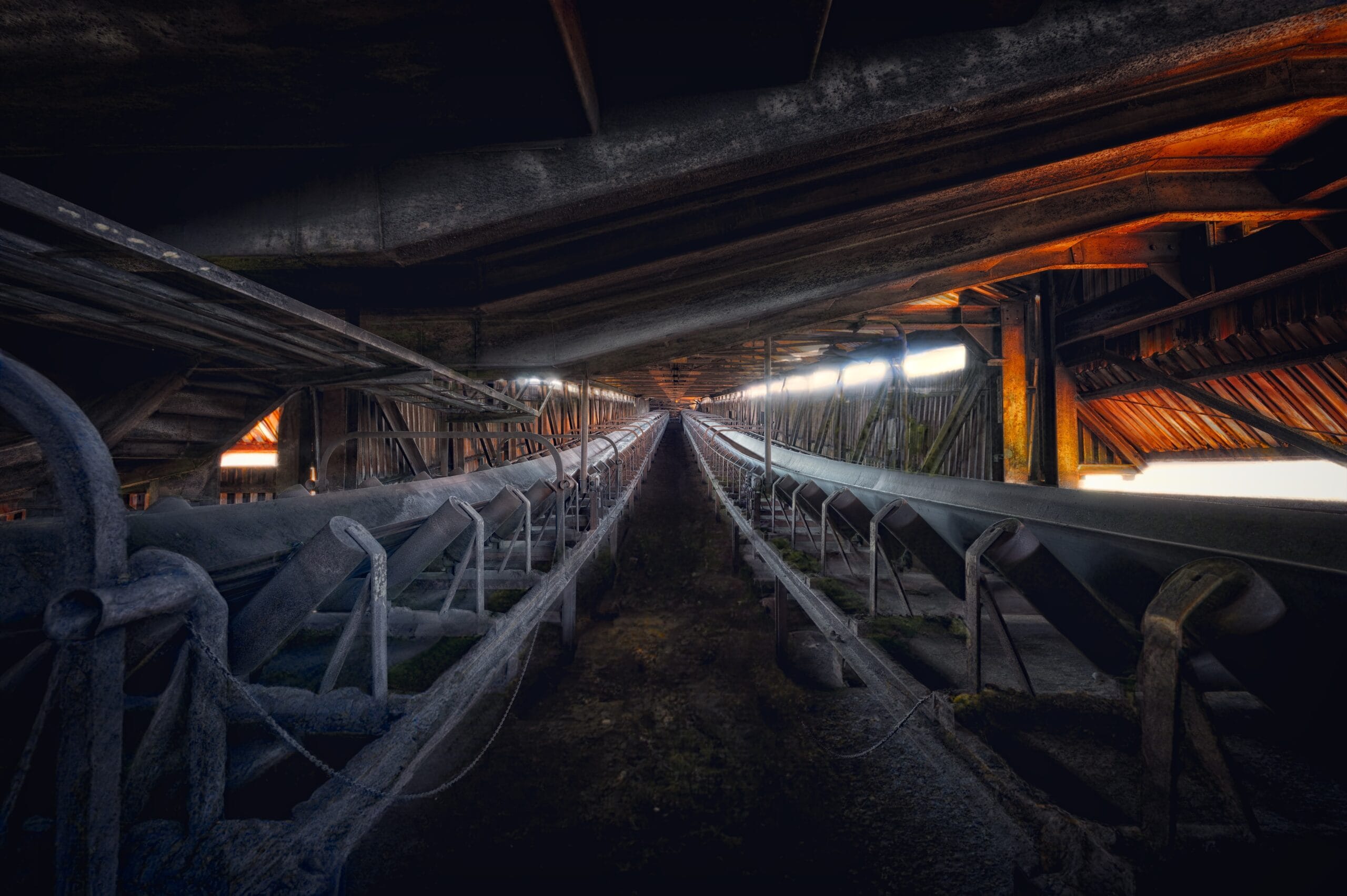
Conveyors moving goods on an industrial line
What you get

A buyer-grade guide that reduces uncertainty, improves uptime, and makes expansion cheaper and faster.

Outbound reference (DOFOLLOW)

For a neutral baseline definition of Conveyors, see Wikipedia’s overview. (Then come back for the practical part: design, selection, and ownership decisions.)

Key takeaways for Conveyors

If you remember nothing else, remember this: the best Conveyors are designed for predictable flow, safe access, clean transfers, and maintenance that fits your reality. These takeaways summarise what drives success with Conveyors.

  • Conveyors should be built as zones, not as one “type” everywhere.
  • Transfers decide whether Conveyors run smoothly or jam repeatedly.
  • Standardisation reduces downtime across Conveyors faster than “premium upgrades.”
  • Access corridors are part of the design of Conveyors, not an afterthought.
  • Plan for peak volumes, because Conveyors fail at peaks, not averages.
  • Corrosion and dust planning determine lifespan for Conveyors in Africa.
  • Controls and safety are not optional for Conveyors in high-traffic facilities.
  • Commissioning is how Conveyors avoid “it worked once” syndrome.
  • Spares strategy is what keeps Conveyors running when supply chains slow down.
  • Total cost ownership is the correct comparison method for Conveyors.

1) What Conveyors actually do (beyond “move stuff”)

Good systems create predictable flow. The obvious advantage is moving product from Point A to Point B, but the real value is what happens between those points: consistent spacing, controlled timing, safer handling, fewer manual touches, and far fewer “surprises” that turn normal shifts into emergency recovery sessions.

When a conveying line is designed correctly, planning improves. Dispatch times become reliable. Quality checks become easier to integrate because product arrives consistently. Labour planning stabilises because you are not constantly reacting to jams and short bursts. The end result is simple: a calmer operation that often outperforms a “busy” operation.

In African operating conditions, the decision is rarely “conveyors or no conveyors.” It is “how do we build Conveyors that survive dust, humidity, uneven floors, variable packaging, and tight maintenance windows.” A design that is perfect on paper but fragile in operation is not a solution. It is a future downtime schedule pretending to be an investment.

When it’s the right move

Use a conveyor line when movement repeats daily, output needs stable timing, safety and ergonomics matter, and scale has outgrown manual handling. Repetition is where the strongest ROI shows up.

When to phase it in

If product variety is extreme or routes change often, phase by zones: receiving, staging, packing, and dispatch first, then extend as the process stabilises.

Throughput

Stable spacing and speed make output predictable.

Safety

Proper guarding and e-stops make audits easier and intervention safer.

Cost control

Lower damage, rework, overtime, and rush fixes reduce hidden costs.

The mindset shift matters: this is flow control. Treat it like “just equipment” and you’ll overspend on the wrong features while ignoring the details that protect uptime.

2) Types and where each one wins

Most successful facilities do not use one technology everywhere. Effective layouts are built as zones: belt transport for mixed packaging, rollers for staging and buffering, modular belts for wet or washdown areas, and gravity lanes for simple accumulation when product stability allows it.

Belt-based conveyors (flat belt / PVC / fabric)

Belt transport is chosen when you need continuous support under the product. Many operations use belt lines to move cartons, totes, packaged goods, and assemblies where roller contact could cause tipping or vibration. Belt transport is also commonly used as the “spine” that connects multiple zones.

The biggest success factor is transfer design. A belt can run beautifully until transfers are poorly designed, at which point the line becomes a jam generator. Transfers are not accessories, they are reliability gates.

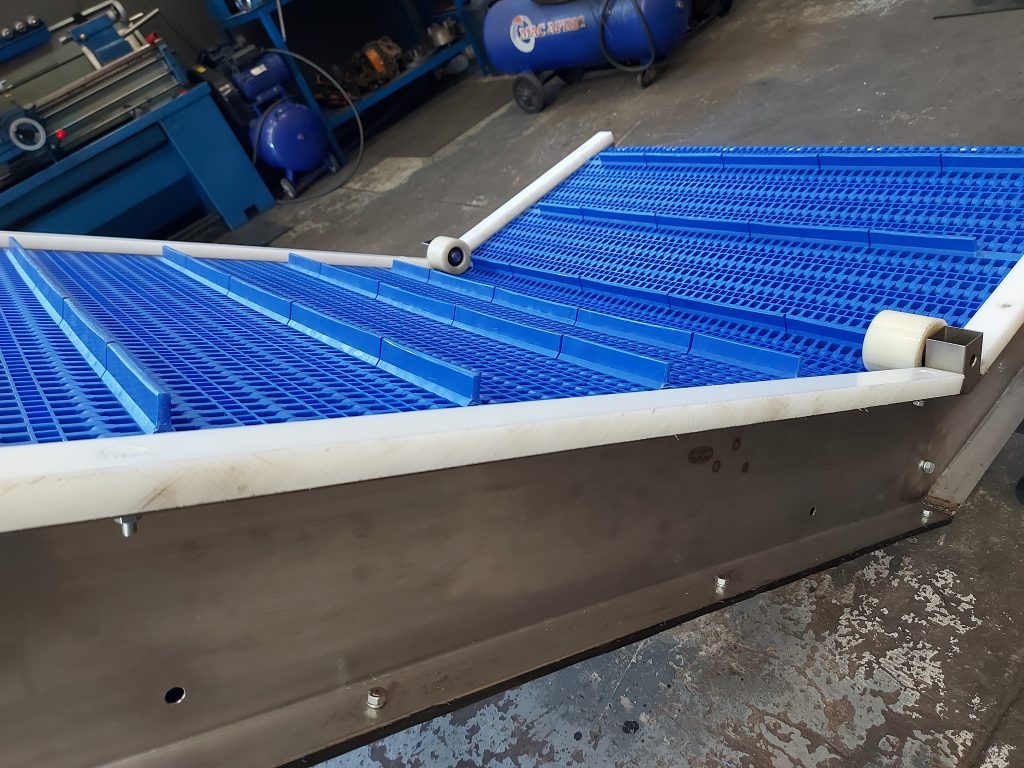
Modular belt conveyors (plastic modular belts)

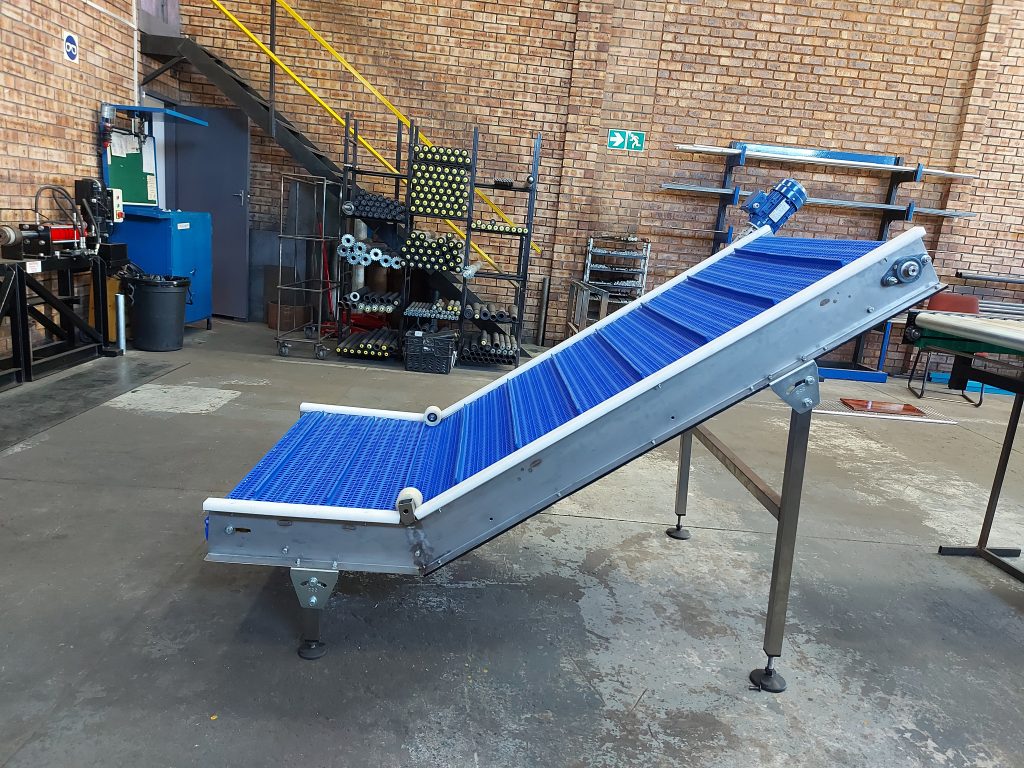
Modular belts are often selected for maintainability and durability, particularly in environments where frequent cleaning is required. Many operations use modular belts for wet zones, washdown areas, or where robust construction makes repairs easier by replacing sections rather than full continuous belts.

Modular options can be useful in complex layouts with turns, inclines, merges, and diverters. The design advantage is not only the belt itself, but how the overall routing can be simplified through modular paths.

Roller conveyors (gravity or powered)

Roller lines are widely used for cartons, totes, and rigid-bottom loads. Powered rollers can deliver controlled accumulation, merges, and controlled discharge into packing or sorting zones. They are common in distribution because they balance performance and simplicity.

Roller lines perform best when product base stability is reliable. If product bottoms are soft, uneven, or flexible, rollers may cause tipping or rocking. In that case, belt zones often reduce risk.

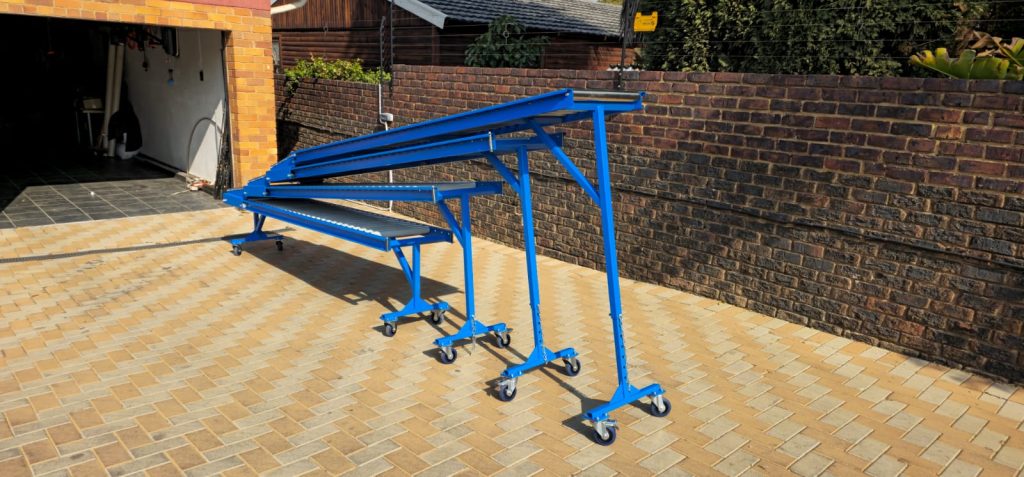
Gravity conveyors (gravity rollers)

Gravity lanes are simple, cost-effective, and low maintenance. They are typically used for staging, loading and unloading, and simple accumulation lanes. The key requirement is correct slope planning and speed control.

If slope is too steep, gravity lanes become uncontrolled. If slope is too shallow, product stalls. The right slope is not a guess, it is tied to product weight, friction, and packaging stability.

Practical takeaway: Don’t buy a “type.” Build a zone-based layout that matches each part of the process.

Zone design is why the best operations feel effortless.

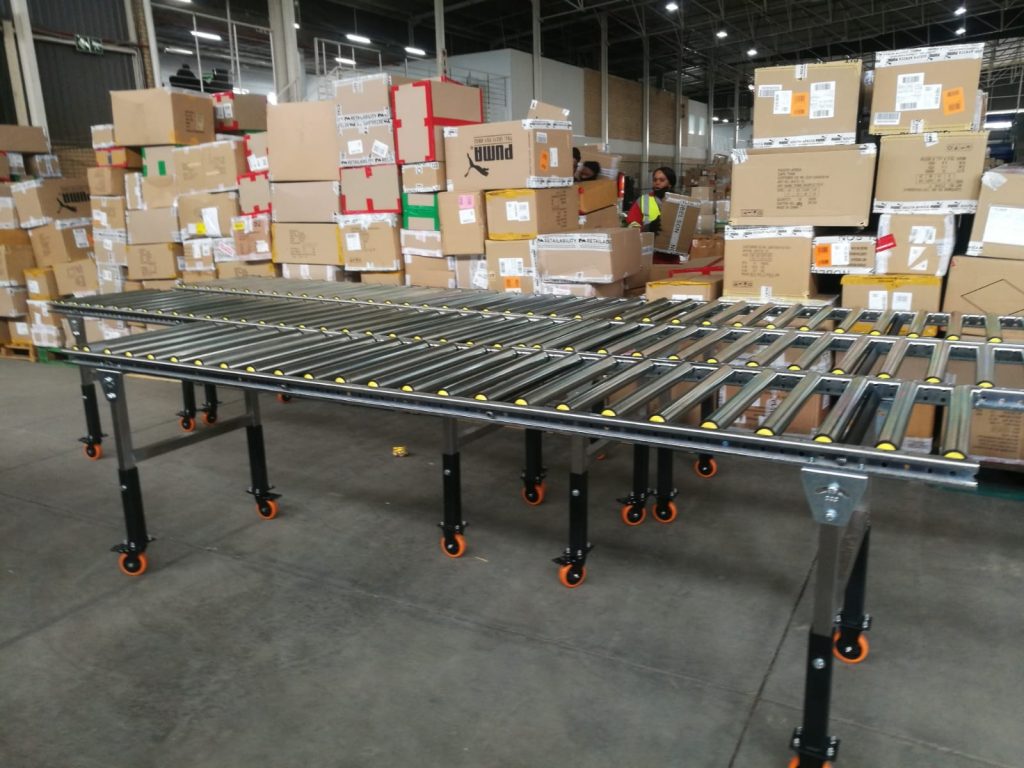
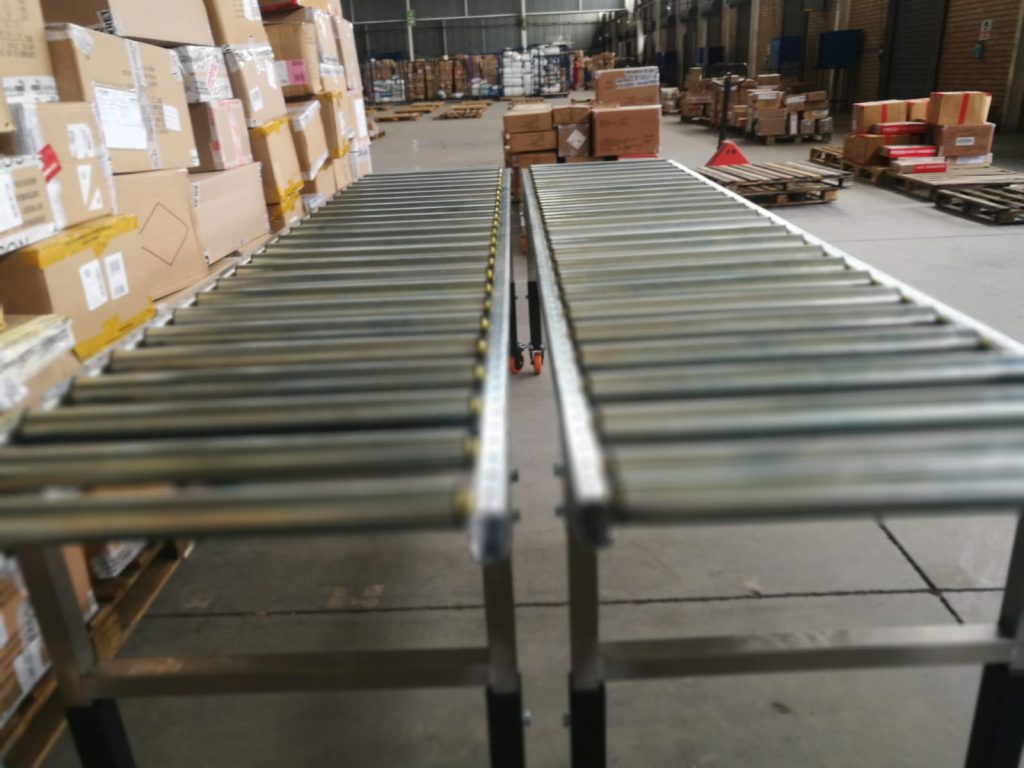
Conveyors using roller zones for warehouse staging

Roller zones are popular because they stage and buffer cartons efficiently when bases are stable.

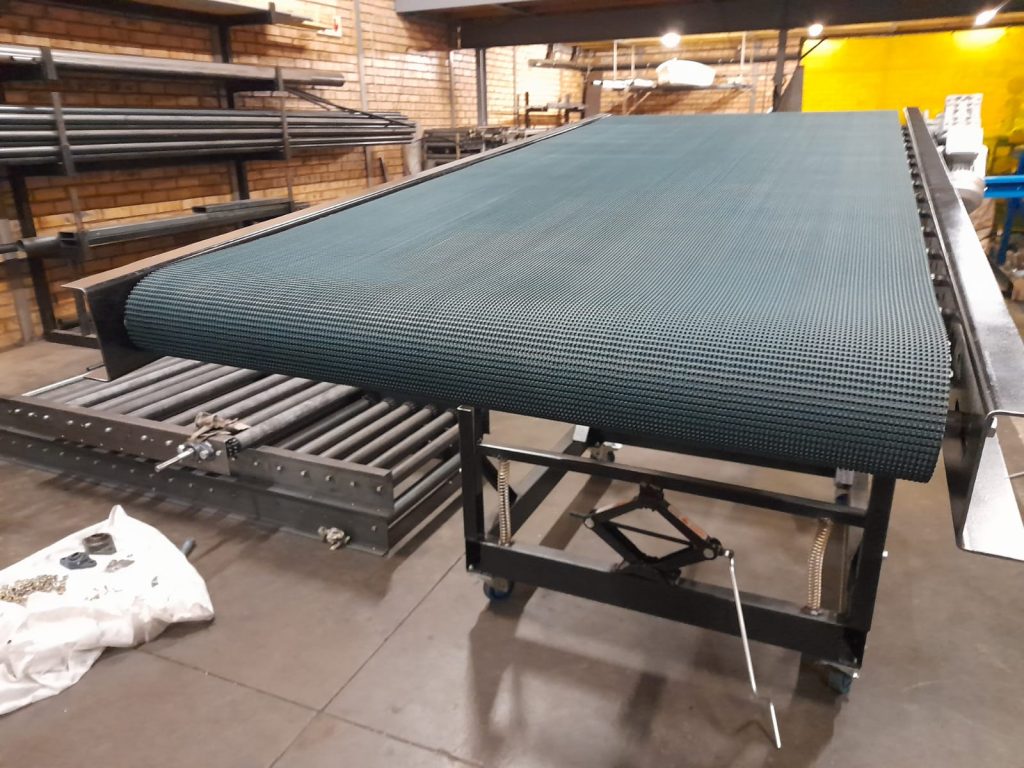
Belt conveyor line moving cartons

Belt transport often forms the main spine, especially where product bottoms are uneven or mixed.

3) Core components and layout fundamentals

Reliable systems are built from repeatable building blocks: drives, frames, tracking and tension, transfers, wear surfaces, and safety. When these fundamentals are understood, procurement becomes clearer and maintenance becomes faster because faults are easier to diagnose.

Layout is as important as the parts list. Many installations fail because access and serviceability were not designed in. A layout that looks neat but cannot be serviced safely will cost more over time than a slightly larger layout with clear access corridors.

Components that drive reliability

  • Drives: motor and gearbox selection, protection, and start behaviour
  • Structure: rigid frames and correct support spacing to reduce vibration
  • Tracking and tension: take-up strategy that prevents drift and edge wear
  • Transfers: plates, nose bars, pop-ups, diverters, and merge design
  • Safety: guarding, pull cords, e-stops, and lockout points

Layout decisions that reduce downtime

  • Clean transfer geometry that matches your smallest product
  • Maintenance access for rollers, belts, drives, and sensors
  • Dust and debris management built into zones and cleaning routes
  • Defined operator interaction points to reduce unsafe intervention
  • Standardisation across the plant to simplify spares
Continuous conveyor loop example

Continuous loops highlight why guarding, consistent speed control, and safe access matter.

The transfer reality

Transfers are where reliability is won or lost. If product catches, tips, or stalls at a transfer, it will happen again and again. Fixing geometry early is cheaper than learning through downtime later.

4) Selection framework: how to choose Conveyors correctly

Selecting Conveyors becomes easy when you stop thinking in product categories and start thinking in constraints: product behaviour, environment, throughput, and growth. This framework helps you choose the right zone approach without overspending.

Step 1: Product reality

Document size range, weight range, base stability, packaging consistency, and damage tolerance. The “worst” product often defines the design requirements.

Step 2: Environment reality

Dust, humidity, washdown practices, chemicals, and temperature determine material choice, corrosion strategy, and wear planning.

Step 3: Throughput reality

Plan for peak volumes, not averages. Define where buffering is required and how accumulation will be controlled.

Step 4: Growth reality

If expansion is likely, design zones with standard interfaces and reserved space. Growth-ready layouts reduce disruption and avoid expensive rebuilds.

Quick match guide (zone-based)

  • Mixed cartons/totes with variable bases: belt zones often reduce risk
  • Washdown or wet areas: modular belt zones often improve maintainability
  • Staging and buffering lanes: rollers are efficient when bases are rigid
  • Simple accumulation with consistent packaging: gravity lanes work with correct slope

Most facilities win with hybrid builds. Hybrid design allocates the right transport method to the right zone, then protects reliability with clean transfers, safe access, and a spares strategy that prevents long stoppages.

5) Engineering checks that prevent failures

Most downtime is predictable. The same issues repeat across sites: poor transfers, incorrect speed selection, weak supports, inadequate tensioning, and limited access. These checks reduce avoidable stoppages and improve long-term reliability.

Core mechanical checks

  • Load and duty cycle calculations, including peak conditions and start torque
  • Speed selection matched to product tolerance and throughput needs
  • Transfer geometry validated using the smallest and least stable product
  • Tracking and tension strategy that reduces drift and edge wear
  • Support spacing and rigidity to reduce vibration and fatigue

Africa-ready operational checks

  • Dust and debris management, sealing, and cleaning access
  • Humidity and corrosion planning for coastal or washdown environments
  • Power quality protection and safe restart behaviour
  • Maintenance access corridors and safe intervention points
  • Standardisation for spares availability across multiple lines

Transfer first, everything else second

In many failures, the belt or roller is blamed because it is visible. The root cause is often transfer behaviour, guiding, or speed transitions. Fix transfer behaviour, and performance improves dramatically without expensive replacements.

6) Drives, controls, and safety

Movement is not just mechanical. Drives and control logic determine how lines start, stop, accumulate, merge, and recover after interruptions. Safety design determines whether operations remain compliant, auditable, and stable as teams interact with moving equipment.

Drive and control fundamentals

  • Correct drive sizing for start torque, duty cycle, and incline effects
  • Speed control for product stability and controlled accumulation
  • Gentle start/stop behaviour that protects belts and reduces product shifts
  • Zone control and sensors where controlled buffering is required
  • Power protection and restart planning for African operating conditions

Safety fundamentals

  • Emergency stops must be accessible, consistent, and routinely tested
  • Guarding should protect operators without blocking maintenance
  • Lockout points must be practical for real maintenance routines
  • Signage and training reduce unsafe intervention
  • Auditable inspections reduce risk and improve operational discipline

Procurement should demand predictable behaviour in writing. Drives and safety are not “extras.” They determine whether the line operates smoothly or becomes a continuous sequence of avoidable incidents.

7) Installation and commissioning

Many projects fail in the final 10%. Equipment arrives, it is installed quickly, and everyone rushes to go live. Then issues appear: tracking drift, transfers jam, and access is blocked by structural choices nobody questioned. Commissioning is how the system becomes reliable, not “mostly functional.”

Pre-install checks

  • Confirm floor condition and level tolerance before fixing supports permanently
  • Validate product dimensions and packaging quality under real supply conditions
  • Confirm power availability, protection requirements, and safe restart design
  • Plan access routes for inspection and belt/roller replacement
  • Confirm operator pathways and guarding before final sign-off

Commissioning steps that protect uptime

  • Test empty, then under load, then at peak throughput with worst-case product
  • Validate transfers using the smallest, lightest, and most unstable items
  • Set speeds and accumulation logic to match packaging tolerance
  • Train operators on safe intervention rules
  • Create an inspection checklist and spares reference pack for maintenance

Commissioning is operational risk control. Fixing transfer geometry before go-live is cheaper than learning through downtime after production starts.

8) Maintenance and spares strategy

Maintenance is the difference between stable output and emergency mode. Good routines prevent small issues from becoming line-stopping failures. When systems are maintained predictably, uptime becomes boring, and boring uptime is the best kind.

Routine maintenance guidance

  • Daily: visual checks, debris removal, safety device checks
  • Weekly: alignment checks, tension checks, roller condition checks
  • Monthly: drive inspection, transfer inspections, wear surface checks
  • Quarterly: deeper inspections, planned replacements, safety validation

Spares strategy

  • Hold critical stop parts: belts/segments, key rollers, wear parts
  • Standardise interfaces so spares can support multiple zones
  • Document part references and replacement steps for quick intervention
  • Review spares quarterly based on failures, not assumptions

A disciplined spares plan plus routine maintenance keeps output predictable even in challenging environments. Standardisation is one of the fastest ways to reduce downtime across multiple lines or sites.

9) ROI and total cost ownership

Pricing alone is a weak decision tool. Compare options using total cost ownership: downtime impact, labour reduction, product damage reduction, and maintenance cost over time. The cheapest option is often the most expensive once you count stoppages and rework.

Where ROI typically comes from

  • Reduced product damage: fewer returns, fewer rework cycles, fewer claims
  • Reduced manual handling: less fatigue, fewer injuries, more stable staffing
  • Higher dispatch reliability: fewer missed cut-off times and rush recoveries
  • Better quality integration: stable flow supports inspection without chaos
  • Lower unplanned downtime: planned interventions beat emergencies

Simple ROI comparison method

Calculate the cost of one hour of downtime for your facility. Then estimate stoppage frequency based on transfer quality, access, and spares planning. Many buyers discover that stronger layouts pay back quickly because downtime is more expensive than equipment improvements.

If your facility handles mixed products, evaluate ROI by zone. A belt spine may deliver strong ROI, while staging lanes may be best solved by rollers or gravity.

10) Industries served

Material movement must match product behaviour, compliance expectations, and site conditions. Use the industry pages below for guidance tailored to your operating environment.

Hybrid facilities are normal

Most sites combine receiving, staging, processing, packaging, and dispatch. The best layouts match each zone to the right transport method, then protect reliability with clean transfers and access for maintenance.

11) Countries supported

CSA supports projects across Africa with selection guidance, supply support, documentation, and maintenance-friendly planning. Country routes influence lead times, spares strategy, and the best standardisation approach.

If you operate across multiple countries, standardisation reduces spares complexity and makes training easier.

12) Rich media: systems in motion

Some teams align faster when they see line behaviour. These embedded references help stakeholders visualise transfers, belt movement, and typical flow concepts.

Video is a reference, not a specification. Selection should still follow product and environment constraints discussed throughout this guide.

13) Procurement checklists

Checklists protect projects from assumption risk. The easiest way to improve outcomes is to standardise your RFQ process. When you buy consistently, performance becomes consistent.

RFQ checklist: product and environment

  • Product dimensions (min/max), weight range, packaging stability, and base behaviour
  • Environment: dust, wet, washdown, chemical exposure, temperature range
  • Throughput: average vs peak, and seasonal spikes that impact design
  • Changeover: how often products change and what variability must be tolerated

RFQ checklist: layout and performance

  • Route lengths, elevation changes, turns, merges, and accumulation zones
  • Transfer points: smallest product dimension, packaging weakness, and guiding requirements
  • Speed requirements and tolerance for acceleration and deceleration
  • Maintenance access requirements and safety constraints

RFQ checklist: reliability and ownership

  • Spares list: critical stop parts and what stock must be held
  • Standardisation plan: where common parts can be used across zones
  • Commissioning plan: test under load, peak rate, and worst-case products
  • Training plan: operator rules vs maintenance rules for safe interaction

Want CSA to validate your selection?

Share product details, environment conditions, throughput targets, and layout constraints. We will recommend a practical approach and highlight the risks to address before installation.

14) Advanced planning guide for large-scale Conveyors

Quick glossary for Conveyors

  • Conveyors “spine”: the main transport route linking critical zones.
  • Conveyors “zone control”: sections that start/stop independently for buffering.
  • Conveyors “transfer”: where product moves between belts, rollers, or lanes.
  • Conveyors “accumulation”: controlled buffering without damaging product.
  • Conveyors “take-up”: the tensioning method that supports tracking and belt life.
  • Conveyors “wear parts”: consumables that should be planned and stocked.

As facilities scale, Conveyors stop being a simple transport solution and become process infrastructure. At scale, the objective is orchestration: how material enters, moves, buffers, diverts, and exits without conflict.

Large operations rarely fail because the wrong belt or roller was selected. They fail because lines were designed as isolated runs rather than an integrated network. When each area is treated as a separate project, the result is often mismatched speeds, incompatible transfers, and a spares cupboard that looks like it belongs to ten different factories.

Designing as infrastructure, not equipment

Mature facilities treat Conveyors the same way they treat electrical reticulation or compressed air: routes are planned early, space is reserved, and access corridors are protected. This avoids costly relocations and makes future extensions cheaper. When planned as infrastructure, the layout becomes easier to expand, easier to maintain, and easier to standardise.

Redundancy and risk planning

In high-throughput environments, the cost of failure must be planned explicitly. Critical spines feeding multiple areas sometimes justify redundancy, bypass routes, or parallel lanes. Redundancy doesn’t mean duplication everywhere, it means identifying sections that would stop production if they failed, then building practical alternatives.

Standardisation strategy

One of the strongest long-term advantages in multi-line operations is standardisation. Different belts, rollers, drives, sensors, and fasteners multiply spares requirements and training complexity. Even a good maintenance team slows down when they must diagnose ten different “standards.”

Standardised layouts reduce spare parts inventory, shorten fault-finding time, simplify procurement, and improve training outcomes. Over time, standardisation turns uptime into a managed routine rather than an ongoing emergency response.

Environmental adaptation for African operating conditions

Designing Conveyors for Africa requires honesty about operating environments. Dust, heat, humidity, washdown practices, power instability, and variable product quality are normal conditions, not edge cases.

Reliability improves when you account for dust ingress into bearings and rollers, thermal expansion across long runs, corrosion risks in coastal or washdown environments, power interruptions and restart behaviour, and inconsistent packaging from upstream suppliers.

Human interaction

No matter how automated a facility becomes, people will interact with moving lines. The real question is whether the design encourages safe behaviour or forces shortcuts.

Lifecycle thinking

The true cost is not purchase price. It’s the combined cost across installation, operation, maintenance, downtime, and modification. Lifecycle thinking separates short-term savings from long-term value.

Practical expansion playbook

If growth is likely, build a phased plan. Phase one usually focuses on the spine between receiving, processing, and dispatch. Phase two adds controlled buffering and staging. Phase three adds optimised merges, diverters, and refined safety corridors.

Expansion changes flow behaviour and accumulation patterns. That’s why scaling requires re-checking transfer geometry, throughput assumptions, and spares strategy. Done correctly, expansion becomes predictable rather than a recurring crisis.

Final guidance for decision-makers

The best outcomes are not defined by a brand name or a spec sheet headline. They are defined by how well the solution fits the process, the environment, and the people who rely on it every day. Design for access, plan for growth, standardise intelligently, and validate behaviour under real operating conditions.

Common issues and fixes in Conveyors

Most failures in Conveyors are repeatable patterns. Fix the causes once, and your uptime improves without constant firefighting. Use this as a practical checklist when diagnosing Conveyors on-site.

  • Conveyors jamming at transfers: adjust geometry, guiding, and speed transitions.
  • Conveyors tracking drift: review tensioning method, pulley alignment, and frame rigidity.
  • Conveyors product tipping: reduce acceleration, improve side guides, and stabilise the base.
  • Conveyors noise/vibration: check support spacing, bearing condition, and roller quality.
  • Conveyors belt wear: correct tracking, remove debris, and improve wear surface selection.
  • Conveyors roller seizure: improve housekeeping, dust control, and planned replacement cycles.
  • Conveyors motor overheating: confirm drive sizing, load, airflow, and duty cycle.
  • Conveyors inconsistent accumulation: validate sensor placement and control logic.
  • Conveyors safety non-compliance: standardise e-stops, guarding, and lockout points.
  • Conveyors slow recovery after stops: add restart rules and reduce manual intervention points.
  • Conveyors downtime waiting for spares: standardise parts and hold critical stock locally.
  • Conveyors chronic small stoppages: map stop reasons and fix the top 3 causes first.

15) FAQs

How do I choose between belt, roller, modular, and gravity?

Start with product base stability and environment conditions. Rigid cartons often suit rollers. Wet zones often suit modular belts. Mixed packaging and gentle handling often suit belts. Then validate transfers, accumulation needs, and access, because those decide if the line runs smoothly.

Why do transfers cause the most issues?

Transfers create gaps and changes in direction and support. Unstable or poorly packaged products exploit these weak points repeatedly. Strong geometry and guiding prevent jams and damage.

How do I keep Conveyors reliable in dusty or humid environments?

Design for access and cleaning, choose corrosion-aware materials where required, protect drives from power instability, and standardise parts so spares are available.

Can Conveyors be expanded later?

Yes, when designed as zones with standard interfaces and reserved space. Growth-ready layouts reduce future rework and disruption.

What should procurement demand in writing?

Clear scope, performance targets, transfer requirements, commissioning plan, spares list, safety inclusions, and access requirements. If it is not documented, the project fails on assumptions.

Page Contents