Conveyor Supplies Africa About Us is simple: we supply conveyor systems and components for operations that value reliability, correct specification, and support that actually shows up when production is under pressure.
This page explains what we stand for: practical conveyor problem-solving, quality workmanship, and a team that supports clients across Africa long after installation.
Important: We focus on industrial processing, agriculture, food handling, packaging, warehousing and logistics. We do not supply the mining sector.
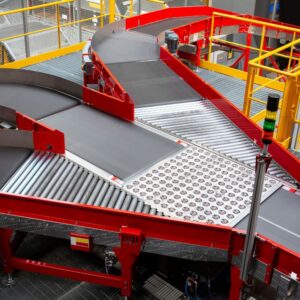
From spec guidance to spares planning, we help you keep flow stable and downtime low across Africa (non-mining).

Quick facts that matter: We focus on practical conveyor flow, realistic specifications, and support that reduces downtime. If your operation runs on tight dispatch windows or production schedules, we build and supply to match that reality.
Clients usually want predictable movement, fewer stoppages, better transfers, and parts that don’t turn into a treasure hunt when something fails. That’s why our approach is application-first: we start with your product, environment, throughput, and footprint, then match the conveyor type and components accordingly.
If you’re reading Conveyor Supplies Africa About Us, you’re probably not here for fluffy branding. You want to know how the team works, what standards are enforced, and what kind of support you can realistically expect. That’s exactly what this Conveyor Supplies Africa About Us section is for: clarity, not decoration.
Conveyor Supplies Africa About Us is built around a simple operating truth: conveyors must run reliably under real conditions. So Conveyor Supplies Africa About Us focuses on correct specification, maintainable layouts, and practical follow-through. When someone searches Conveyor Supplies Africa About Us, they are usually looking for a supplier who can help prevent downtime, reduce repeated breakdowns, and supply parts that actually match the environment.
Conveyor Supplies Africa About Us is not a slogan and it’s not a “nice story” with no operational value. Conveyor Supplies Africa About Us is a commitment to doing the practical work correctly: understanding the product, confirming the duty cycle, matching rollers and belting to the environment, and supporting the system after delivery.
Reminder: This Conveyor Supplies Africa About Us page reflects our focus on industrial processing, agriculture, food handling, packaging, warehousing and logistics. We do not supply the mining sector.
People don’t search Conveyor Supplies Africa About Us because they want a motivational quote. They search Conveyor Supplies Africa About Us because they need to trust the process behind the supply, the standard behind the build, and the support behind the installation.
That’s why Conveyor Supplies Africa About Us highlights practical details: how we scope, how we specify, and how we support the operation when reality shows up (heat, dust, moisture, washdown, peak season). Conveyor Supplies Africa About Us is written for operators, maintenance teams, production managers, and dispatch teams who need predictable flow and fewer interruptions.
If you want to move from Conveyor Supplies Africa About Us into solutions, use: Conveyor Systems · Conveyor Belting · Conveyor Rollers · Parts & Spares
Finally, Conveyor Supplies Africa About Us exists so you can quickly confirm whether our approach fits your operation. If you value correct specification, stable flow, practical installation support, and guidance that reduces downtime, then Conveyor Supplies Africa About Us will match what you are looking for.
Conveyor Supplies Africa is built around practical conveyor problem-solving. This Conveyor Supplies Africa About Us story starts with hands-on experience and a focus on getting the specification right the first time.
To deliver innovative, reliable and cost-effective conveyor solutions that exceed client expectations and improve operational flow.
We measure success by: smoother flow, fewer stoppages, and easier maintenance for your team.
We aim for outcomes you can actually feel on the floor: reduced walking, fewer manual touches, less re-handling, and fewer “small issues” that quietly destroy throughput over time. Conveyor performance isn’t just about speed. It’s about stable flow, predictable transfers, and components matched to duty cycle and environment.
We listen to your requirements and constraints, then recommend what fits your product, environment, and budget realistically. That’s how we build long-term partnerships based on trust and performance.
Built on experience, discipline, and the kind of practical standards that keep conveyors working when nobody is watching.
If you have photos, short videos, or a rough sketch, that’s usually enough to start narrowing down the right direction quickly.
Industry references: Learn more about conveyor systems, conveyor belts, material handling, and roller conveyors.
Conveyor projects succeed when the specification matches the application and the support matches the urgency of production. We focus on belt selection, roller specification, tracking considerations, hygiene needs, and maintenance access.
Internal links: Conveyor Systems · Conveyor Belting · Conveyor Rollers · Parts & Spares
We focus on practical industries and applications. Mining is excluded, permanently.

We continuously improve layouts, components and build methods to meet evolving industry demands, and tailor conveyor systems to the real application for predictable performance.
Tip: If you’re not sure what you need, tell us your product, environment, throughput, and footprint. We’ll guide the rest.

Director
Justin leads Conveyor Supplies Africa with a practical, hands-on approach: understanding the operation, specifying the correct system, and ensuring execution from concept to completion.
That practical approach is part of the Conveyor Supplies Africa About Us identity: real support, real answers, and solutions that work in the real world.
Reality check: conveyors fail in heat, dust, washdown and peak season. We build for that.
Leadership at CSA is not a desk job. The focus is on understanding site reality, solving root causes, and delivering a specification that matches duty cycle, environment, and maintenance access. That keeps systems working longer and reduces total cost over time.
Allan van Wyk’s legacy sits at the heart of Conveyor Supplies Africa. He built deep knowledge of conveyor design, manufacturing, and real-world troubleshooting over 25+ years and passed that knowledge on, giving us the privilege to continue what he taught.
For you personally, this part of Conveyor Supplies Africa About Us is not marketing. It’s gratitude, and it’s the standard your team continues to hold.
Allan’s legacy is not a slogan and it is not something we dust off for an anniversary post. It shows up in the way conveyor systems are designed, specified, built, and supported long after installation. In practical terms, it means refusing to accept short-term fixes that create long-term problems, and refusing to walk away from issues that are inconvenient but solvable.
One of the clearest lessons Allan passed on was that most conveyor failures are not mysterious. They are the result of small compromises stacking up over time: incorrect roller spacing, bearings not suited to the environment, belt selection that ignores cleaning reality, or layouts that look fine on paper but are impossible to maintain properly. Addressing those details early prevents downtime later, and that mindset still defines how work is done today.
In day-to-day practice, Allan’s legacy means designing with the maintenance team in mind. Access panels are placed where inspections actually need to happen. Wear points are treated as expected service items, not surprises. Components are standardised wherever possible so that spares are available when they are needed, not three days after production has stopped.
It also means solving root causes instead of repeating temporary fixes. If a transfer keeps jamming, the solution is not to tell operators to “watch it more carefully”. The solution is to stabilise the product, correct the geometry, and remove the condition that causes the jam. That approach saves time, protects throughput, and earns trust because problems stay solved.
Quality, as Allan defined it, was never about premium branding or unnecessary complexity. It was about doing the correct work once, using materials and components that match the real operating conditions. When systems are built this way, they tend to disappear into the background, quietly doing their job without demanding constant attention. That is the standard still applied across projects today.
Ultimately, Allan’s legacy lives on in consistency. Clients know what to expect: honest advice, practical solutions, and support that does not vanish after delivery. That continuity from one generation to the next is not accidental. It is the result of holding the same standards even when nobody is watching, and especially when it would be easier not to.
Thank you, Allan.
Your standards, discipline and belief in doing things properly continue to guide how we work and how we treat people.
Personal note: Allan was a role model and mentor, and his knowledge continues through the way we design, build and solve problems today.
This Conveyor Supplies Africa About Us page isn’t here to claim we “love excellence” and “value synergy” like every other company on Earth. It’s here to explain how we approach conveyor work in a way that reduces downtime and protects your operation when things get busy. Real conveyor performance is not just about buying equipment. It’s about understanding flow, identifying wear points, specifying the correct components, and building layouts that can be maintained without turning every repair into a shutdown event.
Most conveyor problems are predictable. They show up at transfer points, on inclines, at merges, and anywhere product changes direction or speed. They show up when rollers are not matched to duty cycle, when bearings are not suited to the environment, or when belt selection ignores product behaviour. They show up when access is poor, guards are awkward, and maintenance becomes “later” until later becomes “stopped production”. Our job is to remove that chaos with practical design and sensible specification.
We start with what you’re moving, how you’re moving it, and what the environment does to equipment over time. That includes product size range, weight range, packaging type, throughput targets, duty cycle, and the physical constraints of the site. A conveyor that works perfectly in a clean, dry environment can fail quickly in dust, moisture, heat, or washdown conditions. If you want stable flow, you have to design for reality.
Small truth: if you don’t know the smallest carton size, you don’t know your transfer risk.
Different workflows need different conveyor types. If you need predictable movement between zones, belt conveyors often do the job well. If you need accumulation and staging with controlled flow, roller conveyors and accumulation lanes are typically the backbone. If floor space is limited and you have multi-level movement, vertical and overhead solutions can reduce congestion. The point is not to push a specific product. The point is to choose what fits the operation, then build it properly.
Helpful context (Wikipedia): Conveyor system, Conveyor belt, Roller conveyor.
People say “quality” as if it’s a magic spell. In conveyor terms, quality is usually boring: correct materials, correct duty cycle matching, correct bearing selection, correct tracking setup, and correct maintenance access. If those are wrong, even expensive equipment will still cause problems. If those are right, the system tends to run quietly in the background, which is exactly where conveyors belong.
Rollers are often treated as interchangeable cylinders. They’re not. Roller diameter, shaft size, bearing type, seal design, and spacing should match load, speed, and environment. Incorrect rollers lead to vibration, belt tracking issues, and premature bearing failure, which then becomes unplanned downtime.
Practical win: fewer roller variants means faster repairs and cheaper spare stock.
Belting choice affects grip, tracking, cleaning effort, product stability, and wear. If the belt surface is wrong for the product, you get slip, drift, and product instability. If the belt is not suited to cleaning routines, hygiene becomes harder and belt life drops. We help match belt type to real operating needs, not just what is “commonly used”.
Internal references: Conveyor Belting · PVC & PU Belt Conveyors · Modular Belt Conveyors
The difference between a good supplier and a useful supplier is what happens after equipment is delivered. Conveyors live in harsh conditions. They deal with constant movement, impacts, misloads, and “temporary” operational changes. That’s why we focus on support that protects uptime: guidance on tracking, tension, transfers, wear points, and spares planning. If you need to keep dispatch moving or keep production flowing, the small issues matter.
Plain rule: predictable maintenance beats heroic repairs every time.
If you want quick and accurate guidance, the right input makes a big difference. You don’t need a perfect engineering pack. A few photos, a short video, and basic product and throughput details usually get us 80% of the way there. Then we refine from a realistic scope instead of guessing.
If you’re unsure, start with our main contact page: Contact Us.
Final reminder: Conveyor Supplies Africa supports warehousing, logistics, packaging, agriculture, food handling, pharma and general industry. We do not supply the mining sector.
Useful internal links: Conveyor Systems · Conveyor Rollers · Parts & Spares · Repairs & Maintenance
If you’re here for the full story, you’re already on the Conveyor Supplies Africa About Us page.
Tell us your product, throughput targets, environment (wet/dusty/washdown), and footprint. We’ll recommend the right conveyor layout, belts, rollers and spares for consistent performance.
To get a fast, accurate recommendation, send:
The more clarity we have upfront, the less time you waste on redesigns later. It also helps us recommend components that stay available and make spares planning simpler.
If you came here from our Conveyor Supplies Africa About Us page because you want a supplier who supports you properly, this is the next step: send your details and we’ll respond fast.
HELP ME CHOOSE TOOL: Select “Not sure” in the message and describe your application. We’ll guide you to the best-fit conveyor solution.