
CSA Blog
Choosing conveyor systems Africa businesses can rely on is not about picking a catalogue item and hoping for the best. It is about matching the right belt, roller, modular, and custom layout choices to real African operating conditions, uptime demands, and long-term support. This page covers the practical checks that help you choose the right system and the right partner.
If you are comparing conveyor systems Africa teams use daily, focus on three things: fit for environment, fit for product, and fit for support. Many systems fail in Africa because the design ignores dust, moisture, inconsistent loads, power variability, and maintenance realities.
On this page
Wikipedia references: Conveyor system, Belt conveyor, Material handling.
Let’s be blunt: the “perfect” conveyor design on a spreadsheet often becomes an expensive headache on site. In Southern Africa and across the continent, conveyor systems Africa operators depend on must survive real conditions, not showroom conditions. The challenges below are common across manufacturing, logistics, agriculture, food processing, warehousing, and FMCG.
If environmental conditions are ignored, belts stretch, rollers seize, and cleaning becomes a daily disruption. This is why industrial conveyors Africa facilities choose are engineered for serviceability and durability, not just throughput.
A system that needs specialist intervention for every adjustment is not practical. The best conveyor systems Africa teams adopt are designed so routine checks can be done quickly and safely.
A final note: we exclude mining here on purpose. This page is focused on the industries that drive day-to-day value in logistics, manufacturing, agriculture, food processing, warehousing, and FMCG. The selection logic still applies, but the applications and priorities are different, and that matters when you choose a supplier.
A conveyor system is a controlled transport solution that moves goods from one point to another using a belt, rollers, modular surfaces, or a custom combination. If you want the academic baseline, Wikipedia’s “Conveyor system” and “Material handling” pages cover the general definition, but the practical question is this: what must your conveyor systems Africa operation achieve every day without failing?
Most systems, regardless of type, include a structure, a transport medium, a drive, and safety controls. The performance difference comes from: correct belt or roller selection, correct tension and tracking strategy, correct bearing and shaft choices, correct guarding, and correct maintenance access. That is why conveyor manufacturers Africa operations trust tend to start with site realities, not guesswork.
If you design these blocks for the environment and the product, the system becomes stable. If you ignore them, you spend your time fighting tracking, wear, and stoppages. That is not a strategy. That is a slow-motion breakdown.
When those questions are answered, selecting between belts, rollers, modular surfaces, and custom conveyor solutions becomes much simpler. The choice becomes engineering, not guesswork.
When those questions are answered properly, choosing between belt conveyors Africa facilities rely on, modular surfaces, and roller systems becomes far simpler, and your supplier can design for long-term stability instead of short-term installation. In Africa, that difference is everything.
There is no “best” conveyor type. There is only the best fit for your product, your environment, your uptime requirement, and your budget. Below are the most common categories of conveyor systems Africa operations implement, plus the practical pros and limitations you should consider.
Belt conveyors are a cornerstone in many plants and warehouses because they handle a wide range of goods with smooth movement and predictable flow. They are particularly useful where you need continuous transport over longer distances.
Many failures blamed on “bad belts” are actually design or maintenance problems. Good support from conveyor suppliers Africa businesses rely on makes a huge difference.
Modular surfaces are built from interlocking modules. They are popular in food processing and wash-down environments because cleaning is easier, and damaged sections can be replaced without changing the entire belt.
In practice, conveyor systems Africa food operations choose modular belts when hygiene and cleaning time become limiting factors.
Roller conveyors move goods across rollers instead of a continuous belt. They can be gravity, motorised, or zoned for accumulation. Warehousing operations favour rollers for cartons and pallets with flat bottoms and consistent geometry.
If you want to explore components, see Conveyor Rollers and related spares under your product range.
Many African facilities were not built around ideal conveyor layouts. Space constraints, existing equipment, and phased expansion often demand custom engineering. The right custom approach reduces bottlenecks and allows growth without ripping everything out later.
This is where conveyor manufacturers Africa operators trust must be able to design, fabricate, and support on the ground.
One more practical point: you can mix these types in one facility. Many efficient sites use belt conveyors for long runs, modular surfaces where hygiene is strict, rollers in warehousing zones, and custom conveyor solutions to connect everything safely and logically. That integrated approach is where the best conveyor systems Africa projects deliver lasting return.
Rank Math wants rich media for a reason: images help users understand conveyor types and applications faster. Below are four example visuals shown in standardised image cards. All images are set to the same size for neat alignment across the page.
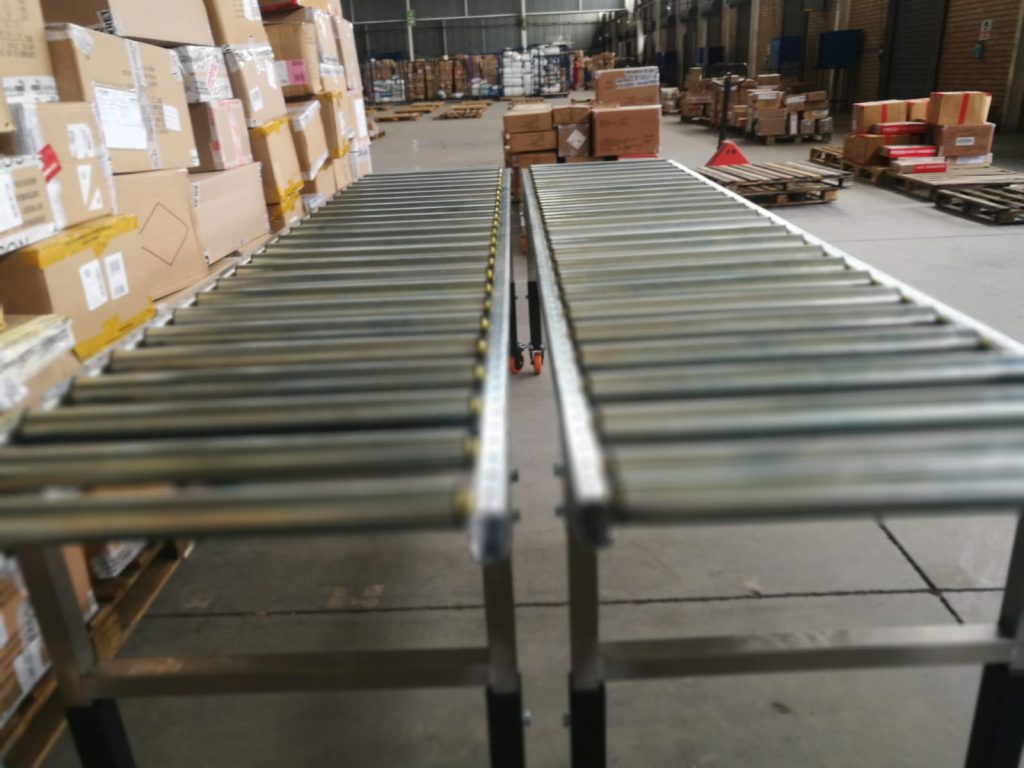
Example: warehouse flow using rollers and controlled transfer points.
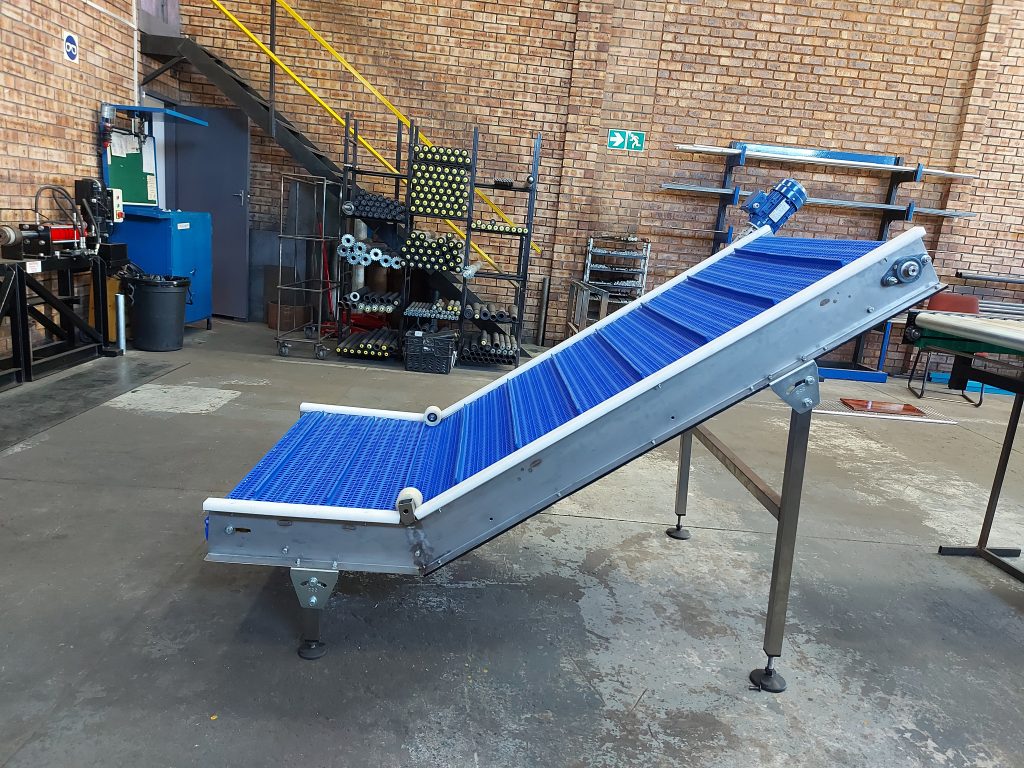
Example: modular incline suited to wash-down and hygiene-first zones.
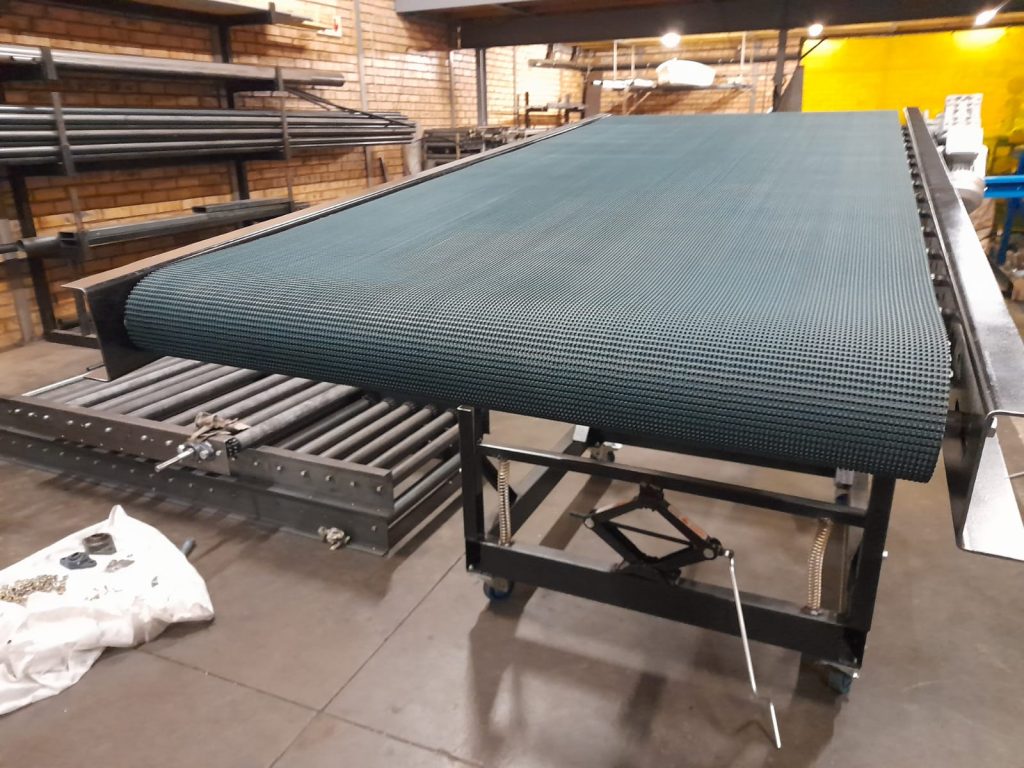
Example: belt run designed for stable transfer and predictable line speed.
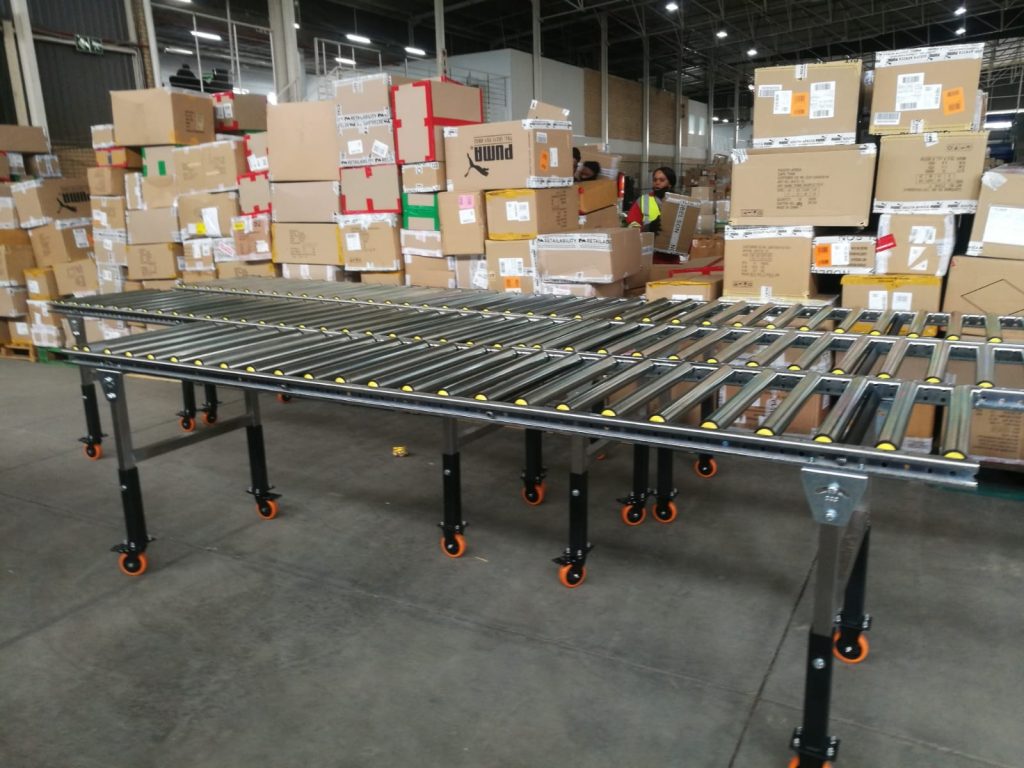
Example: distribution staging using roller lanes for dispatch efficiency.
The fastest way to choose the right system is to anchor the decision in your industry’s real constraints. The same conveyor design can succeed in one environment and fail in another. Below are common industry patterns for conveyor systems Africa projects, without any mining content.
Agricultural environments demand robust construction, sensible cleaning access, and tolerance for inconsistent product sizes. Produce lines also benefit from gentle handling to reduce bruising and waste.
Many industrial conveyors Africa agriculture sites use are built for easy wash-down and quick access for day-to-day checks.
Hygiene, wash-down resilience, and predictable flow are the big priorities. Systems should be designed so cleaning does not turn into a daily shutdown. This is why modular conveyor systems and carefully selected belt surfaces are common in these environments.
When you need reliable conveyor systems Africa food operations can trust, you design for cleaning, not around it.
Logistics operations want speed, accuracy, and scalability. Roller systems, belt runs, and smart merges reduce manual handling and improve throughput. Layout matters more than any single component, because poor flow creates backlogs instantly.
If your operation expands regionally, your conveyor systems Africa solution should be designed for phased growth.
Manufacturing needs consistent speed control, safe operator interaction, and smart workstation integration. The goal is usually balanced flow rather than maximum speed, because bottlenecks are often human or process-based.
The right custom conveyor solutions reduce wasted steps and increase output without increasing risk.
Notice the pattern: your industry drives the “non-negotiables,” and that narrows the options quickly. Once those are clear, your supplier can guide the correct selection across belts, rollers, and modular conveyor systems. In other words, choose requirements first, then choose equipment. That is how conveyor systems Africa projects avoid costly redesigns.
Buying a conveyor is easy. Living with it for years is the hard part. In Africa, support is not a “nice extra”. It is the difference between a system that compounds value and a system that bleeds time and money. The strongest conveyor systems Africa implementations are backed by local capability.
Even the best belt conveyors Africa plants run will drift out of alignment if nobody knows what “normal” looks like. Support is what restores stability quickly, and stability is what keeps production moving.
This is why buyers compare not only pricing, but also which conveyor suppliers Africa companies trust can actually deliver and sustain the project.
The best strategy is to treat support, spares, and service access as part of the original specification. If a supplier cannot explain their spares approach, their service process, and how they handle urgent issues, you are not buying a conveyor, you are buying a future problem. That is why conveyor systems Africa decision-makers insist on local capability and practical execution.
Most supplier comparisons are too shallow. People compare a quote line item and ignore the lifecycle. If you want a supplier who delivers reliable conveyor systems Africa operations can scale, evaluate using a structured checklist.
Without clear input, even skilled conveyor manufacturers Africa teams will be forced to guess. Guessing looks cheap on day one, then shows up as downtime later. Avoid it.
A supplier that only sells one category will try to force every problem into that category. That is how custom conveyor solutions turn into awkward compromises that cost you later.
Strong industrial conveyors Africa facilities depend on are built for quick servicing and predictable wear patterns. Uptime is not luck. It is design plus discipline.
A supplier that can execute in SA but cannot support broader Africa is not a growth partner. Your conveyor systems Africa plan should not be boxed in by geography.
If you want to explore your internal product and service categories while you evaluate, use: Products, Belting, Conveyor Rollers, Services, Industries, and Countries. The goal is to map your requirements to a supplier’s proven capabilities, then lock the design before spend begins. That is how conveyor systems Africa projects stay stable.
A strong supplier is not defined by one product. It is defined by how well they solve the whole movement problem across your facility. Conveyor Supplies Africa focuses on the complete picture: supply, design guidance, integration, and ongoing support across SA and Africa. If you want conveyor systems Africa sites can run with confidence, you need a partner who treats reliability as the product.
This breadth helps prevent mismatched solutions. When a supplier can support multiple categories, you get a fit-for-purpose system instead of a forced compromise.
In short: you get custom conveyor solutions that are easier to live with, not just impressive to install. “Easy to live with” is the real KPI.
If your next step is to connect your needs to the right product group, start at Products and drill into Belting and Conveyor Rollers. If you are mapping an industry-specific approach, use Industries. If you operate across regions, use Countries. This approach turns the broad promise of conveyor systems Africa into a practical plan you can implement and scale.
The most versatile choice depends on product type and environment, but belt conveyors and modular surfaces cover a wide range of common needs. For many facilities, combining belts for long runs, rollers for warehousing zones, and custom conveyor solutions for transfers produces the best result. That integrated approach is common in high-performing conveyor systems Africa projects.
Choose belts when you need stable continuous transport across varied goods and longer distances. Choose modular surfaces when hygiene, wash-down, and replaceable sections are priorities. Many food processing and FMCG lines in SA and Africa use modular conveyor systems in wet zones and belts in dry zones. Either way, the selection should be guided by what your conveyor systems Africa operation must do every day without interruption.
Early failure usually comes from mismatched specifications: wrong belt surface, wrong bearing selection, poor tracking strategy, poor guarding, and insufficient maintenance access. Add dust, moisture, inconsistent loads, and delayed spares, and downtime becomes inevitable. This is why experienced conveyor suppliers Africa businesses rely on prioritise durability and serviceability.
Yes. Support is a core requirement, not an optional extra. Local assistance reduces downtime, spares planning prevents long delays, and training helps operators catch issues early. Reliable conveyor systems Africa projects treat support as part of the design.
Absolutely. Many facilities require custom conveyor solutions because of space constraints, legacy equipment, phased expansions, and mixed product ranges. Custom design is often the most cost-effective approach over the life of the system, especially when your conveyor systems Africa needs evolve.
If you want a practical path forward, start by mapping your product flow (infeed to dispatch) and then match each zone to the best-fit solution: belts for stable transfer, rollers for warehousing movement, modular conveyor systems where wash-down is frequent, and custom conveyor solutions for tight transfers and merges. This process removes guesswork and produces conveyor systems Africa operations can scale across sites and regions.
Reference links (Wikipedia): Conveyor system | Belt conveyor | Material handling
Before you approve a quote, run this checklist. It is boring, repetitive, and extremely effective. Which is exactly what you want from conveyor systems Africa operations depend on.
If you can answer those points confidently, you are no longer “shopping for conveyors.” You are building a reliable material flow system. That is the mindset that creates strong, scalable conveyor systems Africa operations across manufacturing, logistics, agriculture, warehousing, and FMCG.