
01
Built for uptime
Reliable conveyor flow should not depend on one experienced operator being available to continuously correct the system.
- Reduce snag points at transfers
- Plan for predictable component wear
- Improve maintenance access
Reliable material movement is operational control. Conveyor Supplies Africa supports logistics operations with practical conveyor design, component standardisation and planned spares that help keep receiving, picking, sorting, packing and dispatch moving when throughput pressure increases.
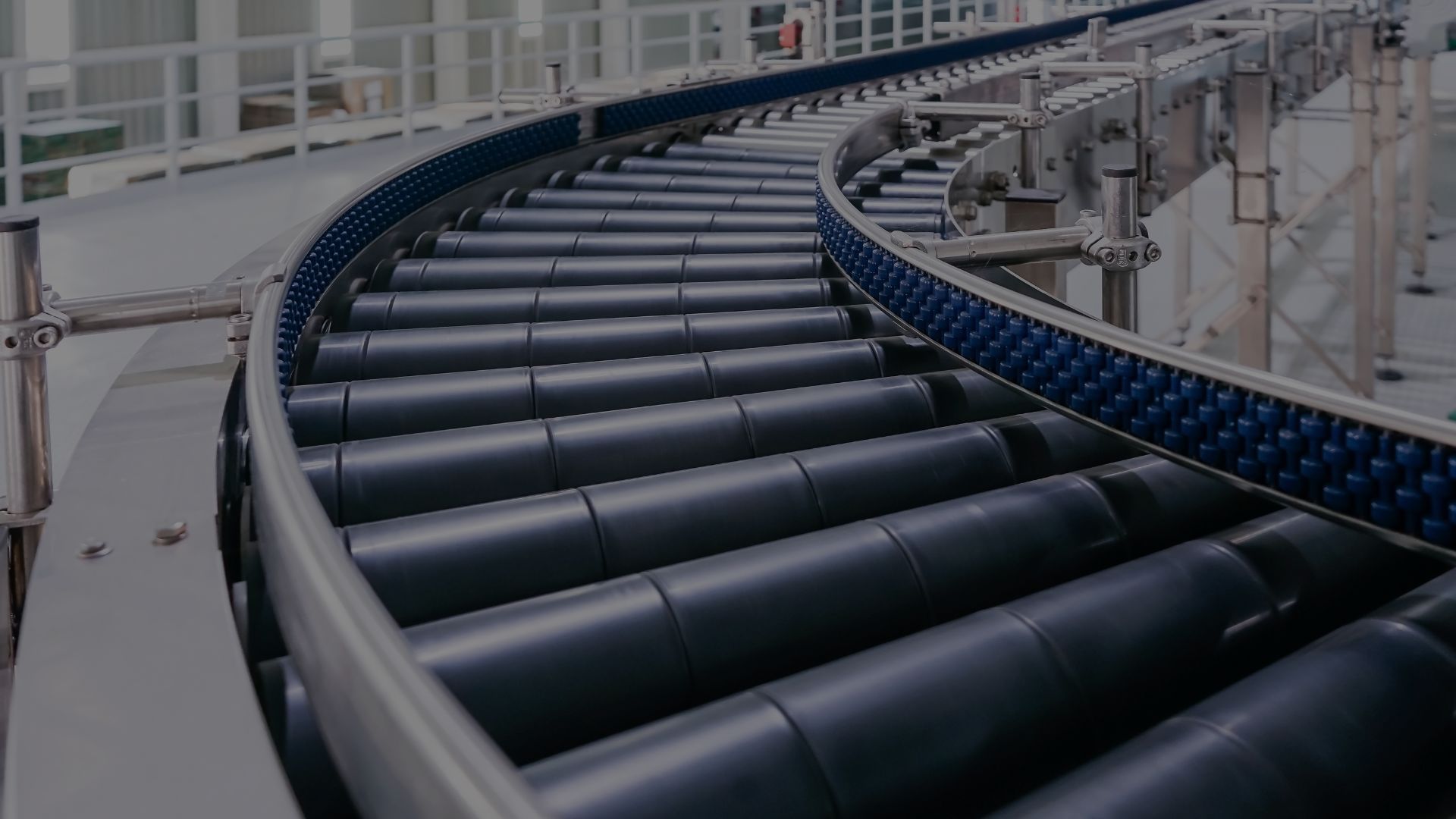
Consistent routing, correct transfers, suitable roller spacing and planned spares are usually more valuable than simply making a conveyor run faster.
Conveyor Supplies Africa focuses on stable movement, fewer stoppages and maintenance plans that operations teams can actually execute.
In logistics applications, the difference between equipment that simply runs and a system that runs reliably every day is often found in transfer geometry, guides, roller spacing, wear surfaces, component selection and service access.
Reliable conveyor flow should not depend on one experienced operator being available to continuously correct the system.
Warehouse layouts are rarely perfect rectangles. Conveyor routing can be adapted around real footprints and workflow.
Small wear components can stop large parts of an operation. Critical spares planning reduces that exposure.
Most facilities do not struggle because every piece of equipment is fundamentally wrong. Problems appear when small design decisions compound under real throughput pressure.
A curve that is too tight, a transfer that is too high, roller spacing that does not suit the smallest product footprint or a conveyor that is difficult to clean and maintain can create repeated stops and manual workarounds.
Selection therefore starts with product behaviour. A rigid carton behaves differently from a flexible bag. A crate with ribs behaves differently from a tote with uneven runners. Mixed-product systems should be designed around the difficult item instead of assuming every load behaves the same way.
The environment matters too. Dust changes wear and friction. Cold conditions can affect grip and tolerances. Cleaning routines affect corrosion exposure and access requirements.
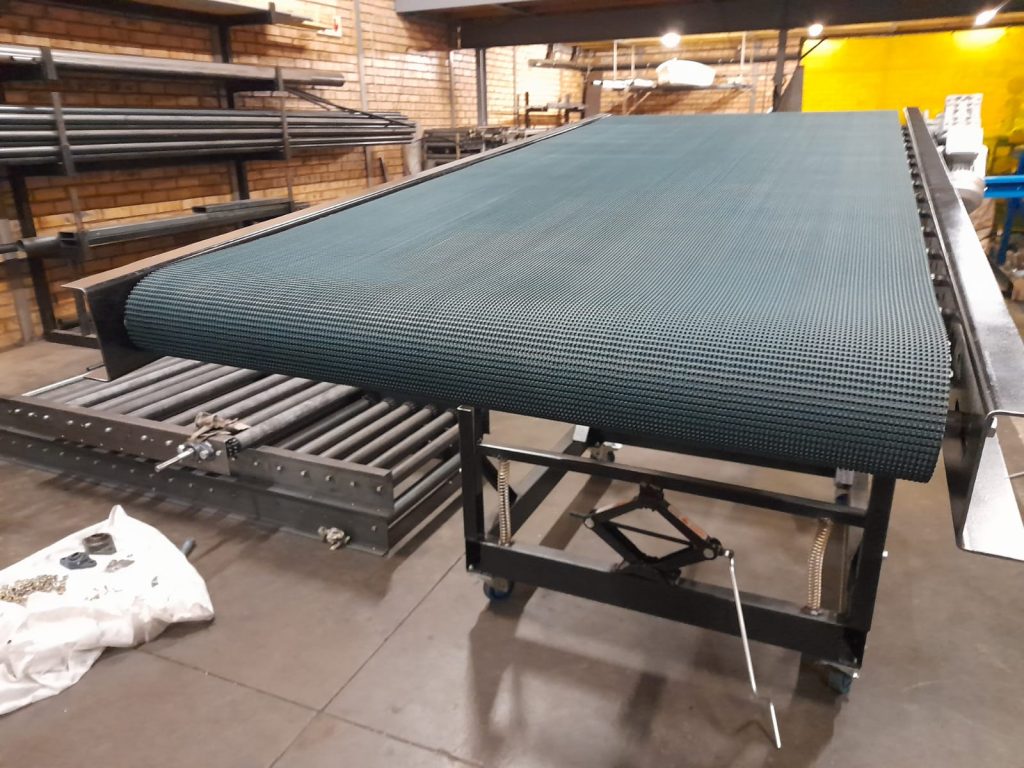
Selection should stay as simple as possible. The best conveyor is normally the easiest system that achieves the flow requirement without creating unnecessary maintenance complexity.
Roller lanes suit cartons, totes and suitable pallet applications where controlled movement, buffering and staging are required.
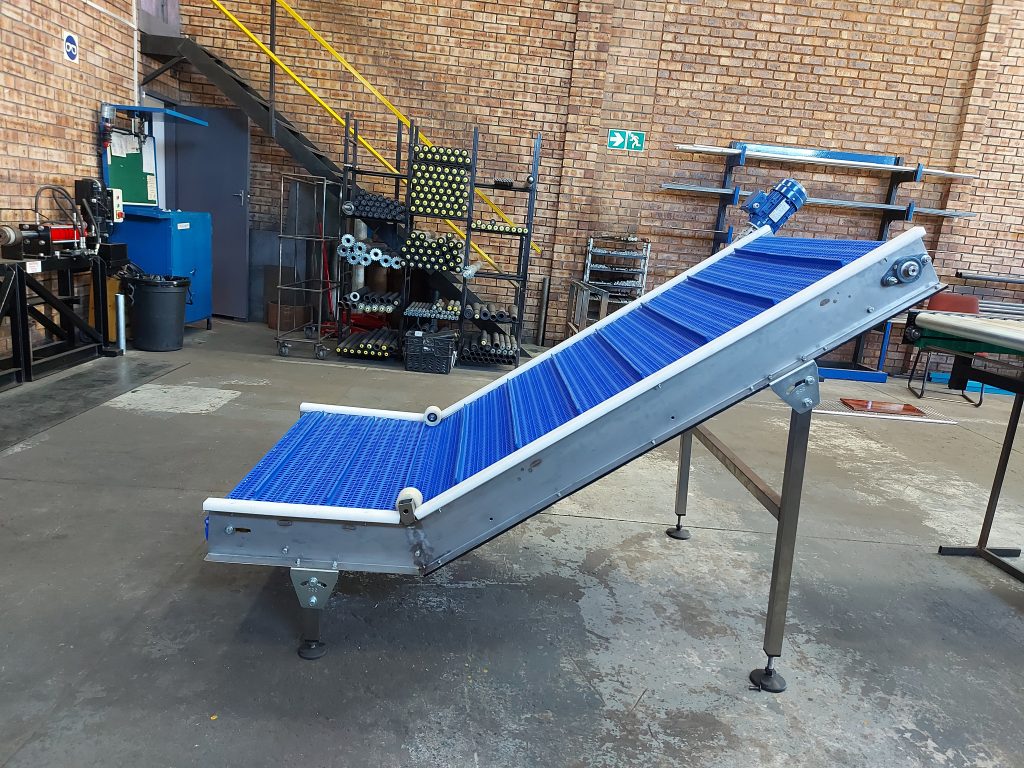
Merges, transfers, elevation changes and discharge points usually determine whether a logistics system remains reliable.
Belt surface selection influences tracking, grip, noise, product stability and how practical future maintenance will be.
Many stoppages begin with a small component that was not available when the maintenance team needed it.
Small targeted improvements can address recurring jams, worn components and difficult transfers without automatically replacing an entire conveyor line.
Multi-site operations benefit from repeatable component choices rather than allowing every facility to develop a completely different spare-parts list.
Many logistics facilities do not need a complete rebuild. They need recurring friction points identified and corrected in a disciplined order.
Better transfer geometry, consistent roller spacing, correct guiding, reliable belt tracking and appropriate spare planning can deliver substantial gains without adding unnecessary complexity.
If a stoppage repeatedly happens in the same place, investigate the geometry before changing the entire conveyor system.
The smallest footprint item is often most likely to tip, skew or become unsupported. Validate roller spacing and transfers against that product.
Faster movement should amplify stable flow. It should not amplify an existing transfer or guiding problem.
Standardising the most frequently replaced components can simplify purchasing, storage and maintenance training.
A ten-minute inspection routine that gets completed consistently is more useful than a perfect two-hour checklist that gets ignored.
Every facility has different dimensions and workflow constraints, but the same operational scenarios appear repeatedly. Conveyor selection should be based on what each zone needs to accomplish.
Receiving lanes need stable presentation and smooth transitions so product enters downstream handling consistently.
Accumulation should absorb variability between processes rather than simply creating another place for products to pile up.
Merges and diverts are high-risk points because product orientation, side pressure and speed changes all happen in a small area.
Picking improves when products arrive at a consistent height, position and spacing without unnecessary manual handling.
Pallet applications require suitable structural capacity, roller duty and controlled alignment at release points.
Dispatch zones should be designed around peak flow, because that is normally when congestion and fragile transfer points reveal themselves.
Conveyor projects become much easier to specify when product behaviour, throughput, change points, buffering and maintainability are defined before equipment is selected.
Product dimensions, weight, base rigidity and centre of gravity determine how reliably it can move through rollers and transfers.
Average flow alone does not define the application. Dispatch surges and receiving peaks should also be considered.
Transfers, diverts, changes in elevation and merges are common locations for recurring stoppages.
Product sensitivity and required buffer duration determine whether accumulation should be simple or actively controlled.
Access, component standardisation and spare availability determine how quickly the system can recover from normal wear.
A useful starting point is to define the flow objective, product behaviour, change points and maintenance reality. That gives the conveyor design something meaningful to solve rather than merely specifying “a conveyor”.
Send Application DetailsPeak-season problems usually appear gradually through longer induction queues, repeated merge stoppages, carton damage, noisy rollers and growing reliance on manual workarounds.
The objective should not simply be to run faster. It should be to run with fewer interruptions and recover more quickly when a normal component failure occurs.
Identify the routes that carry the highest volume or most time-sensitive orders first. Those lanes deserve the strongest transfer geometry, easiest maintenance access and clearest critical-spares plan.
Fast diagnosis and recovery can reduce the impact of downtime even when failures cannot be eliminated completely.
Operations spread across multiple locations benefit from standardised rollers, belts and critical spare kits. Consistency reduces the risk of every site developing a completely different parts requirement.
Conveyors serve the process rather than the industry label. Packaging, food, agriculture and warehousing facilities can share logistics requirements while still needing different conveyor surfaces, hygiene considerations and duty ratings.
Continue by conveyor type, support requirement or operating region.
Send the product dimensions, weight range, throughput target, transfer points, accumulation requirements, layout information and photographs of the important operating areas. CSA can review the requirement around your actual warehouse or distribution process.