Language
Conveyor Supplies Africa

Search Conveyor Supplies Africa

Generic selectors
Exact matches only
Search in title
Search in content
Post Type Selectors
Packaging Industry Conveyors

Packaging Conveyor Systems built for stable flow, accuracy and throughput

Conveyor Supplies Africa designs and supplies Packaging Conveyor Systems for carton handling, case packing, labelling, inspection, accumulation, checkweighing and end-of-line dispatch. Systems are configured around the product range, line speed, transfer points and actual operating conditions so packaging remains stable from machine infeed to palletising and dispatch.
Carton & Case Handling Accumulation Labelling & Inspection Merges & Diverts End-of-Line Dispatch
Packaging conveyor systems moving cartons through an automated facility
Faster quoting

Send the smallest and largest carton dimensions, weight range, target throughput, transfer points and photographs or a short video showing the existing packaging line.

01 • Product Flow Keep cartons stable Support mixed packaging sizes without constant manual correction.
02 • Transfers Control every handover Reduce skew, edge catching and recurring jams between machines.
03 • Accumulation Protect upstream uptime Absorb temporary stoppages without crushing or scuffing cartons.
04 • Dispatch Prevent end-of-line congestion Stage product predictably before palletising, wrapping and dispatch.
Packaging Line Reality

High throughput comes from stable flow, not maximum conveyor speed

Packaging operations rarely lose output because one conveyor is simply too slow. More often, throughput disappears through repeated micro-stops where cartons change direction, enter a machine, merge, divert or accumulate.

A reliable packaging line therefore needs to treat conveyors, packaging machinery, inspection points and end-of-line staging as one connected process. Product presentation should remain predictable even during changeovers, temporary machine stops and peak production.

The smallest or least stable carton is normally the useful design test. If the conveyor can move that product cleanly through transfers, merges and accumulation zones, the rest of the product range becomes substantially easier to manage.

Product Stability Mixed cartons behave differently Weight, base rigidity and centre of gravity affect tracking and transfers.
Transfer Geometry Small gaps create large problems Poor heights and unsupported transitions cause skew, catching and jams.
Accumulation Buffering needs control Excess pressure can damage cartons while weak buffering passes downtime upstream.
Serviceability Maintenance must remain practical Inspection points need realistic access during normal production shifts.
Packaging Flow Map

Control product movement from packing machinery to final dispatch

Individual machines vary between facilities, but most packaging lines contain the same broad flow stages. Each stage should present product predictably to the next instead of creating another bottleneck.

01
Machine Infeed

Products or cartons enter case packing, sealing or wrapping equipment with controlled orientation and spacing.

02
Labelling & Inspection

Stable conveyor speed supports scanners, label applicators, checkweighers and quality-control stations.

03
Merge & Accumulation

Cartons are combined, buffered or temporarily held while downstream equipment completes its operating cycle.

04
End-of-Line Handling

Product moves towards palletising, stretch wrapping, order consolidation or outbound staging.

05
Dispatch

Roller or belt conveyor zones release cartons into warehouse staging and final loading areas.

Packaging & Dispatch

Conveyors need to connect production flow with practical staging

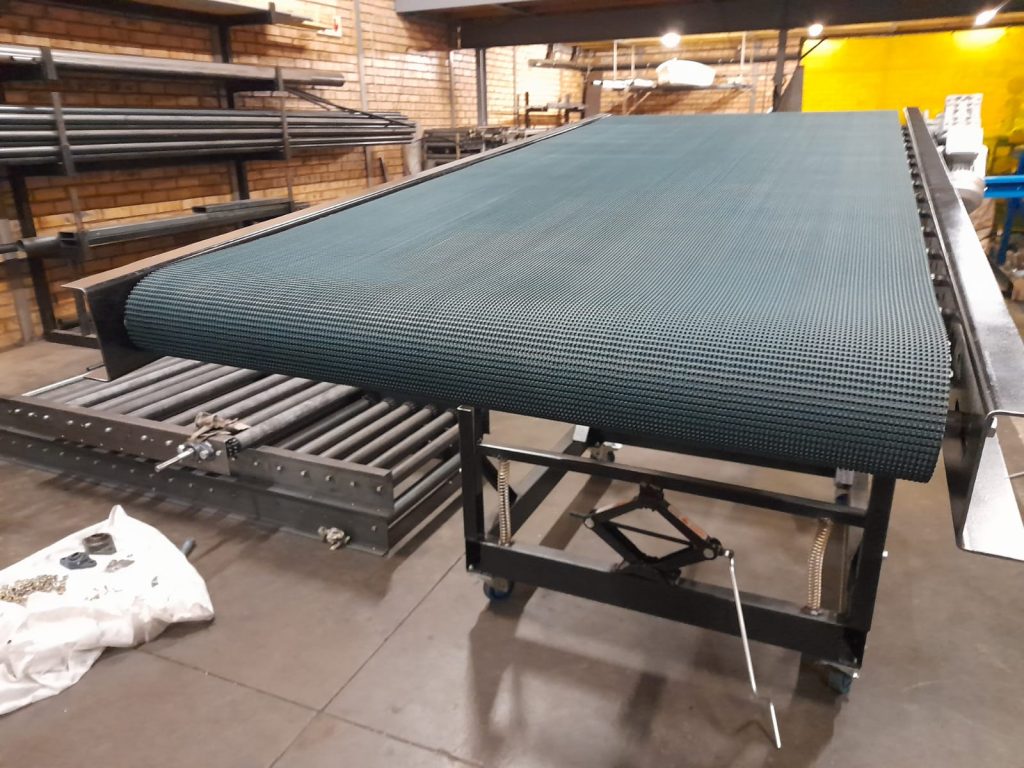
Packaging and warehousing often overlap at the end of the line. Belt systems provide stable continuous transport while roller lanes support staging, accumulation and dispatch.
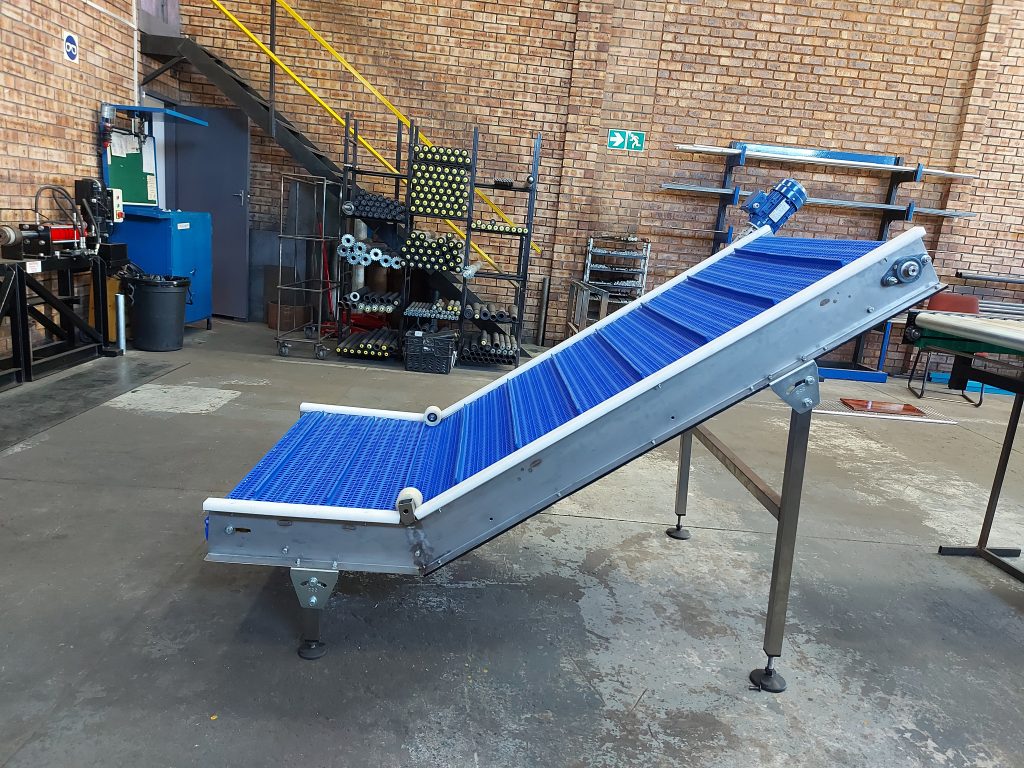
Industrial material handling supporting packaging operations
Production Flow

Stable movement between processing, packaging and handling zones

Conveyor selection should support the product and the machinery around it rather than force every application onto the same transport surface.
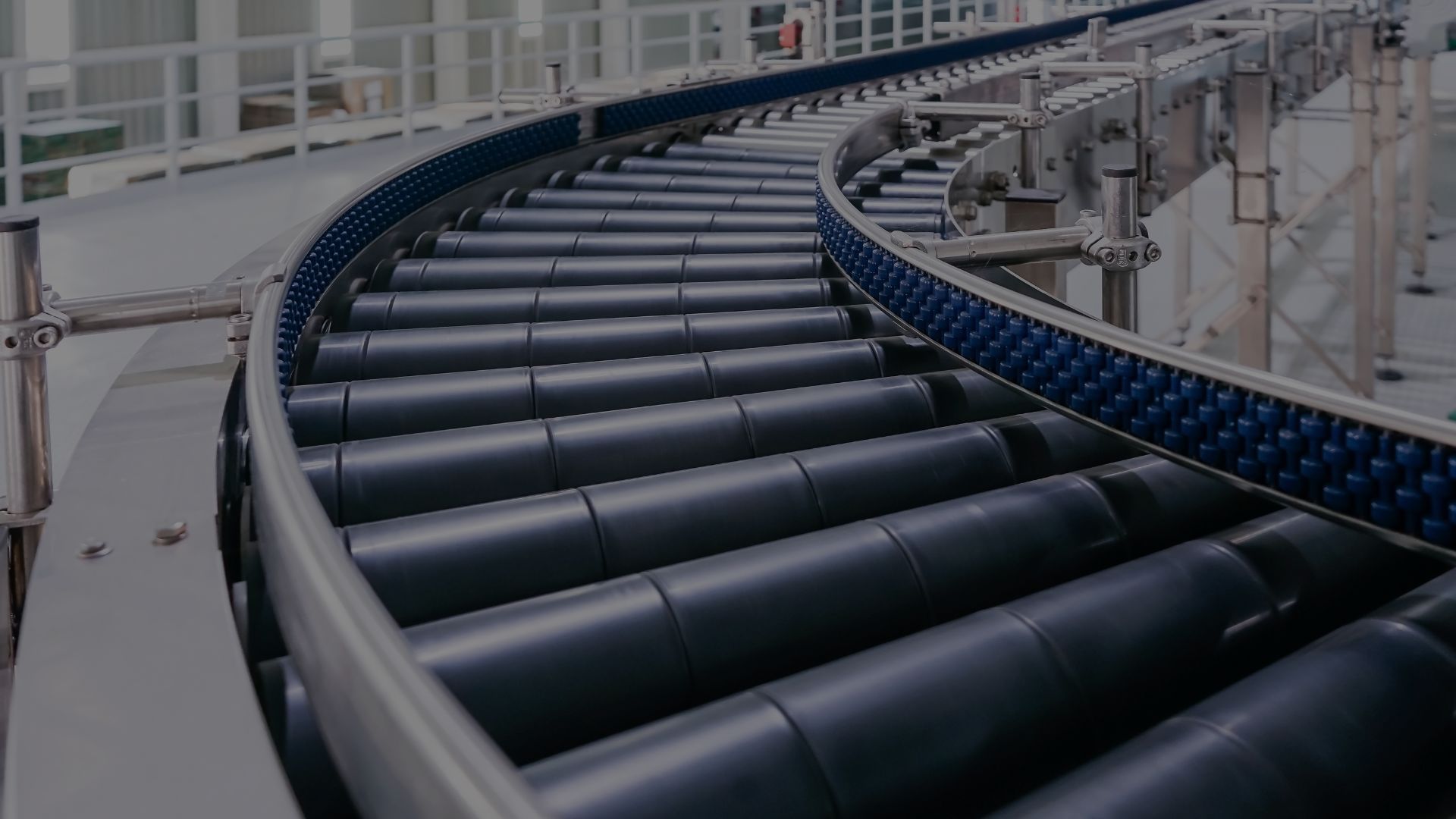
Roller conveyor lanes for carton staging and dispatch
Staging & Dispatch

Roller lanes for cartons, cases and controlled staging

Correct roller pitch and load rating are important where multiple carton sizes share the same packaging or dispatch line.

Packaging Conveyor Solutions

9 practical solutions for packaging flow, accumulation and dispatch

Packaging systems may combine belt, roller and modular conveyor sections depending on product support, machine integration, accumulation requirements and the operating environment.

01
Cartons

Carton & Case Conveyors

Feed case erectors, packers, sealers and wrapping stations while keeping different carton sizes aligned and supported.

Stable handling Mixed sizes Case packing
02
Belt Handling

Belt Conveyors

Provide continuous support between packaging machines where stable product presentation and predictable line speed matter.

Continuous support Stable speed Machine infeed
03
Roller Handling

Roller Conveyors

Support carton staging, accumulation and outbound handling using roller pitch and duty ratings matched to the smallest product.

Staging Dispatch Carton flow
04
Buffering

Accumulation Conveyors

Protect upstream equipment during labelling, inspection, palletising or downstream machine stoppages.

Buffer zones Controlled release Less downtime
05
Change Points

Transfers, Merges & Diverts

Guide cartons through changes in direction and line convergence without creating recurring snag points or unstable rotation.

Smooth transfer Guided merges Less skew
06
Inspection

Labelling & Checkweighing

Create predictable product speed and orientation through scanners, label applicators, checkweighers and quality-control zones.

Stable speed Traceability Inspection zones
07
Rework

Reject & Rework Paths

Divert failed or rework products away from the main flow without unnecessarily stopping the primary packaging line.

Reject lanes Rework flow Less disruption
08
End-of-Line

Palletising & Dispatch Conveyors

Move packaged goods towards palletising, stretch wrapping, consolidation and outbound warehouse staging.

Palletising Outbound staging Dispatch
09
Uptime

Maintenance & Spares Planning

Standardise critical rollers, guides, wear surfaces and belt components so repeat failures can be recovered from quickly.

Wear planning Easy access Faster recovery
Engineering Realities

Most packaging stoppages begin at a change point, not on the straight run

Transfers, merges, roller spacing and accumulation zones deserve more engineering attention than their physical size suggests. Repeating the same correction every shift usually indicates that the system geometry or component selection needs attention.

Transfers & Product Presentation

A small unsupported gap can disrupt an otherwise reliable packaging line

Incorrect transfer heights, large gaps or poor approach angles can rotate cartons, catch edges and interrupt product presentation to packaging machinery. Transfers should be designed around the smallest and least stable product expected on the line.

Roller Pitch

Small cartons need enough support

Incorrect roller spacing allows cartons to dip, skew or wedge between rollers, particularly in mixed-size operations.

Design around the smallest footprint
Accumulation

Buffer zones should not damage cartons

Excess pressure creates scuffing and compression damage. Controlled accumulation protects both packaging and upstream uptime.

Control release pressure
Line Recovery

Restart should be predictable

After a stop, cartons should restart without collisions, uncontrolled release or specialist-only intervention.

Design for repeatable recovery
Maintenance

Access determines whether checks happen

Rollers, belts, guides, sensors and transfer components should remain inspectable during realistic maintenance windows.

Make inspection practical
Conveyor Specification

What we need to specify a packaging conveyor correctly

A useful quotation depends on the product range, throughput, change points, operating environment and downstream equipment. If every detail is not yet available, send what you have and CSA can help narrow the remaining requirements.

01 • Product

Carton & Case Range

Product dimensions and base condition affect roller pitch, belt support, side guides and transfer design.

What to send Smallest and largest dimensions, weight range, base rigidity and any unstable packaging.
02 • Capacity

Throughput

Average and peak production rates influence conveyor speed, buffering requirements and zone capacity.

What to send Units per minute or hour, peak production, shift pattern and expected changeovers.
03 • Machinery

Integration Points

Packaging machinery determines infeed height, product orientation, speed coordination and discharge requirements.

What to send Packers, sealers, wrappers, labellers, checkweighers and other connected equipment.
04 • Flow

Merges & Transfers

Every direction change, transfer and merge can influence carton stability and overall line reliability.

What to send Number of change points, elevations, merge directions and any recurring jam locations.
05 • Buffering

Accumulation Requirement

Buffer capacity should match realistic downstream stoppages without damaging the packaged product.

What to send Required buffer time, carton sensitivity and which machines regularly pause.
06 • Environment

Operating Conditions

Dust, moisture, temperature, cleaning practices and operating hours influence belts, rollers, bearings and frame selection.

What to send Cleaning routine, humidity, temperature variation, dust exposure and duty cycle.
07 • Maintenance

Service & Recovery

Maintenance access and spare component planning should match the actual people, shift windows and downtime tolerance available at the packaging facility.

What to send Existing recurring failures, maintenance frequency, critical production lanes and the time normally available for repairs.
Packaging Line Integration

Conveyors should make automation more predictable, not more complicated

Packaging lines commonly include sealers, label applicators, scanners, checkweighers, metal detection, palletising and stretch wrapping. The conveyor needs to present product reliably to each machine and receive it without creating another backlog.

If cartons rotate before a scanner or labeller Review approach geometry, guiding, belt support and the transfer immediately before the machine.
If upstream equipment stops whenever palletising pauses Review the amount and control of end-of-line accumulation.
If cartons collide after restart Review zone control, restart sequencing and available product spacing.
If operators constantly straighten product manually Review guides, transfers and the stability of the smallest carton in the range.

Good controls rely on predictable mechanical flow

Sensors and automation cannot compensate indefinitely for unstable product presentation. Mechanical support, guiding, transfers and accumulation should first create a repeatable physical process.

Once the product path is stable, speed coordination, sensor logic and controlled release become much simpler to manage and troubleshoot.

Infeed presentation Maintain consistent spacing and product orientation before machinery.
Inspection zones Stable conveyor movement supports scanning, weighing and label accuracy.
Reject lanes Divert rejected product without unnecessarily interrupting the main line.
End-of-line staging Provide sufficient controlled accumulation during wrapper or palletising cycles.
Fast Packaging Review

Start with the recurring stoppage that costs the most

If one transfer, merge or accumulation zone stops production several times per shift, correcting that point can deliver more value than increasing conveyor speed across the entire line.

Why Conveyor Supplies Africa

Packaging conveyor layouts built around real production conditions

CSA focuses on practical product flow, maintainability and component selection rather than designing packaging conveyors around ideal operating conditions that disappear the moment production gets busy.

01

Application-Led Design

Product sizes, packaging behaviour, throughput, transfers and machinery interfaces are reviewed as one system.

02

Custom Manufacturing

Conveyor layouts can be configured around existing machinery, restricted footprints and specific packaging flows.

03

Component Alignment

Belting, rollers, guides and transfer components are selected around actual product and duty requirements.

04

Maintenance Support

Service access and critical wear components can be considered during design to reduce downtime exposure.

Application Scope Non-mining conveyor applications CSA supports packaging, warehousing, logistics, food, agriculture and other non-mining operations.
Conveyor Options Belt, roller and modular systems Conveyor family and component selection are matched to product support, flow and operating conditions.
Project Support South Africa & African markets Supply and project support are available across multiple African regions according to scope and location.

Need a packaging line that stops fighting the product?

Send the carton or case dimensions, weight range, target throughput, packaging machinery, accumulation requirement and photographs of the important transfer areas. CSA can review the conveyor requirement around the actual packaging process.

What conveyor types are commonly used on packaging lines?
Packaging lines commonly combine belt conveyors, roller conveyors, modular conveyors and controlled accumulation zones. Belt conveyors provide continuous support, while roller systems suit cartons, staging and many dispatch applications. The correct choice depends on product stability, throughput and the surrounding machinery.
How do I choose between belt and roller conveyors for cartons?
Belt conveying is useful where cartons need continuous support and predictable presentation to packaging machinery. Roller conveying is commonly used for staging, accumulation and outbound handling when products have sufficiently rigid and stable bases.
Why do cartons jam at transfers and diverts?
Repeat jams are commonly caused by unsupported gaps, incorrect conveyor heights, weak guiding, unsuitable approach angles or unstable product orientation. Small and lightweight cartons make these problems more noticeable.
Can accumulation conveyors reduce packaging line downtime?
Yes. Correctly designed accumulation creates temporary buffer capacity when downstream equipment such as labellers, wrappers or palletising stations pause. Accumulation should use controlled release so cartons are not unnecessarily compressed or damaged.
Can packaging conveyors integrate with scanners and checkweighers?
Yes. Conveyor sections can be planned around scanners, checkweighers, label applicators and other inspection equipment. Stable speed, product orientation and suitable transfer geometry help these systems operate consistently.
What information should I send for a packaging conveyor quote?
Send the smallest and largest carton or case dimensions, weight range, target throughput, required conveyor layout, accumulation needs, machinery interfaces and operating conditions. Photos or videos of transfers and recurring problem areas are particularly useful.
Can CSA help with packaging conveyor upgrades?
Yes. A recurring jam, skew point, damaged buffer zone or congested end-of-line area may be addressed through component, transfer, roller, belting or layout changes rather than automatically replacing an entire conveyor line.
Do you support packaging conveyor projects outside South Africa?
Conveyor Supplies Africa supports non-mining conveyor requirements across South Africa and multiple African markets. Project scope, installation and commissioning availability depend on location and the specific site requirement.