Language
Conveyor Supplies Africa

Search Conveyor Supplies Africa

Generic selectors
Exact matches only
Search in title
Search in content
Post Type Selectors
Gravity conveyor systems

Gravity conveyors for controlled product flow

Gravity conveyors provide a practical, low-maintenance method of moving cartons, totes, trays, crates and palletised goods through warehouses, packing areas, staging zones and production environments. Conveyor Supplies Africa supplies and manufactures gravity conveyor systems for non-mining industrial applications throughout South Africa and other African markets.

Reliable gravity conveyors depend on more than putting rollers into a frame. Product footprint, roller spacing, available slope, unit load, side guidance, stopping positions and the operating environment all influence how smoothly the conveyor performs.

Non-powered movement Gravity or controlled manual push moves the load.
Custom conveyor manufacture Width, length, rollers, guides and stops can be specified.
Gravity conveyors and gravity roller conveyor systems supplied in south africa
Built around your application Correct support. Controlled slope. Predictable stopping.

A properly specified gravity conveyor should move loads smoothly without repeated pushing, sudden acceleration or constant product correction.

CSA South African supply and Africa-wide support
01 Product Footprint Smallest load determines support requirements.
02 Unit Weight Load influences rollers, frame and supports.
03 Available Fall Slope controls movement and conveyor speed.
04 Stops & Guides Control accumulation and product tracking.
05 Environment Dry, damp, washdown, cold or dusty conditions.
Practical material handling

Why gravity conveyors remain a practical choice

Straightforward equipment can deliver excellent results when the product, load and operating conditions are understood properly.

Gravity conveyors are widely used because they provide simple and visible product movement without requiring a powered conveyor drive for every section of the process. Products can move under gravity on a controlled decline or be pushed manually across level roller sections where operators require direct control.

Typical applications include packing benches, warehouse picking, carton transfer, order consolidation, dispatch staging, quality inspection areas and temporary buffer lanes. Gravity conveyors are particularly useful where the objective is to reduce unnecessary carrying while keeping products accessible to operators.

A well-built system is not simply a row of rollers. Roller centres must suit the smallest product footprint, conveyor slope must produce predictable movement, guides should maintain product alignment and stops must be positioned where loads are genuinely required to pause. These details determine whether gravity conveyors become useful equipment or a daily source of small interruptions.

Because gravity conveyors contain fewer powered components, they can also be straightforward to maintain. Rollers, bearings, frames, guides, stops and supports remain visible and accessible. Correct specification and standardised spares can therefore provide reliable operation without unnecessary mechanical complexity.
Warehouse Staging

Keep cartons and totes in controlled lanes.

Gravity conveyors can organise work-in-progress between picking, checking, packing and dispatch instead of allowing products to accumulate randomly around the floor.

Packing Flow

Reduce unnecessary carrying.

Roller lanes placed beside packing benches allow operators to move products forward with less lifting and repeated repositioning.

Visibility

Make queues easy to understand.

Open gravity conveyor layouts allow operators to see product flow, waiting loads and potential bottlenecks before they become major interruptions.

Maintenance

Keep service requirements practical.

Gravity conveyor rollers and wear components can be selected for quick replacement so routine maintenance does not require dismantling an entire conveyor line.

Help me choose

How to select gravity conveyors

The right gravity conveyor starts with the product rather than the catalogue. Dimensions, weight, base condition, conveyor length, operating environment and required flow behaviour all influence the final specification.

Information required for gravity conveyor selection

Send photographs together with these basic measurements. They allow Conveyor Supplies Africa to understand how the gravity conveyor should support, move and stop the product.

  • 01
    Product length, width and base condition.
  • 02
    Individual product weight and maximum expected lane load.
  • 03
    Required gravity conveyor length and working width.
  • 04
    Entry height, discharge height and available fall.
  • 05
    Straight sections, curves, gates, transfers and stopping points.
  • 06
    Dry, wet, washdown, cold-chain, dusty or outdoor conditions.
Product Support

Roller spacing

Gravity conveyors should keep the smallest product supported across multiple rollers. Excessive spacing can allow cartons to dip, rock or catch between rollers.

Movement

Conveyor slope

Too little fall creates stalling. Excessive fall causes products to accelerate and increases impact at stops and downstream transfer points.

Control

Stops and buffers

Gravity conveyor stops should be positioned around real packing, scanning, checking and dispatch operations rather than added after installation.

Environment

Materials and bearings

Wet, washdown, cold or dusty environments may require different roller materials, bearing arrangements, fasteners and frame finishes.

Gravity conveyor types

Gravity conveyors for different loads and layouts

Conveyor configuration should match product size, weight and the route through the facility. Straight gravity roller conveyors, curved sections, skatewheel lanes and pallet systems each solve different material-handling requirements.

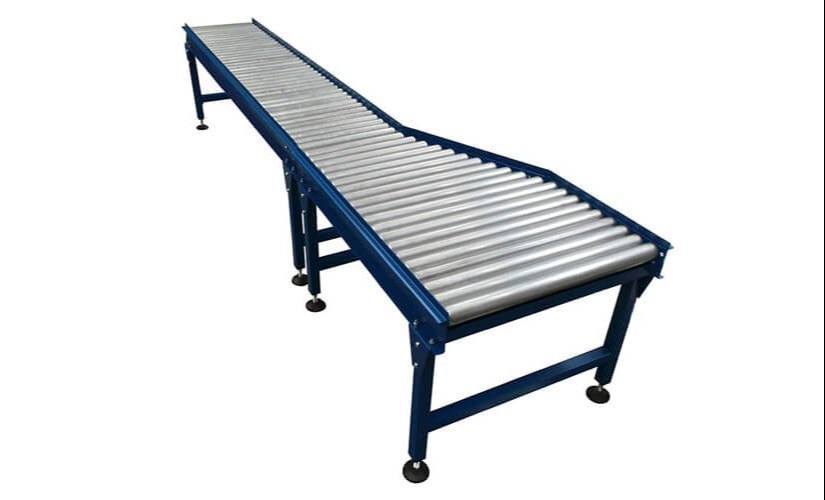
Straight gravity conveyors for cartons totes packing and warehouse staging General Purpose

Straight Gravity Roller Conveyors

Straight gravity conveyors are commonly used for cartons, totes, crates and trays moving through packing, staging, order preparation and dispatch areas.

Roller spacing should be based on the smallest product footprint. Side guides can be added where width variation or manual loading may cause products to skew during movement.

Request specification →
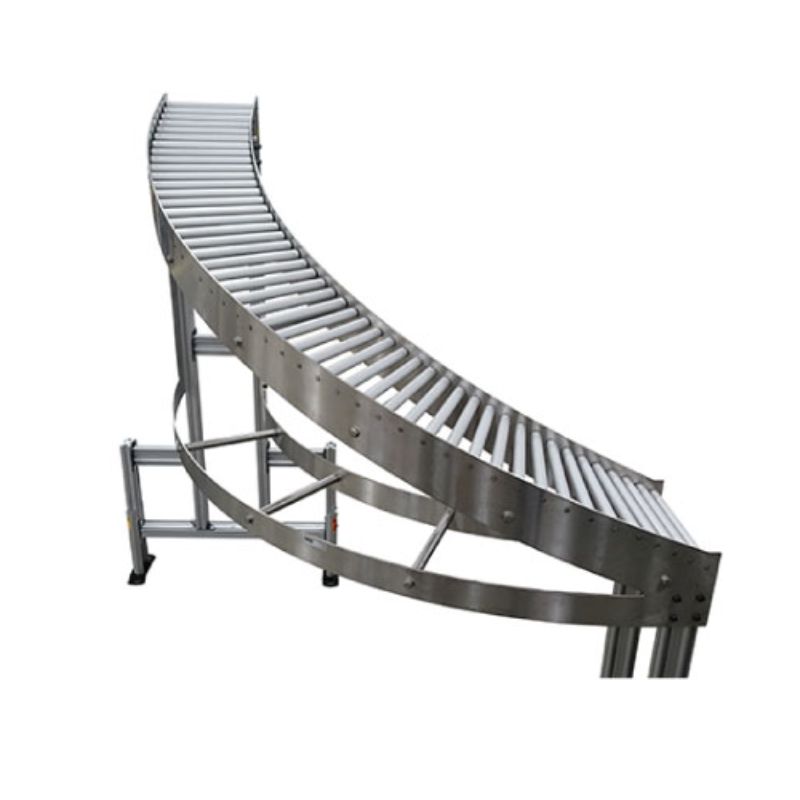
Curved gravity conveyor systems for warehouse product routing Curved Conveyor

Gravity Conveyor Curves

Curved sections route products around columns, equipment and working areas where a straight gravity conveyor cannot provide the required path.

Correct guide positioning and smooth transitions help prevent cartons from rotating or rubbing through the curve.

Request specification →
Gravity conveyor roller and skatewheel conveyor application Small Products

Skatewheel Conveyor Lanes

Skatewheel conveyor sections can suit smaller cartons and parcels where additional contact points help support narrow or irregular product bases.

They can also provide a lightweight gravity conveyor solution for selected packing and order-handling applications.

Request specification →
Decline gravity conveyors with controlled slope for carton handling Controlled Decline

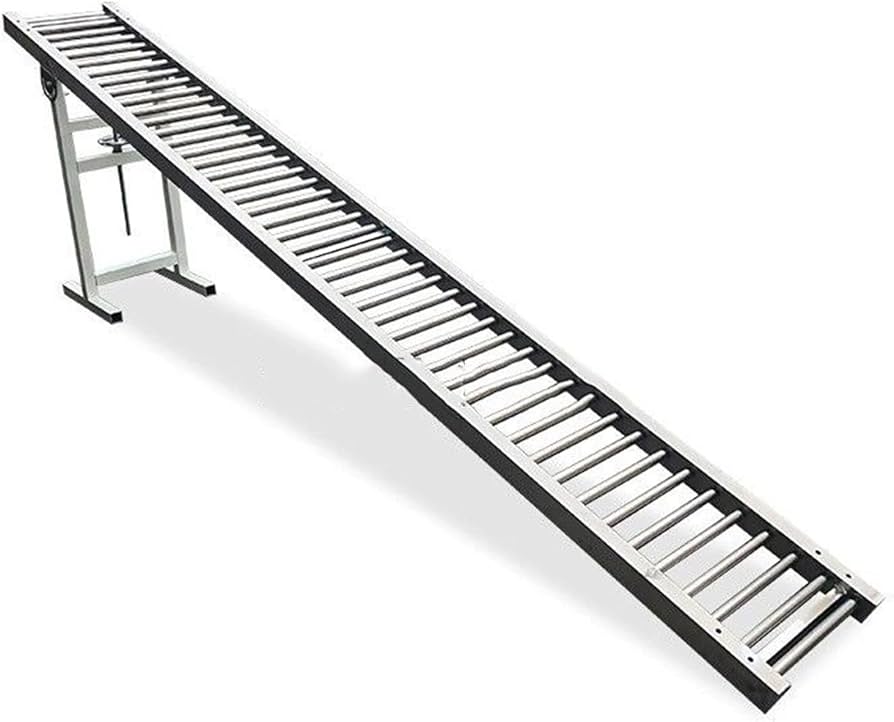
Decline Gravity Conveyors

Decline gravity conveyors use height difference to move products forward without a conveyor drive. The available fall must be balanced against product weight, rolling resistance and the desired speed.

Stops, buffers and discharge control become particularly important where loads accumulate at the end of the decline.

Request specification →
Heavy duty pallet gravity conveyors and roller conveyor systems Heavy Duty

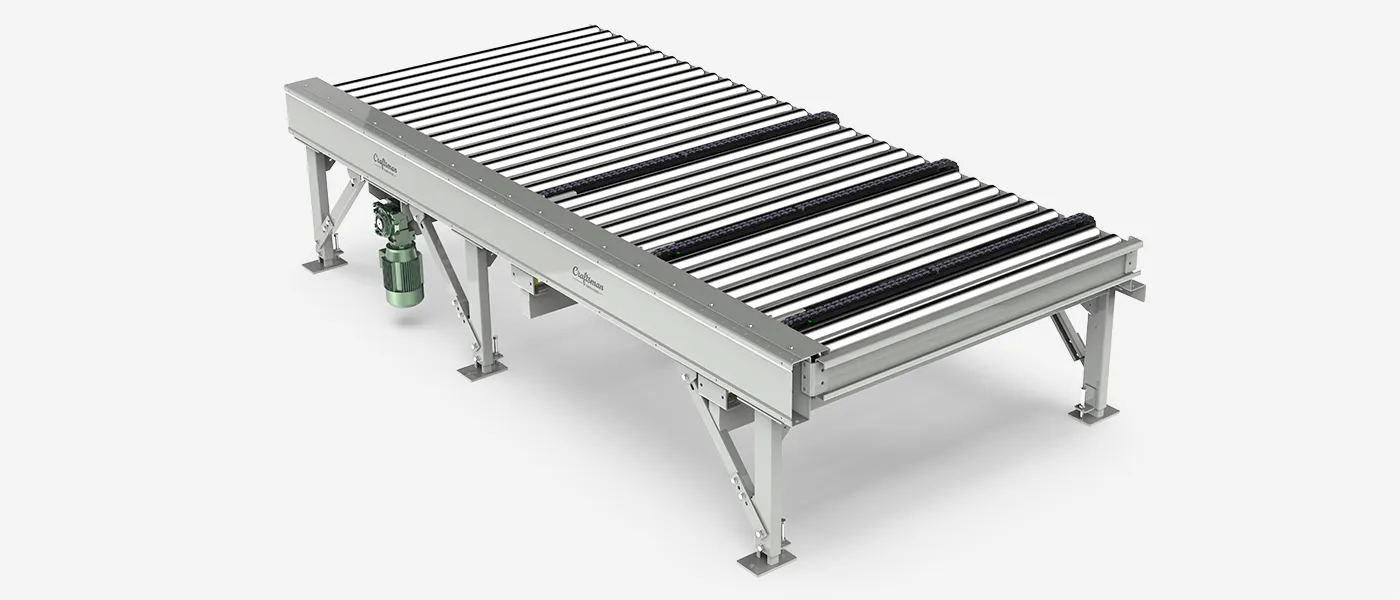
Pallet Gravity Conveyors

Pallet gravity conveyors require heavy-duty rollers, strong frames and appropriate roller centres to support concentrated pallet loads.

Pallet footprint, total weight and stopping strategy should always be considered during specification.

Request specification →
Low noise gravity conveyors with nylon conveyor rollers Low Noise

Low-Noise Gravity Conveyor Options

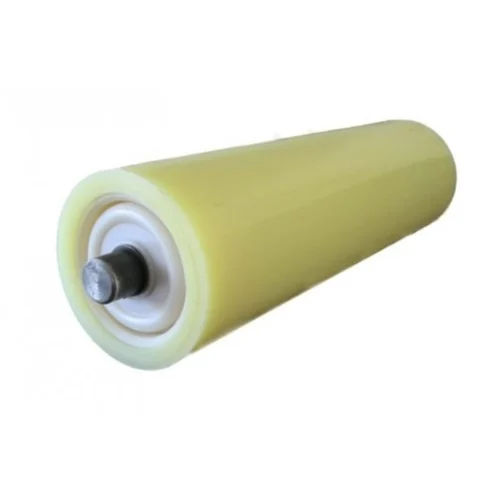
In packing areas and shared workspaces, noise from rollers and product impact can affect comfort. Polymer rollers and controlled conveyor movement may help reduce noise in selected applications.

Material choice still needs to match product load, operating frequency and environmental conditions. Quiet operation should not come at the expense of reliable support.

Request specification →
Gravity conveyor selection guide

Technical factors that affect gravity conveyor performance

Successful gravity conveyors balance product support, rolling resistance, slope, guidance and controlled stopping.

Roller centres Control product support and stability. The smallest product should remain supported by multiple rollers throughout the conveyor, including transfer points.
Available slope Determines how readily products move. Gravity conveyors require enough fall to overcome resistance without allowing loads to accelerate to unsafe or damaging speeds.
Product base Influences friction and rolling behaviour. Flat rigid cartons generally behave differently from flexible, ribbed or damaged bases and may therefore require different spacing.
Side guides Maintain alignment through the conveyor. Guides are particularly useful around curves, mixed-width products and areas where loads enter the conveyor manually.
End stops Control where loads are allowed to stop. Gravity conveyor stops must tolerate expected impact and should be positioned around practical workflow requirements.
Environment Changes material and bearing requirements. Moisture, washdown, dust, temperature and cleaning processes should be considered when selecting rollers and conveyor construction.
Slope, stops and buffering

Gravity conveyors should move product under control

The objective of gravity-powered movement is not maximum speed. A good gravity conveyor moves the product when required, keeps it stable while travelling and brings it to a predictable stop.

01 — Loading

Stable entry

Products should enter gravity conveyors without abrupt drops, large unsupported gaps or immediate sideways movement.

02 — Movement

Controlled slope

Conveyor fall should create dependable rolling without turning a carton into an unexpectedly enthusiastic projectile.

03 — Accumulation

Buffer lanes

Gravity conveyors can create controlled queues between production, packing, inspection and dispatch processes.

04 — Discharge

Safe stopping

End stops and transfer points should handle the expected product load without requiring operators to manually catch moving items.

Gravity conveyor applications

Gravity conveyors for warehouses, packing and production

Gravity conveyor systems are used across non-mining industries where products need to move, queue or stage without the complexity of a continuously powered conveyor drive.

Agriculture

Packhouses & processing

Gravity conveyors can support boxed produce, packing, grading and dispatch operations where maintainable product movement is required.

Food & Beverage

Packing & handling

Washdown conditions, corrosion resistance and cleanability can influence gravity conveyor roller and frame selection.

Logistics

Distribution centres

Gravity conveyors support carton and tote movement through picking, order consolidation, checking, packing and dispatch.

Packaging

Packing line transfer

Products can move between packing tables, labelling positions, inspection stations and downstream staging areas.

Pharmaceutical

Controlled environments

Cleanable construction and repeatable product movement can support selected pharmaceutical and controlled-handling applications.

Warehousing

Pick, pack & dispatch

Gravity roller conveyors are well suited to carton flow, packing support, temporary buffers and dispatch staging.

Explore Conveyor Supplies Africa

Find information by industry, conveyor solution or African country.

Browse the website according to your operating environment, the conveyor equipment required or the African market where supply and support are needed.

Custom gravity conveyor manufacturing

Gravity conveyors manufactured around real site constraints

Standard conveyor sizes do not suit every facility. Columns, doorways, workstations, existing machinery, restricted floor space and limited available fall can all affect the final gravity conveyor layout.

Conveyor Supplies Africa supports custom manufacturing of gravity conveyors, roller sections and related components for non-mining industrial applications. Width, length, roller configuration, supports, curves, guides and stopping positions can be selected around the workflow.

01

Custom widths and lengths

Gravity conveyor dimensions can be designed around product footprint and available operating space.

02

Roller specification

Roller diameter, material, bearings and shaft style can be selected for the expected load and environment.

03

Guides and stops

Product guides, gates, buffers and end stops can be incorporated around the required workflow.

04

Maintenance access

Gravity conveyor rollers and wear parts should remain accessible for practical inspection and replacement.

Why Conveyor Supplies Africa

Reliable gravity conveyors start with better specification

Conveyor equipment should be selected around the product, operating environment and maintenance requirements rather than a generic conveyor assumption.

Application

Product-first selection

Gravity conveyors are specified around footprint, load, movement, available fall and required stopping behaviour.

Manufacturing

Custom conveyor solutions

Custom roller conveyors and gravity conveyor sections can be produced around existing site dimensions.

Components

Replacement rollers and spares

Standardising roller and component specifications helps maintenance teams hold useful replacement stock.

Safety

Planned product control

Stops, guides and buffer areas should be part of gravity conveyor design from the beginning.

Supply

Africa-wide support

Conveyor Supplies Africa supports industrial customers across South Africa and other African markets.

Industry

Non-mining applications

Our focus includes warehousing, food and beverage, agriculture, packaging, logistics, pharmaceutical and general manufacturing.

Practical conveyor planning

Gravity conveyor design, maintenance and spares

Maintaining gravity conveyors

Although gravity conveyors are mechanically simple, routine inspection still matters. Rollers should rotate freely, bearings should not become noisy or seized, frames should remain aligned and product guides should not create unnecessary friction.

Damaged rollers can increase rolling resistance and cause products to stall in sections that previously operated correctly. Where several gravity conveyors use the same roller specification, holding planned spare rollers can reduce downtime and simplify maintenance.

Cleaning access is also important. In food, beverage and other hygiene-sensitive applications, gravity conveyor construction should allow surfaces around rollers and supports to be cleaned without excessive dismantling.

Gravity conveyors across African operations

For companies operating multiple warehouses, plants or distribution sites, standardising gravity conveyor widths, roller types, shaft arrangements and stop components can simplify support across regions.

Repeat specifications make it easier to identify replacement conveyor rollers and maintain useful spare stock. They also reduce the risk of individual sites ordering components that appear similar but do not fit the existing conveyor.

Conveyor Supplies Africa supplies gravity conveyors and related conveyor components to non-mining industrial customers in South Africa and selected African markets.

Search terminology

Common gravity conveyor terms

Buyers, maintenance teams and conveyor manufacturers may use different terminology when describing similar gravity conveyor systems and components.

gravity conveyors gravity conveyor gravity conveyor systems gravity roller conveyors gravity roller conveyor roller conveyor systems non-powered conveyors non-powered roller conveyor warehouse conveyors warehouse roller conveyors packing conveyors dispatch conveyors carton conveyors tote conveyors carton flow conveyors gravity conveyor rollers roller lanes skatewheel conveyors gravity conveyor curves decline gravity conveyors pallet gravity conveyors pallet roller conveyors custom gravity conveyors gravity conveyor manufacturers gravity conveyor suppliers gravity conveyors South Africa material handling conveyors conveyor stops conveyor side guides gravity conveyor spares

Need gravity conveyors for your operation?

Send the product dimensions, load, required conveyor length, available height difference, operating environment and photographs of the area. Conveyor Supplies Africa can help establish a gravity conveyor configuration that matches the real application.

Request a Quote
Gravity conveyor quotation

Send your gravity conveyor requirements

Clear product information, photographs and basic conveyor dimensions help reduce quotation delays and allow the correct roller, frame and control arrangement to be considered.

Information to include

These details help establish the correct gravity conveyor design and reduce unnecessary back-and-forth during quotation.

Product Length, width and base condition.
Load Minimum and maximum product weight.
Conveyor Required length and working width.
Fall Entry and discharge heights.
Environment Dry, damp, cold, dusty or washdown.
Layout Curves, stops, guides, gates and transfers.
Frequently asked questions

Gravity conveyors FAQ

Common questions about gravity conveyor selection, slope, rollers, pallet handling, custom manufacture and African supply.

What are gravity conveyors?
Gravity conveyors are non-powered conveyor systems that allow cartons, totes, trays, crates or pallets to move over rollers or wheels using gravity or controlled manual push. They are commonly used in warehouses, packing areas, staging zones and dispatch operations.
Are gravity conveyors suitable for cartons and totes?
Yes. Gravity conveyors are commonly used for cartons and totes. Roller spacing should keep the smallest product supported across multiple rollers, while side guides may be used where product width or alignment varies.
How do I choose roller spacing for gravity conveyors?
Roller spacing depends on the smallest product footprint and the rigidity of its base. The product should remain supported across multiple rollers throughout the gravity conveyor to reduce rocking, snagging and unstable movement.
What slope should gravity conveyors use?
Gravity conveyor slope depends on product weight, rolling resistance, conveyor length, base condition and desired speed. Too little fall can cause products to stall, while excessive slope can create high speed and impact at the discharge point.
Do gravity conveyors need stops and side guides?
Many gravity conveyors benefit from side guides, end stops, gates and buffer positions. These components help maintain alignment, control accumulation and create predictable stopping positions for packing, scanning, inspection or dispatch.
Can gravity conveyors handle pallets?
Yes. Pallet gravity conveyors require stronger frames, suitable roller diameters, appropriate roller centres and planned stopping arrangements. Pallet footprint, weight and transfer geometry should be confirmed before specification.
Do you manufacture custom gravity conveyors?
Yes. Conveyor Supplies Africa supports custom gravity conveyor manufacturing for non-mining applications. Conveyor width, length, roller arrangement, supports, curves, guides, stops and transfer geometry can be selected around the site and product.
Do you supply gravity conveyors across Africa?
Yes. Conveyor Supplies Africa supports customers in South Africa and other African markets with gravity conveyors, conveyor rollers, replacement components and related conveyor systems.
Does Conveyor Supplies Africa supply the mining industry?
No. Conveyor Supplies Africa focuses on non-mining industries including agriculture, food and beverage, packaging, warehousing, logistics, pharmaceutical environments and general manufacturing.