
 01
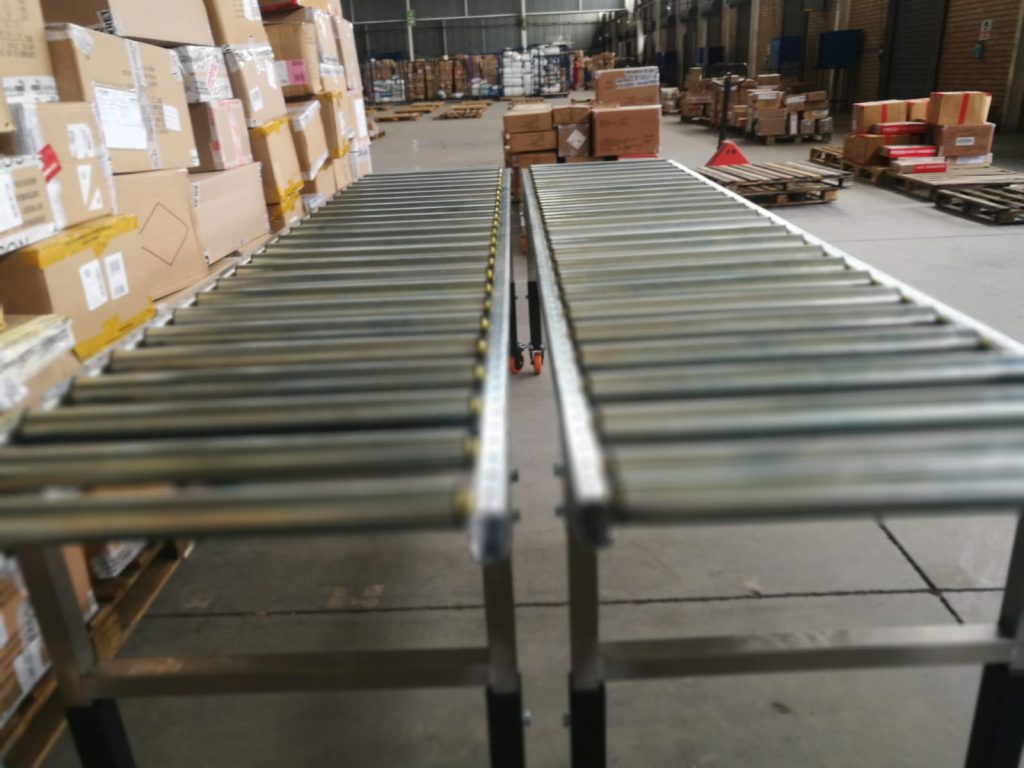
01Gravity Conveyors
Low-maintenance roller lanes for cartons, totes, staging, packing and manual transfer applications.
View gravity conveyors
Conveyor Supplies Africa designs, manufactures and supplies practical conveyor systems for processing, packaging, agriculture, food handling, warehousing and logistics operations across Africa.
Different products, environments and workflows need different transport surfaces. We help you choose the simplest reliable option for the job.
01Low-maintenance roller lanes for cartons, totes, staging, packing and manual transfer applications.
View gravity conveyors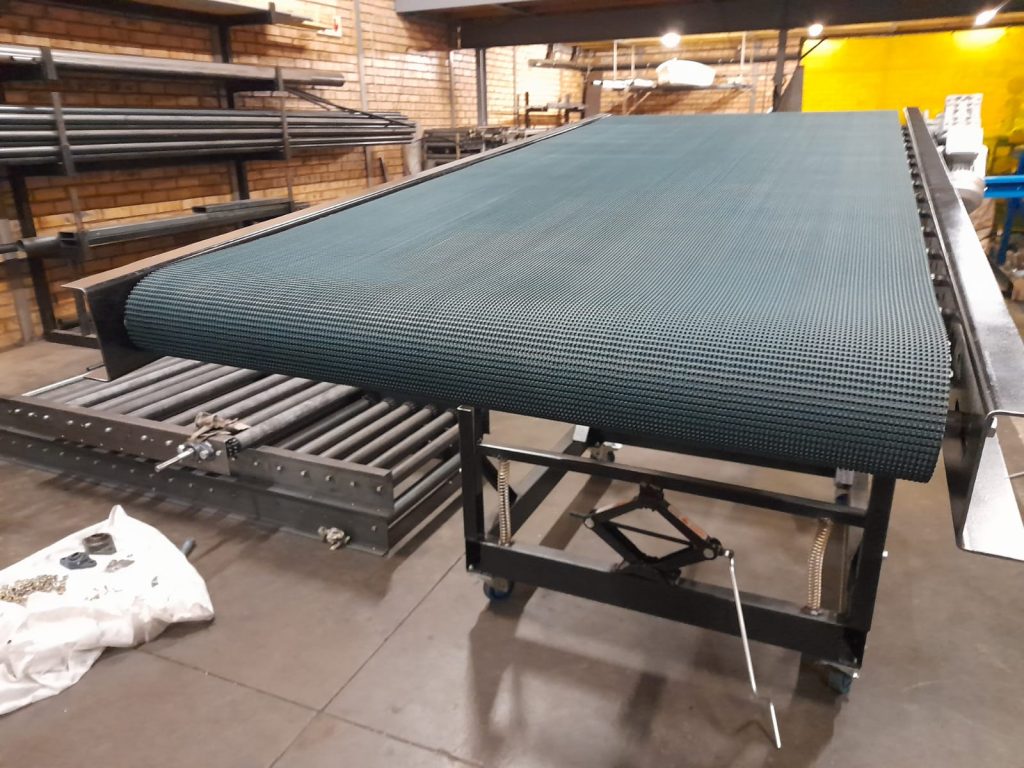 02
02Versatile powered systems for stable, continuous transport across production, packing and transfer areas.
View belt conveyors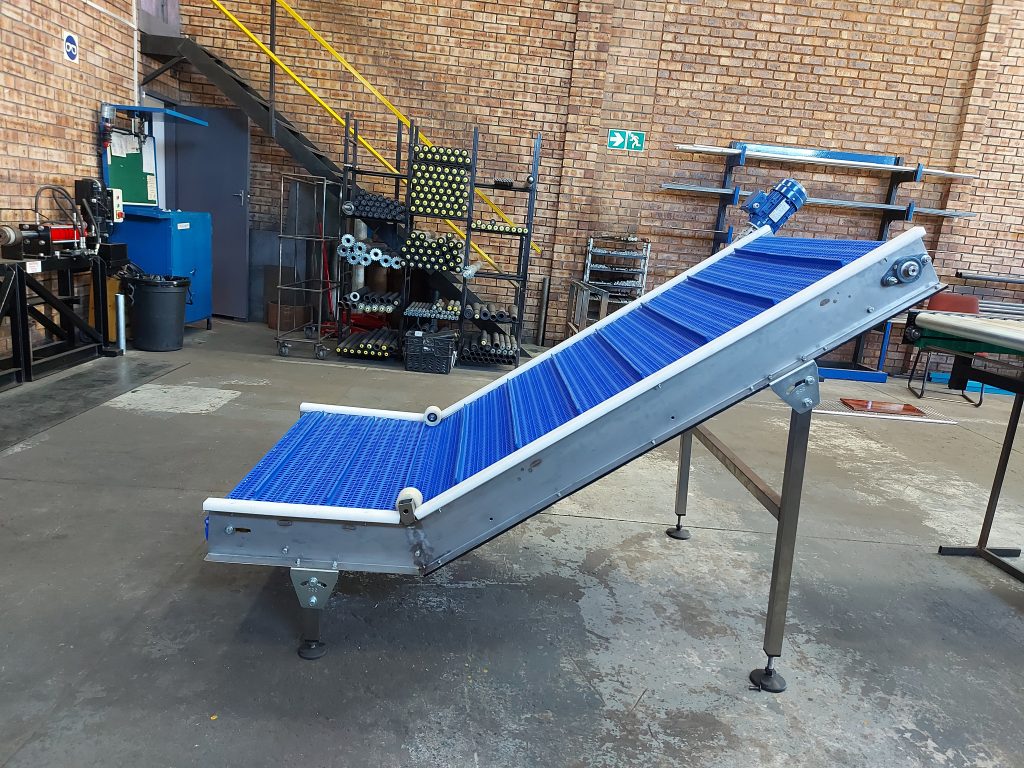 03
03Cleanable, configurable systems suited to wash-down areas, curves, inclines and demanding processing environments.
View modular conveyors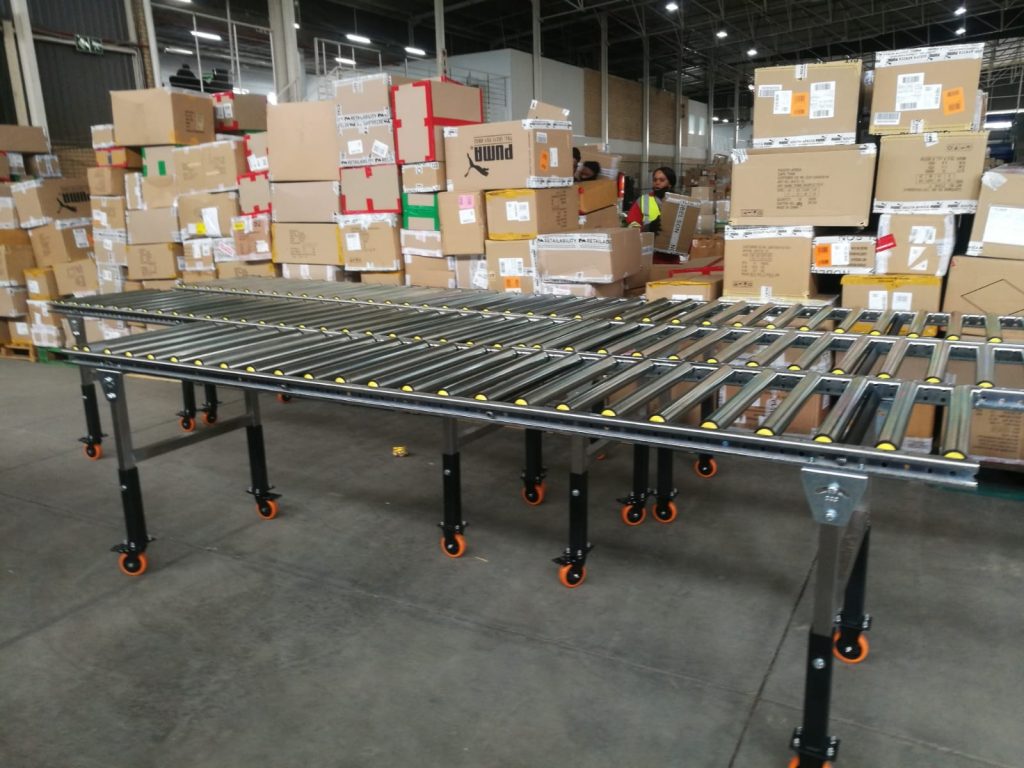 04
04Powered and non-powered roller systems for controlled movement, buffering and scalable warehouse flow.
View roller conveyors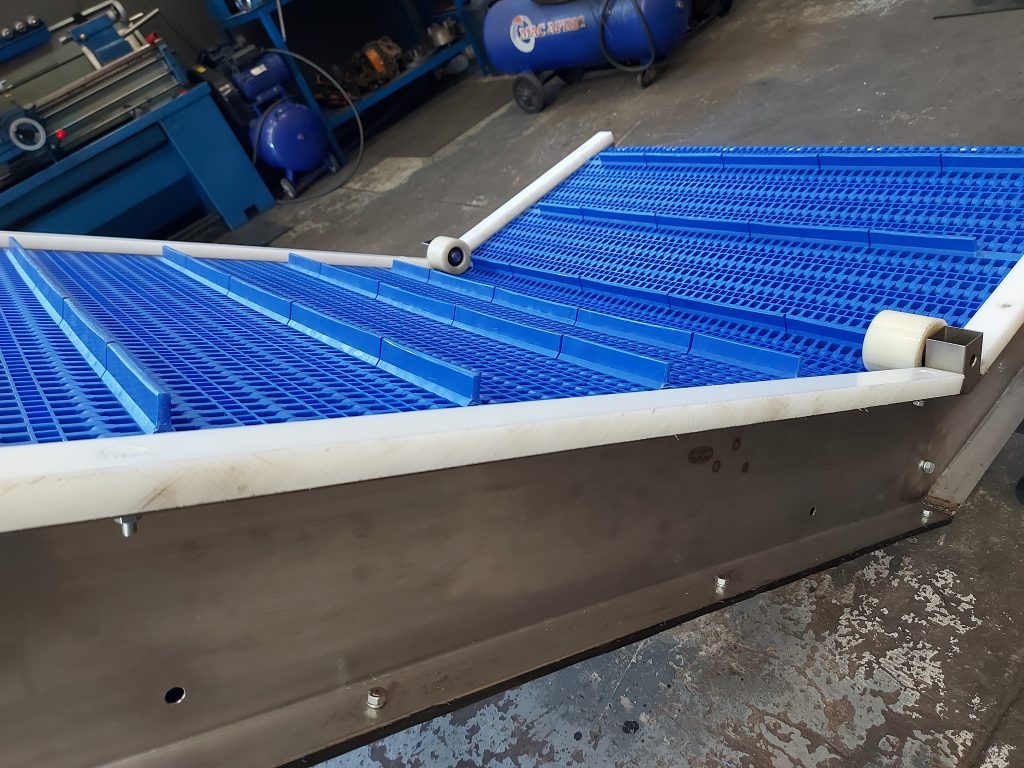 05
05Hygiene-focused frames for food processing, wash-down areas and corrosion-sensitive production zones.
View stainless conveyors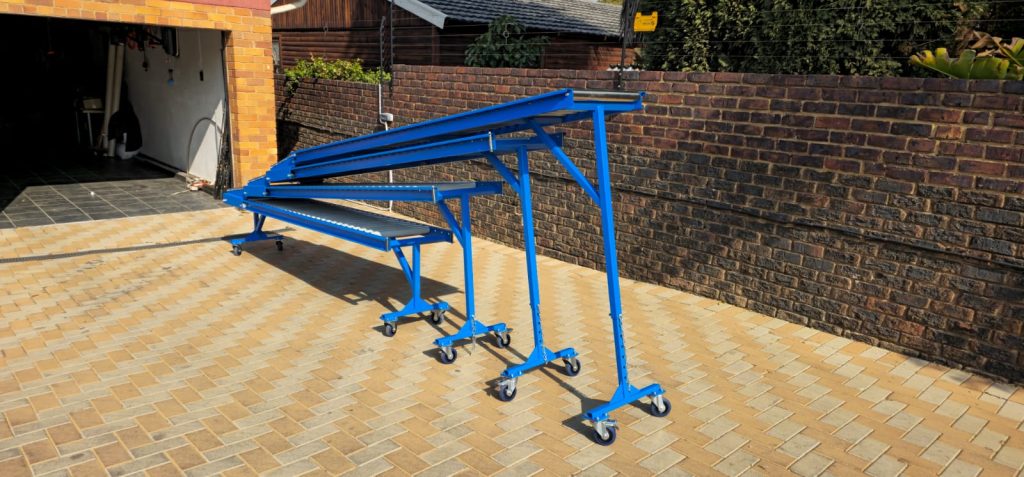 06
06Extendable loading systems that reduce walking, speed up vehicle handling and improve dispatch efficiency.
View telescopic conveyorsThe correct conveyor is not chosen from a photograph. It is selected from the product, environment, flow requirement and maintenance reality.
Size, weight, base shape, stability and surface condition determine the transport surface, roller pitch, guides and transfer design.
Dust, water, chemicals, cold rooms, outdoor exposure and cleaning routines influence materials, bearings, sealing and frame construction.
Stable feeding, accumulation, merges, inclines and discharge points matter more than simply choosing the highest possible speed.
A professional conveyor should be practical to inspect, clean and repair without dismantling half the surrounding process.
The correct system is chosen by matching the product, environment, layout and maintenance reality. These factors matter more than selecting equipment from a catalogue based only on length and width.
Selection begins with the physical behaviour of the product. A rigid carton with a flat base moves differently from a soft bag, ribbed crate, tote with runners or an item that can rotate and tip. Measure the smallest, largest and heaviest products expected on the line. Include the base condition, because the contact surface determines roller spacing, belt support, guide design and transfer geometry.
Mixed-product operations should be assessed around the most difficult item rather than the easiest. That does not mean every system needs to be over-engineered. It means the transport surface, guides and change points should remain stable when the awkward product enters the process. Correctly selected conveyors reduce manual correction, product damage and the small recurring stops that quietly lower throughput.
Moving an item from one point to another is only part of the requirement. Some operations need controlled accumulation before packaging. Others need stable feed into a machine, spacing between products, routing at a divert, or temporary staging before dispatch. The best design supports the downstream constraint rather than simply running faster.
For warehousing and logistics, gravity or roller systems may provide practical staging and release. Belt systems are often suitable for stable continuous movement. Modular surfaces can support hygiene, curves and incline applications. Stainless-steel construction is usually selected where corrosion resistance and cleanability are operating requirements. Each family has a purpose, and the simplest reliable option is normally the strongest long-term choice.
Many stoppages happen where products enter, leave, merge, divert or change elevation. A small gap, poor discharge angle or incorrect height difference can catch packaging and create repeated jams. Transfer plates, nose bars, roller pitch and side guides should therefore be treated as primary design elements rather than accessories added after the main frame is built.
Provide photographs of every important change point together with a basic sketch showing direction of travel. This allows the layout to be reviewed as a complete process. Well-designed conveyors should move products through these areas without requiring one experienced operator to constantly guide or reposition them.
Dry, dusty, wash-down, cold-room and outdoor applications place different demands on frames, bearings, belts and electrical components. A line described as dry may still be cleaned with water. Light dust can become heavy airborne powder during production. Honest environmental information prevents material and sealing choices that look acceptable during installation but create maintenance problems later.
Wash-down environments need accessible, cleanable geometry and appropriate corrosion control. Dusty processes need sensible protection and wear planning. Cold areas can affect grip and material behaviour. Outdoor installations need consideration of drainage, exposure and service access. The operating environment should be included in the first quotation request, not discovered after fabrication.
Who will maintain the equipment, how often production can stop and which parts are available locally all influence the correct design. Covers, guards and tensioning points should be accessible without turning routine maintenance into a major dismantling exercise. Wear items should be identifiable and practical to replace.
Standardising belts, rollers, bearings and components across several lines can reduce stockholding and simplify training. This is especially valuable for cross-border sites where replacement lead times matter. Conveyor Supplies Africa supplies conveyor components and spares, conveyor belting and conveyor rollers to support planned servicing and breakdown preparation.
A useful quotation depends on useful application information. Sending the points below reduces back-and-forth and helps prevent later changes caused by missing requirements:
For complex applications, our conveyor services and support can help assess layout, transfers, maintenance access and practical operating requirements before manufacturing begins.
Conveyor Supplies Africa designs and supplies systems for processing, production, food handling, packaging, agriculture, warehousing and logistics applications. Mining-sector content is excluded from this website. The focus is practical equipment for non-mining operations that need stable flow, accessible maintenance and dependable parts support.
Custom manufacturing can include gravity lanes, powered belt systems, modular solutions, roller transport, stainless-steel builds, telescopic loading equipment and turntable routing. The right approach depends on the process rather than a fixed template. Visit our conveyor systems page or review the complete product range for related equipment and components.
Cross-border projects need clear specifications and sensible spares planning because delivery times and site access can differ significantly. Standard component choices, documented wear items and accurate measurements reduce project risk. We support customers in South Africa and other African markets with product selection, custom manufacturing and replacement parts.
Country and industry pages provide more specific application context. Browse the countries we serve and industry conveyor solutions, or contact the sales team with your product details and site photographs.
We focus on non-mining conveyor applications across production, processing, packing and distribution operations.
Wash-down-friendly handling, hygienic materials and practical cleaning access.
Sorting, grading, bagging, packing and seasonal product-handling workflows.
Carton, tote, staging, picking, accumulation and dispatch movement.
Controlled infeed, line balancing, transfer and end-of-line handling.
Reliable movement between production stages and work areas.
Clean, controlled movement for hygiene-sensitive and regulated workflows.
Send product details, dimensions, operating conditions and a few photographs. We will help narrow the options and identify the information needed for an accurate quotation.