
01
IntakeControlled Offload Conveyors
Stabilise crop arriving from trucks, trailers or harvest equipment before uneven feeding creates downstream jams.
Stable loading
Less spillage
Flow control
Crop Farming Conveyors need to cope with harvest surges, uneven loading, changing site conditions and time-sensitive product movement. Conveyor Supplies Africa designs and manufactures non-mining conveyor systems that support crop handling from field-side intake through transfer, staging, storage, packing and final dispatch.
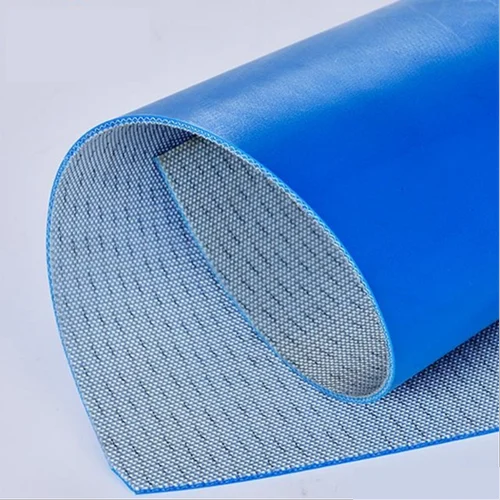
Send the crop type, approximate throughput, conveyor length, belt width where known, incline angle and a few photographs or a short video of the load, transfer and discharge points.
Crop Farming does not operate at one neat, constant production rate. Product arrives in bursts, loading changes with equipment and operators, and environmental conditions can change during the same working day. A conveyor layout therefore needs to tolerate reality rather than depend on perfect feed conditions.
Stable conveyor flow reduces manual rehandling, keeps storage and packing stages supplied more consistently and prevents harvest pressure from being shifted from one bottleneck to the next. Good flow also makes downtime easier to manage because the system is not permanently operating on the edge.
A well-specified Crop Farming conveyor system controls how crop enters the line, how it is supported during transfer and how it reaches storage, packing or transport. The important design decisions are usually around load zones, elevation changes, transfer geometry and service access.
Every farm and processing site is different, but most crop handling systems pass through the same broad stages. The conveyor layout should allow each stage to feed the next without creating another spill zone, queue, product-damage point or maintenance problem.
Crop arrives from harvesting equipment, trailers or temporary field-side handling points.
Surges are stabilised before the crop is transferred further into the system.
Crop moves between levels, buildings or processing areas with controlled support and discharge.
Staging conveyors smooth peak flow before storage, grading, packing or downstream equipment.
Controlled discharge supports packing lines, bins, trailers or other transport interfaces.
Finished or stored crop moves into warehousing, logistics or onward transport flow.
These system patterns address the recurring Crop Farming problems: uneven intake, elevation changes, product damage, spillage, seasonal pressure and slow manual handling. CSA configures the final solution around the crop, throughput and site layout.
Stabilise crop arriving from trucks, trailers or harvest equipment before uneven feeding creates downstream jams.
Move crop from field-side handling towards storage or facility intake with durable, serviceable conveyor layouts.
Reduce bruising, breakage and impact through controlled belt speed, stable support and better transfer geometry.
Manage changes in level while controlling rollback, belt drift and spillage on farm and facility layouts.
Smooth harvest surges and reduce stop-start behaviour before storage, packing or downstream process equipment.
Reduce buildup zones and make cleaning practical where dust, soil, crop debris and moisture are part of daily operation.
Position inspection and adjustment points so routine maintenance remains realistic during busy harvest periods.
Reduce repetitive manual handling and improve vehicle turnaround where crop movement continues into transport and dispatch.
Plan for future storage, packing or staging changes so later upgrades do not force a complete conveyor-system rebuild.
Crop Farming conveyors tend to fail in predictable places: unstable loading, uncontrolled transfer, buildup, moisture exposure and access points that are too difficult to service. The conveyor needs to be designed as a complete flow system rather than a collection of separate machines.
Gentle geometry, stable product support and controlled belt speed reduce impact and abrasion. This matters for sensitive crops where bruising, breakage or repeated rehandling directly affects usable yield and product value.
Controlled intake and buffering prevent short-term harvest surges from becoming spill zones, jams and repeated stoppages further downstream.
Stabilise before transferDust, crop debris and moisture can affect tracking, traction and wear. Layouts should minimise trap points and keep routine cleaning practical.
Reduce buildup zonesInspection and adjustment need clear access. If servicing requires dismantling large sections of the system, preventative work is more likely to be delayed.
Design for inspectionSun, temperature variation, moisture and dust influence belt selection, structure protection and bearing life. Protection should improve service life without making maintenance unnecessarily complex.
Match protection to exposureCorrect specification prevents the cycle of mistracking, spillage and repeated stoppages that comes from a conveyor being almost right. If you do not have every detail, send what is available and CSA can guide the remaining inputs.
Influences belt surface, speed, transfer geometry and the level of product protection required.
Influences belt width, drive sizing, structural loading and the amount of surge capacity required.
Controls conveyor length, support locations, elevation changes and transfer spacing.
Affects impact, spill control and how consistently crop enters the conveyor.
Influences product loss, dust behaviour and how smoothly the next stage is supplied.
Influences traction, wear, coatings, bearing protection and the cleaning strategy.
Service access and spares planning should match the people, time and downtime tolerance available on the site. A system that needs constant specialist adjustment is a poor fit for peak harvest operation.
Crop Farming is seasonal. A conveyor that behaves well during low-volume periods can still fail when intake surges, operating hours extend and maintenance windows disappear. Peak conditions need to be part of the design basis from the start.
Conveyors do not operate in isolation. They interface with harvest equipment, storage infrastructure, transport vehicles, packing areas and downstream handling systems. A conveyor can work perfectly on its own and still create a bottleneck if the upstream or downstream interface is poorly matched.
Environmental exposure also matters. Sun, dust, moisture and temperature variation influence belt behaviour, coatings and component protection. The design should provide enough protection for the site without creating enclosures and details that make routine maintenance unnecessarily difficult.
Crop type, throughput, a basic layout sketch and photos or videos of intake, transfer and discharge points are usually enough to begin identifying a practical conveyor approach.
The goal is a crop-handling system that remains stable under uneven feeding, changing environmental conditions and peak-season pressure while staying practical to inspect and maintain.

Crop behaviour, throughput, elevation changes, transfer points and site constraints are considered as one complete system.
Conveyor systems are configured around the actual crop flow, structural requirement and operating environment.
Production-critical wear items can be considered during design so maintenance planning is based on the actual CSA system.
Repairs, maintenance guidance, installation and commissioning support are available according to project scope and region.
Explore related industries, conveyor equipment and African markets.
Send the crop type, required throughput, a basic layout and photos or videos of the intake, transfer and discharge areas. CSA can review the Crop Farming conveyor requirement around the actual site conditions.